← All women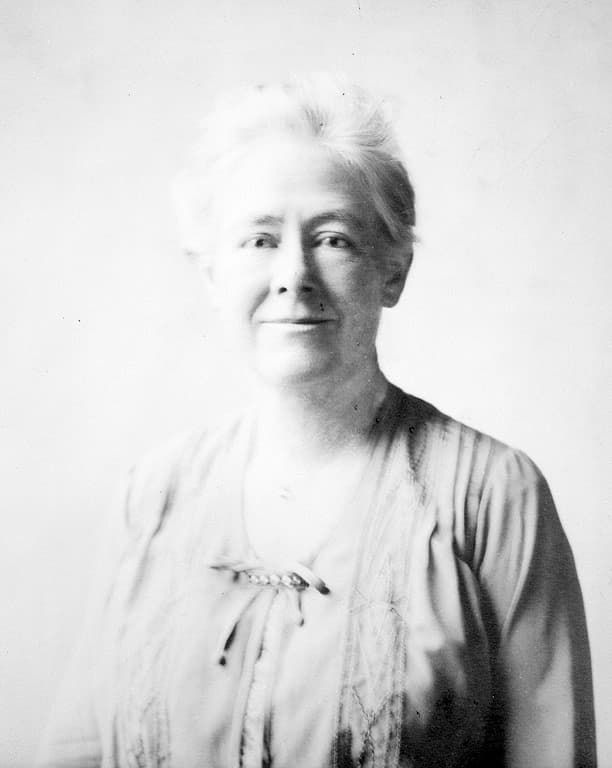
American · Arts · Exploration
Mary Vaux Walcott
September 1, 1860 – August 22, 1940
Early Life and Background
Mary Morris Vaux was born on September 1, 1860, in Philadelphia, Pennsylvania, into a prominent Quaker family. Her father, George Vaux, Sr., was a successful lawyer with a strong interest in geology, which would influence Mary's later pursuits. Her upbringing in a family valuing education and exploration laid the foundation for her future endeavors. Lacking formal higher education opportunities for women at that time, she developed her skills independently, utilizing family connections and resources.
Career Beginnings and Development
Vaux Walcott's initial involvement with natural sciences began with family trips to the Canadian Rockies in the 1880s. After her mother's death in 1880, she assumed responsibility for taking care of her father during these excursions. It was during these trips that Mary developed her interest in documenting the flora of the region. Without formal artistic education, she taught herself to document the native flora with precise and scientifically valuable illustrations.
Major Works, Discoveries, or Accomplishments
Known for her detailed botanical illustrations, Walcott's work gained recognition and praise in scientific circles. Her major contribution was the "North American Wild Flowers" project, published by the Smithsonian Institution between 1925 and 1929. This five-volume set featured over 400 of her illustrations, providing detailed depictions of plants previously undocumented in such a comprehensive visual format. She was often referred to as the "Audubon of Botany" due to her meticulous approach.
Awards, Honors, and Recognition Received
Walcott's contributions to science were recognized with her election to the American Association for the Advancement of Science in 1904. Although awards were limited for women in her field at the time, her influence extended into scientific communities where her work facilitated greater understanding and appreciation of North America's botanical diversity.
Personal Life
Mary married Charles Doolittle Walcott, a distinguished paleontologist, in 1914. Her marriage provided her with further opportunities to engage with scientific communities and travel. The couple had a close partnership, sharing interests in geology and paleontology, which were often integrated into their joint expeditions.
Legacy and Historical Impact
Mary Vaux Walcott's legacy is enduring, marked by her pioneering role in botanical illustration and her exploration efforts which brought attention to the flora of the Rocky Mountains. Her work inspired future generations of botanical illustrators and scientists, especially women pursuing careers in sciences traditionally dominated by men. Her meticulous artistry remains a standard for scientific illustration.
Later Life and Death
After her husband's death, Walcott continued her work but increasingly settled into a quieter life. She passed away on August 22, 1940, leaving behind a substantial legacy in both botanical science and art. Her works continue to be celebrated, preserved mostly by institutions like the Smithsonian, ensuring that her contributions remain accessible to those who follow in her footsteps.
Dated achievements
2 indexed.
- Sep011860Arts
Birth of Mary Vaux Walcott
Mary Vaux Walcott, notable American botanist and artist, was born on September 1, 1860, in Philadelphia.
View details Mary Vaux Walcott Wikipedia - Aug221940Arts
Death of Mary Vaux Walcott
Mary Vaux Walcott passed away on August 22, 1940, leaving behind a legacy of scientific and artistic contributions.