← All women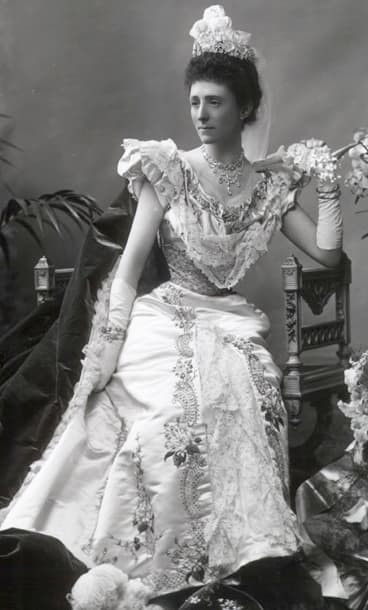
British · Aviation · Medicine · Exploration
Mary Russell
October 26, 1865 – March 22, 1937
Early Life and Background
Mary du Caurroy Russell, Duchess of Bedford, was born Mary du Caurroy Tribe on 26 October 1865, the daughter of the Reverend Walter Tribe, a clergyman. She was raised in a respectable, educated but not particularly wealthy Victorian household, receiving the conventional upbringing afforded to daughters of the English clergy in the mid-nineteenth century — an education emphasizing domestic accomplishments, religious instruction, and social decorum rather than professional training.
Her life changed dramatically in 1888 when she married Herbrand Russell, who in 1893 succeeded to the title of 11th Duke of Bedford. As Duchess of Bedford, Mary gained access to enormous wealth, the family seat at Woburn Abbey in Bedfordshire, and the freedom afforded by aristocratic status to pursue interests well outside the conventional domestic sphere expected of Victorian and Edwardian women.
Nursing, Medicine, and Philanthropy
Long before she became famous as an aviator, the Duchess devoted herself to medicine and hospital work. She trained as a nurse and became deeply involved in the administration and funding of hospitals, most notably founding and running a cottage hospital at Woburn. She personally participated in surgical operations and nursing care, an unusual and hands-on commitment for a woman of her rank, who could easily have limited her involvement to patronage and fundraising alone.
Her philanthropic work extended to founding hospitals for the treatment of tuberculosis and other illnesses, and she was known for her serious, almost professional dedication to medical causes, spending considerable personal time in wards and operating theatres. This period of her life established her reputation as a woman unafraid of hard, often unglamorous work, and demonstrated a restless energy and desire for purpose that would later find its most famous outlet in aviation.
She also had a keen interest in ornithology, conducting studies of birds at Woburn Abbey and contributing to natural history in ways that were taken seriously by contemporary scientists, despite the general exclusion of women from formal scientific institutions of the period.
Turn to Aviation
The Duchess of Bedford took up flying relatively late in life, in her sixties, at a time when aviation was still a dangerous and predominantly male pursuit, having only recently emerged from its pioneering era. She reportedly turned to flying partly as a personal challenge and partly as a means of coping with progressive deafness, finding that the engagement and concentration required by flight offered a welcome escape from the isolating effects of her hearing loss.
She employed skilled pilots, notably Charles Barnard, to accompany and instruct her, and quickly progressed from passenger to active pilot. Her flying career, beginning in earnest in the late 1920s, coincided with a golden age of long-distance aviation records, when pilots — including a growing number of women such as Amy Johnson and Amelia Earhart — competed to set new benchmarks for distance, speed, and endurance between Britain and far-flung parts of the Empire.
Record-Breaking Flights
The Duchess undertook a series of highly publicized long-distance flights that captured the attention of the British press and public. Among her most celebrated achievements was a flight to Cape Town, South Africa, and back, and in April 1930, a long-distance flight to India and back, accompanied by pilot Charles Barnard and co-pilot Robert Little. These journeys, undertaken in relatively primitive aircraft over vast and often hazardous distances — crossing deserts, mountains, and seas with limited navigational aids — were remarkable feats of endurance and courage, particularly for a woman in her sixties.
Her achievements earned her the affectionate and admiring nickname the "Flying Duchess," and she became one of the most famous female aviators in Britain during the interwar period. Her exploits helped popularize civil aviation among the British public and demonstrated that flying was not the exclusive preserve of young men, challenging contemporary assumptions about age and gender in the still-nascent field of aviation.
Personal Life
Mary Russell married Herbrand Russell, later 11th Duke of Bedford, in 1888. The couple had one son, Hastings William Sackville Russell, who would become the 12th Duke of Bedford. Her marriage placed her at the heart of one of England's great aristocratic families, and Woburn Abbey became both her home and, later, the base from which she conducted her flying operations, complete with a private aerodrome.
Despite the trappings of aristocratic life, the Duchess was known for eschewing idle luxury in favor of active engagement — whether in medicine, natural history, or aviation. Her deafness, which worsened over the years, was a significant personal challenge that she addressed with characteristic determination, turning to activities that demanded intense focus rather than withdrawing from public life.
Disappearance and Death
On 22 March 1937, at the age of 71, the Duchess took off alone in her de Havilland Gipsy Moth aircraft from the aerodrome at Woburn Abbey for what was meant to be a routine solo flight. She never returned. A search was launched, and wreckage from her aircraft was subsequently found in the Wash, the large tidal bay on the eastern coast of England between Norfolk and Lincolnshire. Her body was never recovered, and the exact circumstances of the crash were never definitively established.
At the time of her death, she was believed to be one of the oldest active pilots in the country, and her disappearance was a significant news event, mourned widely as the loss of a genuinely pioneering and beloved public figure.
Legacy
Mary Russell, Duchess of Bedford, is remembered as one of the most remarkable British women of the early twentieth century — a figure who defied the conventional expectations placed on women of her class and generation not once but repeatedly, first through her serious commitment to nursing and hospital work, and later through her record-setting career in aviation undertaken well beyond the age at which most people, then and now, would consider embarking on such physically and mentally demanding pursuits.
Her life illustrates the expanding possibilities available to women of means in the interwar period, even as most women continued to face severe restrictions on education, employment, and public life. The "Flying Duchess" remains a celebrated figure in the history of British aviation and is commemorated in local Bedfordshire history, aviation histories of the interwar period, and popular retrospectives on pioneering women aviators alongside contemporaries such as Amy Johnson.
Dated achievements
3 indexed.
- Oct261865Aviation
Born at Woburn Abbey as Lady Mary du Caurroy Tribe
Mary du Caurroy Tribe, later Duchess of Bedford and pioneering aviator, was born on 26 October 1865.
View details Mary Russell, Duchess of Bedford - Wikipedia - Apr221930Aviation
Set women's long-distance solo flying record to India and back
The Duchess of Bedford flew to India and back, setting a long-distance record and cementing her fame as the 'Flying Duchess.'