← All women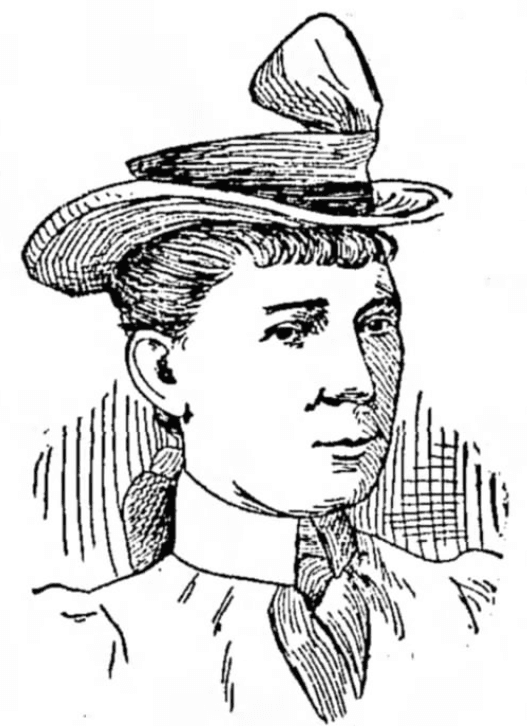
British · Sports
Mary Rudge
February 6, 1842 – November 22, 1919
"
Early Life and Background
Mary Rudge was born in 1842 in Leominster, Herefordshire, England, into a family that, by the standards of the Victorian era, encouraged intellectual pursuits among its daughters. Details of her early education remain sparse in the historical record, as was common for women of the period whose lives were rarely documented with the same thoroughness afforded to men. What is known is that Rudge developed a passion for chess relatively early in life, a pursuit that was, at the time, considered largely the domain of men in formal clubs and competitions. She would go on to become one of the most significant, if under-recognized, figures in the early history of organized women's chess.
Career Beginnings and Development
Rudge's chess career developed primarily in Bristol, where she settled and became a central figure in the local chess scene. She was instrumental in founding and running chess clubs that welcomed women, at a time when most chess institutions barred female membership or relegated women to auxiliary roles. She served for a period as president of the Bristol Chess Club's ladies section and dedicated considerable energy to teaching chess to women and girls, believing strongly that women were fully capable of mastering the strategic depths of the game on equal footing with men.
Her reputation as a strong player grew steadily through local and regional competitions in the 1880s and 1890s. She was known for a solid, patient positional style, and by the mid-1890s she had established herself as one of the strongest women players in Britain, regularly competing against and defeating both female and male opponents in club settings.
The 1897 Ladies' International Chess Congress
The defining moment of Rudge's career, and indeed one of the defining moments in the history of women's chess, came in 1897 when she competed in the first Ladies' International Chess Congress, held in London at the Hotel Cecil. This tournament was groundbreaking: it was the first international chess competition organized exclusively for women, bringing together approximately twenty players from Britain and continental Europe, including strong competitors from countries such as France and Germany.
Rudge, then in her mid-fifties, dominated the field. She finished the tournament with an outstanding, largely unbeaten record, securing first place ahead of all other competitors. Her victory was reported in newspapers of the day and was celebrated within the small but growing community of women chess enthusiasts as proof that women could compete at the highest levels of strategic thought and skill. Because there was no official world championship title for women at that time — the Women's World Chess Championship was not formally established by FIDE until 1927 — Rudge's win at this pioneering event has led many chess historians to informally regard her as the first women's world chess champion, or at least the strongest documented female player of her generation.
Significance and Barriers Overcome
The significance of Rudge's achievement must be understood within the context of Victorian attitudes toward women's intellectual capabilities. Chess was frequently framed in the period's popular discourse as a game requiring a kind of rigorous, almost military logic that many assumed women lacked the temperament or training to master. Women were often excluded from the major chess clubs of London and other cities, and when permitted to play, were frequently relegated to informal or subordinate roles. The organization of the 1897 Ladies' Congress was itself a radical act, asserting that women's chess deserved serious international attention and structured competitive opportunity.
Rudge's success at this event, therefore, was not merely a personal triumph but a symbolic victory for the broader cause of women's participation in competitive intellectual and strategic pursuits. Her win helped legitimize subsequent women's tournaments and contributed to a slowly growing acceptance of women's chess as a serious pursuit worthy of coverage, organization, and institutional support.
Personal Life
Comparatively little is documented about Rudge's personal life, reflecting the broader historical neglect of women's biographical detail during this period. She never married, and much of her adult life was devoted to chess — both as a competitor and as an organizer and teacher who sought to expand opportunities for women in the game. She lived for a significant portion of her adult life in Bristol, where her contributions to local chess culture, particularly in fostering women's participation, were well recognized within the chess community of the city.
Later Life and Death
Following her landmark 1897 victory, Rudge continued to be involved in chess circles, though detailed records of her later competitive career are limited. She lived out her later years with the distinction of having been the most successful woman chess player of her generation. Mary Rudge died in 1919, in Southville, Bristol. At the time of her death, the broader chess world had not yet formalized a women's world championship, meaning her 1897 title stood for decades as the highest recognized achievement by a woman in international competitive chess.
Legacy
Mary Rudge's legacy rests on her role as a trailblazer for women in chess. She is remembered today, particularly in Bristol and in her birthplace of Leominster — where a local museum exhibition has honored her as one of the town's notable historical figures — as an early and important figure who proved that women could excel in high-level chess competition when given the opportunity. Her victory at the 1897 Ladies' International Chess Congress remains a touchstone reference point in histories of women's chess, cited by historians and chess writers as a foundational moment that predates and prefigures the official Women's World Chess Championship. Modern retrospectives, including features by chess history writers and institutions such as Chess.com, have sought to restore her name to greater prominence as part of a broader effort to recover and celebrate the contributions of pioneering women to the history of the game.
"Dated achievements
2 indexed.
- Feb061842Sports
Birth of Mary Rudge
Mary Rudge was born in Leominster, England.
View details Wikipedia: Mary Rudge - Jul081897Sports
Won Women's International Chess Congress
Mary Rudge won the inaugural Women’s International Chess Congress in 1897.
View details