← All women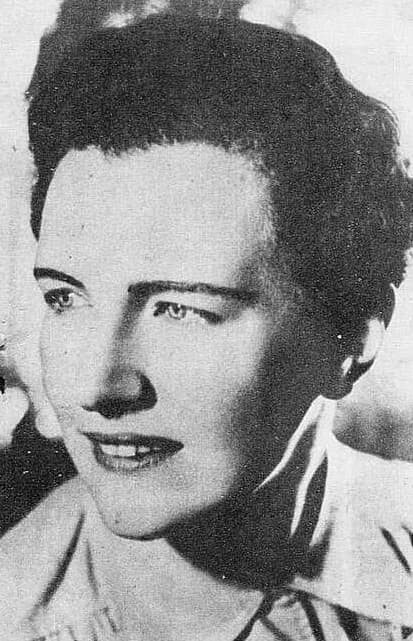
British · Literature
Mary Renault
September 4, 1905 – December 13, 1983
Early Life and Background
Mary Renault was born as Eileen Mary Challans on September 4, 1905, in Forest Gate, Essex, England. Her father, Frank Challans, was a physician, and her mother, Mary Challans, was a homemaker. Renault's early education took place in the North London Collegiate School, where she developed a deep interest in literature. Later, she attended St Hugh's College, Oxford, where she studied under the tutelage of the prominent writer and philosopher, J.D. Beresford. Beresford played a significant role in influencing her literary aspirations and narrative style.
Career Beginnings and Development
After graduating from Oxford in 1928, Renault trained as a nurse at the prestigious Radcliffe Infirmary in Oxford. This experience profoundly impacted her writing, offering insights into human nature and empathy. During World War II, she served as a nurse and also began writing novels. Her early works were primarily contemporary fiction, with her first novel, "Purposes of Love," published in 1939.
Major Works and Accomplishments
Renault is best known for her meticulously researched historical novels centered on ancient Greece. Her interest in classical antiquity allowed her to create vivid portrayals of historical figures such as Theseus and Alexander the Great. "The King Must Die" (1958) and "The Bull from the Sea" (1962) are among her celebrated Theseus novels. Her Alexander Trilogy, including "Fire from Heaven" (1969), "The Persian Boy" (1972), and "Funeral Games" (1981), is lauded for its insightful look into the life and legacy of Alexander the Great.
Renault's books stand out for their rich historical depth and nuanced exploration of themes such as leadership, love, and war, which transcended the narrative boundaries of her time.
Awards, Honors, and Recognition
Throughout her career, Renault received several accolades for her contribution to literature, including the E.M. Forster Award in 1959. Her novels have remained influential, shaping the perception of historical fiction and providing a bridge between scholarly narratives of ancient Greece and popular literary culture.
Personal Life
In her personal life, Renault was known for her long-term partnership with Julie Mullard, a fellow nurse. The couple emigrated to South Africa in 1948, where they lived together until Renault’s death. Their relationship was marked by mutual support and collaboration, which helped Renault establish her career in a new cultural context.
Legacy and Historical Impact
Mary Renault’s work fundamentally transformed the approach to historical fiction, bringing a nuanced understanding of the classical world into contemporary discourse. Her portrayals of complex characters and scenarios have inspired both readers and other authors, establishing a lasting interest in historical figures like Alexander the Great.
Later Life and Death
Renault continued to write until late in life, passing away on December 13, 1983, in Cape Town, South Africa. Her final resting place is a testament to her life’s journey and her honorary citizenship in the world of literature.
Dated achievements
2 indexed.
- Sep041905Literature
Born Eileen Mary Challans in London
Mary Renault was born Eileen Mary Challans on 4 September 1905 in Forest Gate, London, England.
View details Mary Renault - Wikipedia - Dec131983Literature
Died in Cape Town, South Africa
Mary Renault died on 13 December 1983 in Cape Town, South Africa, where she had lived for decades.