← All women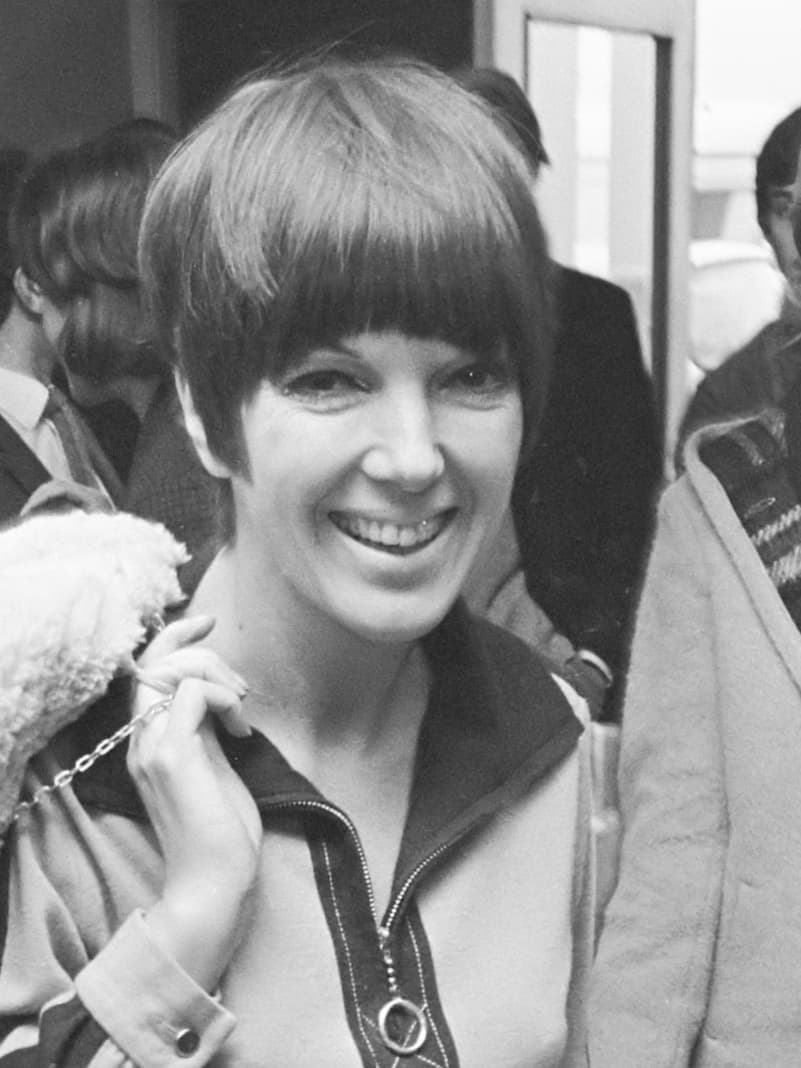
British · Arts
Mary Quant
February 11, 1930 – April 13, 2023
Early life and education
Mary Quant was born Barbara Mary Quant on 11 February 1930 in London, England, and grew up in Blackheath, in southeast London. She was the daughter of Welsh schoolteachers, a background that has often been noted for the combination of educational aspiration and social restraint it represented. Quant later became one of the most recognizable figures in 20th-century fashion, but her early life was not defined by glamour; it was shaped by a disciplined middle-class environment and by the disruptions of wartime Britain.
She studied at Goldsmiths College of Art, where she encountered creative and professional influences that would help shape her later career. Her education gave her a foundation in art and design, but her working life quickly moved beyond the boundaries of conventional training. Quant was drawn to clothing not simply as decoration, but as an expressive and practical form that could respond to the lives of young people. This interest proved decisive in an era when postwar fashion was still dominated by formal tailoring, strict silhouettes, and a strong separation between elite couture and everyday wear.
London itself was an important formative influence. Quant came of age in a city rebuilding after war and opening toward new forms of cultural life. That environment later helped produce the style and attitude associated with “Swinging London,” and Quant became one of its most visible creators. Her early experiences in the capital also placed her in proximity to the city’s evolving art, music, and retail culture, all of which shaped her approach to fashion as something modern, public, and accessible.
Career beginnings
Quant began her professional life by moving toward millinery and fashion design, first working within the structures of the trade and then developing her own ideas. In the mid-1950s she entered the retail world in a way that would become crucial to her success. In 1955 she opened Bazaar, her boutique on King’s Road in Chelsea, with business partner Archie McNair and fellow Goldsmiths graduate Alexander Plunket Greene, who later became her husband. The shop quickly became an important site for a younger, more casual style of dressing.
Bazaar was significant because it was not merely a place to sell clothes; it was a cultural laboratory. Quant’s approach emphasized affordability, novelty, and a direct relationship with a youthful clientele. She understood that young women wanted clothes that felt lively and modern rather than formal and inherited. Her boutique helped make fashion part of a broader youth culture centered on music, nightlife, and a reimagined urban identity. This was a major shift away from the older, more exclusive logic of couture.
Her business instincts were as important as her design instincts. Quant paid attention to how clothes were worn in daily life, not just how they appeared in fashion photographs or on runways. She wanted garments that were practical enough for movement and attractive enough to signal a new social mood. That emphasis on wearability helped establish her reputation and set the stage for the fashion innovations that followed.
The rise of the Chelsea look and the miniskirt
During the 1960s, Mary Quant became one of the key figures in the visual identity of London’s youth culture. Britannica describes her as responsible for the “Chelsea look” and the widespread popularity of the miniskirt and hot pants. Her designs were lively, compact, colorful, and intentionally contemporary, reflecting the energy of young women who wanted to move with greater ease through urban life.
Although fashion historians debate exactly who invented the miniskirt, Quant is among the names most closely associated with its rise. What made her contribution historically important was not only the hemline itself, but the cultural system around it. She helped make shorter skirts acceptable and desirable in mainstream fashion, and she linked them to tights, boots, geometric shapes, and playful styling. In doing so, she changed the silhouette of the decade and influenced the broader aesthetics of popular culture.
Quant’s work also mattered because it aligned with changes in women’s social lives. The postwar generation of young women was entering education, work, and public leisure in greater numbers than before. Clothes that were lighter, less constricting, and less tied to older ideas of respectability suited this new reality. Quant gave those changes visible form. Her fashion language suggested freedom, speed, and self-definition, and it resonated widely in Britain and abroad.
The success of her style was amplified by the media, photography, and the growing international reach of youth culture. Her designs became associated with the atmosphere of “Swinging London,” a period in which fashion, music, art, and commercial energy reinforced one another. Quant was central to that image, and her brand became one of the best-known symbols of 1960s British style.
Business expansion and commercial influence
Quant’s success at Bazaar led to broader commercial opportunities. Her name became linked not only with boutique fashion but with the expansion of youth-oriented style into mass markets. She understood early that modern fashion could be scaled through manufacturing, licensing, and branding. That business sense made her distinctive among designers of the period and helped turn her into a global figure.
She also extended her work beyond clothing into related products and visual identity, helping to establish the idea of a coherent fashion brand. This was particularly important in a decade when consumer culture was accelerating and women’s fashion was becoming increasingly linked to lifestyle rather than individual garments. Quant’s ability to combine design with retail and promotion made her a prototype for later fashion entrepreneurs.
Her work was groundbreaking in another way: it was openly addressed to young women as consumers with their own tastes and purchasing power. That might seem commonplace today, but in the 1950s and early 1960s it represented a real shift. Quant treated youth as a legitimate market and a legitimate source of style innovation. That insight gave her work a durability that went far beyond one trend or one season.
Awards and honors
Mary Quant received major public recognition for her contribution to fashion. The available sources in this profile confirm her broad honors history, including a DBE in 1966 and appointment as a Companion of Honour in 2015, both of which reflect the official recognition of her cultural importance in Britain. These distinctions placed her among the most celebrated creative figures of her generation.
She was also widely honored in popular and critical culture as the designer who helped define the visual vocabulary of the 1960s. That reputation was built not only on the miniskirt but on a larger body of work that included dresses, tights, rainwear, and other garments designed to suit a changing social world. Her awards recognized a career in which creative invention and commercial success were closely linked.
Beyond formal honors, Quant’s influence was acknowledged through exhibitions, retrospectives, documentaries, and museum collections. Institutions such as the Victoria and Albert Museum and the London Museum have presented her work as central to the history of modern dress and to the story of London’s cultural transformation in the 1960s.
Personal life
In 1957, Mary Quant married Alexander Plunket Greene, her business partner and a fellow Goldsmiths alumnus. Their partnership was both personal and professional, and it became part of the mythology surrounding the Bazaar venture and the broader world of Chelsea fashion. The marriage lasted until Plunket Greene’s death in 1990.
The couple had one child, a son named Orlando, born in 1970. Quant’s family life has often been described in connection with her work, but her significance does not rest on domestic biography alone. Rather, her career showed how a woman could build a public identity as a designer, entrepreneur, and cultural tastemaker while also maintaining a family life.
Quant’s personal style and public persona were themselves part of her influence. She projected energy, wit, and confidence, qualities that complemented the youthful and irreverent image of her clothes. In a period when women in business often had to navigate skepticism and gendered expectations, she built a name that was instantly recognizable and commercially powerful.
Later life
In later decades, Quant’s place in fashion history became increasingly secure. She was remembered as one of the figures who helped bring about the democratization of style, making it more responsive to age, movement, and everyday life. Her clothing continued to be discussed as emblematic of a moment when British culture became internationally influential.
Her brand and reputation persisted into the 21st century, and museum exhibitions and retrospectives continued to revisit her work as an essential part of modern design history. Even as trends shifted, the basic principles associated with Quant—youthfulness, practicality, affordability, and a sense of play—remained influential in later fashion and retail culture.
Quant died on 13 April 2023 in Surrey, England, at the age of 93. Her death prompted wide tributes from the fashion world and from cultural institutions that recognized how deeply her work had shaped the image of modern Britain.
Legacy
Mary Quant’s legacy lies in the scale of the change she helped bring about. She did not simply design attractive clothes; she helped transform the relationship between fashion and youth. Her work made the idea of the young consumer central to modern style, and her clothes captured a spirit of liberation that came to define the 1960s.
Her influence is visible in the continuing association of fashion with self-expression, mobility, and independence. She helped normalize shorter hemlines, bold colors, and fun in fashion at a time when seriousness and restraint still held strong authority. For many historians, she stands as one of the clearest examples of a woman who reshaped an entire cultural field through entrepreneurial imagination.
Quant’s significance is also tied to the barriers she overcame. She worked in a male-dominated business environment and in a period when women’s creativity was often expected to remain secondary to established fashion houses. By building her own boutique, her own identity, and her own market, she demonstrated that a woman designer could lead rather than follow fashion change. That achievement remains central to her historical importance.
For these reasons, Mary Quant endures not only as the designer associated with the miniskirt, but as a major architect of 20th-century style. Her work helped define an era, and the language she introduced into fashion continues to shape how modern dress is understood.
Dated achievements
2 indexed.