← All women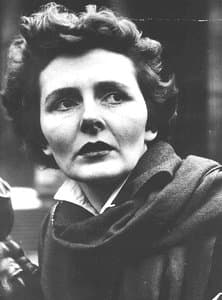
American · Literature
Mary Lee Settle
July 29, 1918 – September 27, 2005
Early Life and Background
Mary Lee Settle was born on July 29, 1918, in Charleston, West Virginia, into a family whose roots in the Kanawha Valley stretched back generations. Her father, Joseph Edward Settle, worked as a civil engineer, and the family's long-standing presence in the region — tied to coal, land, and the industrial transformation of Appalachia — would eventually provide the raw historical material for her most ambitious literary project. Settle grew up amid the social contradictions of a region caught between old agrarian traditions and the rapid, often exploitative, arrival of industrial capitalism.
She was educated at Sweet Briar College in Virginia, a small women's liberal arts institution, though she did not complete a degree there, later studying briefly at Sweet Briar and continuing her education informally through wide reading and immersive experience. Her formal education was interrupted by the upheavals of the Second World War, during which she left college life behind to serve as a WAAF (Women's Auxiliary Air Force) member with the Royal Air Force in Britain — an experience that broadened her worldview considerably beyond the borders of West Virginia and the American South.
Career Beginnings and Development
After the war, Settle worked briefly as a model, actress, and journalist before committing fully to fiction writing. Her early professional life took her through New York and Europe, and she spent extended periods living abroad, including years in Turkey, which would later furnish material for several of her novels, most notably Blood Tie. Her wartime service and subsequent expatriate years gave her a comparative, historically attuned sensibility that distinguished her fiction from more provincial regional writing.
Settle published her first novel, The Love Eaters, in 1954, followed by The Kiss of Kin in 1955. These early works announced her as a serious literary talent, but it was her decision in the late 1950s to begin an ambitious, multi-generational cycle of novels about her native West Virginia that would define her career. She conceived what became known as The Beulah Quintet, a project that would occupy her, on and off, for roughly three decades.
Major Works: The Beulah Quintet and Beyond
The Beulah Quintet consists of five novels — Prisons (1973), O Beulah Land (1956), Know Nothing (1960), The Scapegoat (1980), and The Killing Ground (1982) — though written out of chronological order, together they trace roughly three hundred years of history in a fictionalized Virginia/West Virginia region called Beulah, from the English Civil War era through the twentieth-century labor conflicts of the coalfields. The cycle is widely regarded as one of the most ambitious works of American historical fiction of the twentieth century, notable for its unflinching attention to class conflict, land dispossession, and the long echoes of violence and injustice across generations.
Settle's meticulous historical research set her apart from many of her contemporaries; she was known to spend years studying primary documents, regional archives, and oral histories to authenticate the texture of each era she depicted. Beyond the Quintet, she wrote numerous other novels, including The Clam Shell (1971), Blood Tie (1977), The Killing Ground, and Charley Bland (1989), as well as nonfiction works such as All the Brave Promises (1966), a memoir of her wartime RAF service, and Turkish Reflections: A Biography of a Place (1991), reflecting her long personal engagement with Turkey.
Awards, Honors, and Recognition
Settle's literary achievements were formally recognized when she won the National Book Award for Fiction in 1978 for Blood Tie. In her acceptance remarks, she famously criticized the commercialization of American publishing and the literary establishment's tendency to overlook substantive, historically grounded fiction in favor of fashionable trends — a moment that resonated widely within literary circles and cemented her reputation as an outspoken advocate for serious fiction.
Dissatisfied with what she perceived as the compromises of the major commercial book awards, Settle went on to found the PEN/Faulkner Award for Fiction in 1980, using a portion of her National Book Award prize money as seed funding. The PEN/Faulkner Award, administered by writers rather than publishers, quickly became one of the most respected literary prizes in the United States and remains a lasting institutional legacy of Settle's career, honoring outstanding American fiction annually to this day.
Over her lifetime, Settle received numerous other honors, including a Guggenheim Fellowship, a National Endowment for the Arts fellowship, election to the American Academy of Arts and Letters, and recognition from her home state of West Virginia, which celebrated her as one of its foremost literary figures. She held academic and writer-in-residence positions at several institutions, including Bard College and the University of Virginia, and was closely associated with the MacDowell Colony, an artists' retreat that supported her work throughout her career.
Personal Life
Settle was married multiple times over the course of her life. Her personal relationships and travels — through Britain during the war, through Turkey and other parts of Europe — deeply informed her fiction's cosmopolitan, historically layered perspective. She eventually settled for much of her later life in Charlottesville, Virginia, and its surrounding countryside, maintaining strong ties to both the literary community there (including the University of Virginia) and to her native West Virginia, to which she returned frequently in both person and in her fiction.
Despite the demands of a peripatetic early life and multiple marriages, Settle remained fiercely dedicated to her craft, often describing her writing process as an act of historical excavation as much as imaginative creation. Colleagues and interviewers, including in her extensive 1997 interview for The Paris Review's "Art of Fiction" series, described her as rigorous, opinionated, and deeply committed to the moral seriousness of literature.
Legacy and Historical Impact
Mary Lee Settle's most enduring legacy rests on two pillars: her fiction, particularly The Beulah Quintet, and her institutional contribution to American letters through the founding of the PEN/Faulkner Award. As a novelist, she is remembered as one of the most serious and historically rigorous chroniclers of Appalachian and Southern American history, resisting sentimental or reductive portrayals of the region in favor of complex, morally searching narratives about class, land, and power across centuries.
Her insistence on treating Appalachian history with the same gravity and literary ambition typically reserved for European historical epics helped elevate regional American fiction to a higher critical standing. Scholars of Southern and Appalachian literature continue to study her work for its blend of historical research and narrative craft, and West Virginia institutions, including West Virginia Wesleyan College, have honored her as a defining literary voice of the state.
The PEN/Faulkner Award, meanwhile, stands as a durable institutional monument to her frustration with the commercial pressures on American publishing and her belief that literary merit should be judged by writers, not solely by market forces. Each year's award ceremony implicitly honors Settle's founding vision.
Later Life and Death
Settle continued to write and publish into her later years, producing works of both fiction and nonfiction well into her seventies and eighties. She remained an active, respected voice in American letters, giving interviews, mentoring younger writers, and receiving continued recognition for her body of work. She died on September 27, 2005, at her home in Ivy, Virginia, near Charlottesville, at the age of 87. Her death was noted in major national obituaries, which recalled both her literary accomplishments and her role in shaping the landscape of American literary prizes. Mary Lee Settle is remembered today as a formidable, uncompromising novelist whose Beulah Quintet remains a landmark achievement in American historical fiction, and whose advocacy for literary integrity reshaped how American fiction is recognized and rewarded.
Dated achievements
3 indexed.
- Jul291918Literature
Born in Charleston, West Virginia
Mary Lee Settle was born on July 29, 1918, in Charleston, West Virginia, into a family with deep Appalachian roots that would later inform her Beulah Quintet.
View details Mary Lee Settle - Wikipedia - Nov151978Literature
Wins the National Book Award for Fiction for Blood Tie
Settle won the 1978 National Book Award for Fiction for her novel Blood Tie, set among expatriates in Turkey, marking the peak of critical recognition for her career.