← All women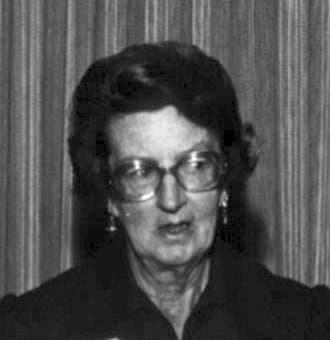
British · Science · Exploration
Mary Leakey
February 6, 1913 – December 9, 1996
Early Life and Background
Mary Douglas Leakey was born on February 6, 1913, in London, England. She spent much of her young life traveling around Europe with her family, exposing her to diverse cultures and historical sites. This exposure significantly influenced her interest in archaeology and prehistory. Educated at a variety of schools, Leakey ultimately took expeditious courses under Noel Hume in archaeology at University College London, as formal university education was inaccessible at the time due to financial and situational constraints.
Career Beginnings and Development
Mary made her debut in the field of archaeology when she worked on excavations, notably those conducted by Dorothy Liddell at Hembury Fort. However, it was her collaboration with Louis Leakey, whom she later married, in Tanzania's Olduvai Gorge that marked the start of her significant contributions to paleoanthropology. Working under challenging conditions, her findings would later revolutionize understanding of early human ancestry.
Major Works, Discoveries, or Accomplishments
In 1959, Mary Leakey made the groundbreaking discovery of the hominin fossil Australopithecus boisei, originally nicknamed "Zinj anthropologisticus". The fossil, dated at 1.75 million years old, secured Mary and Louis Leakey's names in paleoanthropological history. In 1978, she discovered the Laetoli footprints, which provided compelling evidence of bipedal locomotion in Pliocene hominins, approximately 3.6 million years old. These findings were pivotal in reshaping our understanding of human evolution.
Awards, Honors, and Recognition
Mary Leakey's contributions earned her several accolades including honorary degrees from a multitude of universities as well as election as a foreign member of the American Academy of Arts and Sciences. Despite limited formal education, Mary was widely recognized as one of the leading figures in paleoanthropology of the 20th century.
Personal Life
Mary married Louis Leakey in 1936, and together they had three sons, Jonathan, Richard, and Philip. The Leakey family became synonymous with human evolutionary research, with their children continuing the legacy within the anthropological and paleoanthropological community.
Legacy and Historical Impact
Mary Leakey's work laid foundational stones for the field of paleoanthropology, establishing Leakey as a cornerstone of evolutionary studies. Her methodical excavation techniques and exacting standards set new benchmarks in field archaeology. Her discoveries have altered previously held narratives on the timeline and nature of hominin evolution.
Later Life and Death
After Louis Leakey's death in 1972, Mary continued her research work passionately. She passed away on December 9, 1996, in Nairobi, Kenya. Her legacy lives on through the institutions that continue to promote and advance the study of early human life.
Dated achievements
2 indexed.