← All women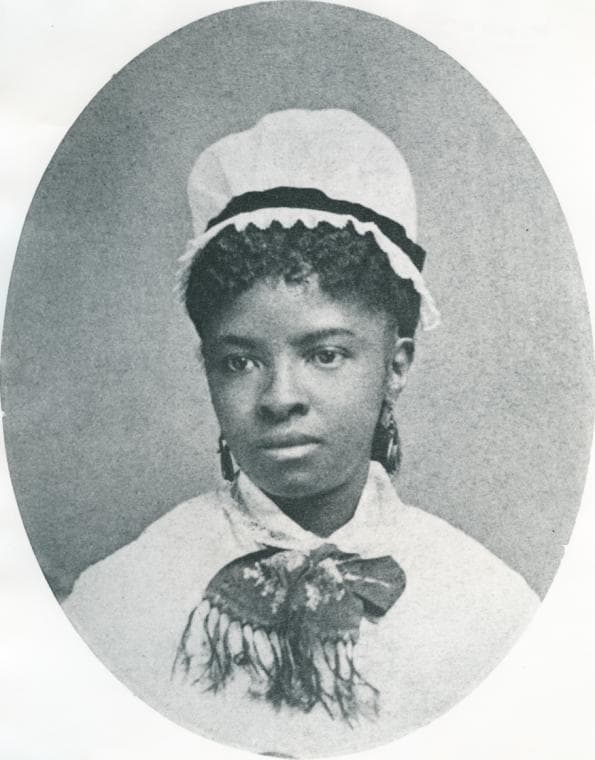
American · Medicine · Activism
Mary Eliza Mahony
May 7, 1845 – January 4, 1926
Early Life and Background
Mary Eliza Mahoney was born on May 7, 1845, in the Dorchester neighborhood of Boston, Massachusetts, to free Black parents Charles Mahoney Sr. of Maryland and Mary Jane (Stewart) Mahoney of Nova Scotia.[1][13][16] Her parents were part of a free African American community in New England that sought relative safety from the intense racial violence and slavery that still existed elsewhere in the United States.[1][4] Growing up in a northern city during the final decades of slavery, the Civil War, and Reconstruction exposed Mahoney to both abolitionist ideas and persistent racial discrimination.
Mahoney attended one of Boston’s schools for African American children, where she received an education that was limited by segregation but nonetheless unusual for Black girls in the mid‑19th century.[1][4] These early experiences with education and community life helped shape her interest in work that combined service, discipline, and advocacy. As a young woman, she began working at the New England Hospital for Women and Children, an institution founded by and for women that offered medical care to women and children and training to female physicians and nurses.[1][4][13]
At the hospital Mahoney initially held support positions, including cook, janitor, washerwoman, and nurse’s aide.[1][13][18] These roles allowed her to observe medical procedures, interact with patients, and witness the early professionalization of nursing while demonstrating her reliability and work ethic. Her years in these jobs laid the groundwork for her later admission to formal nurse training, at a time when Black women faced systematic exclusion from professional education.
Entry into Nursing and Formal Training
By the late 1870s, nursing in the United States was beginning to shift from informal caregiving toward a more structured, hospital‑based profession influenced by Nightingale principles. In this context, Mahoney sought entry into formal training. After approximately fifteen years of work at the New England Hospital, she was accepted into the Training School for Nurses on March 23, 1878.[13] Contemporary accounts emphasize that she was one of 42 women admitted to a demanding 16‑month course, and that her admission was especially notable given widespread racial prejudice and the rarity of Black students in such programs.[1][9]
The hospital’s nursing program required students to work long hours—often more than 12 hours per day—providing direct patient care, maintaining ward cleanliness, and assisting with medical procedures under strict supervision.[1][4][13] Students received theoretical instruction in subjects such as anatomy, physiology, and hygiene, but their training was overwhelmingly practical, emphasizing discipline, moral character, and the ability to work within hierarchies dominated by physicians.
Mahoney’s perseverance through these conditions was extraordinary. The program’s attrition rate was high; only three students completed the course out of her original cohort of more than 40.[1][8] Mahoney’s success reflected not only academic competence but also resilience in the face of racial and gender discrimination. She was navigating a world in which Black women were widely seen as suited only to domestic service, yet she strove to demonstrate that a Black woman could meet the strict standards of professional nursing.
Graduation and Early Professional Career
On August 1, 1879, Mahoney completed the program and received her nursing diploma from the New England Hospital for Women and Children.[8][14] With this achievement, she became the first African American woman in the United States to earn a professional nursing degree and graduate from an American school of nursing.[1][8][10] Historical accounts consistently identify her as the first professionally trained Black nurse in the country, distinguishing her from earlier Black caregivers who lacked formal credentials.[1][4][6]
Following her graduation, Mahoney registered with a Nurses Directory at the Massachusetts Medical Library, becoming the first Black person listed there as a professional nurse.[1] This registration helped physicians and families locate trained nurses and signaled Mahoney’s acceptance, however limited, into the formal medical community. She also joined professional organizations; by 1879 she had become one of the first Black members of the Nurses Associated Alumnae of the United States and Canada, the body that later evolved into the American Nurses Association (ANA).[4][16]
Mahoney chose to focus primarily on private duty nursing, working in the homes of patients rather than in hospital wards.[1][4] This decision was partly strategic: private duty practice offered better pay, more autonomy, and somewhat less direct exposure to institutional racism than hospital employment. She quickly developed a reputation for professionalism, discretion, and high standards of care. Many of her patients were middle‑ and upper‑class white families in New England, reflecting her ability to overcome racial prejudice through competence and demeanor.[1][6]
In private homes, Mahoney cared for postoperative patients, women giving birth, infants, and people with chronic illnesses. Nurses and historians have noted that she insisted on punctuality, cleanliness, and accurate record‑keeping, and that she avoided gossip or undue familiarity with household members.[4][13] Her conduct helped elevate the status of nursing as a respectable, skilled profession for women and demonstrated that Black nurses could embody the highest ideals of professional conduct.
Professional Philosophy and Civil Rights Advocacy
Mahoney’s career unfolded during a period of intense racial segregation and discrimination in the United States. Many nursing schools and hospitals explicitly barred Black applicants, and professional associations were slow to admit African American members.[4][6] In this context, Mahoney’s achievements carried an implicit civil rights dimension. She believed that excellence in practice could serve as a powerful argument against racist assumptions, and she used both her work and her public speeches to advocate for racial justice within nursing.
Mahoney stressed that African American nurses should demonstrate impeccable standards in hygiene, technique, and patient interaction, not to conform to unfair expectations but to make discrimination less defensible.[4][6] She supported efforts to broaden opportunities for Black students in nurse training programs and encouraged Black nurses to seek membership in professional organizations.
Her advocacy aligned with a broader movement among Black health professionals who sought both integration in mainstream institutions and the strengthening of Black‑run health care organizations. While Mahoney did not leave extensive written records, reports of her speeches and participation in meetings show that she combined a quiet, dignified personal style with clear, principled positions on equality.[14][18]
National Association of Colored Graduate Nurses and Leadership
By the early twentieth century, the growing number of Black graduate nurses faced persistent barriers to employment and professional recognition, despite their qualifications. In response, leaders including Mary Eliza Mahoney helped create the National Association of Colored Graduate Nurses (NACGN) in 1908.[4][9] The organization sought to support Black nurses, improve educational opportunities, and challenge discriminatory practices in hospitals and professional associations.
Mahoney played a visible role in the NACGN’s early years. She attended conventions and delivered speeches that highlighted inequalities in nursing education and employment, urging members to persevere and push for change.[11][14] At one NACGN gathering, she called for more African American students to be admitted into nurse training programs and emphasized the importance of solidarity among Black nurses in confronting discrimination.[11][14]
Within NACGN, Mahoney’s stature as the first professionally trained Black nurse made her a symbolic figure and elder stateswoman. Her presence at meetings underscored the organization’s historical roots and reminded younger nurses that progress had been hard‑won. NACGN went on to campaign for the acceptance of Black nurses into the American Nurses Association and other mainstream bodies, and Mahoney’s example was frequently invoked in those debates.[4][14]
Work with the Howard Orphan Asylum and Community Service
Mahoney’s commitment to public service extended beyond individual patient care. In the 1910s, she served on the board and worked with the Howard Orphan Asylum for Black Children and the Aged in Kings County, New York.[13] This institution provided care and shelter to African American children and elderly people at a time when such populations were often excluded from mainstream social services.
At the Howard Orphan Asylum, Mahoney’s nursing expertise and organizational skills contributed to improving standards of care and institutional administration. Her involvement reflected a broader tradition among Black women activists who combined professional work with service in charities, schools, and reform organizations. Through this board position, she supported efforts to provide dignified care for vulnerable members of the Black community, embodying a holistic view of health that encompassed social and economic conditions as well as medical treatment.[13]
Suffrage and Political Engagement
A dedicated advocate for women’s rights, Mahoney followed the progress of the woman suffrage movement closely. When the Nineteenth Amendment guaranteeing women’s voting rights was effectively ratified on August 18, 1920, she acted immediately. That same day, records show that Mahoney registered to vote in Boston’s Ward 13, and local historians credit her as one of the first women in Boston to register after suffrage.[6][7]
Her voter registration listed her occupation as “trained nurse”, linking her professional identity to her new political rights.[7] At approximately 76 years of age, Mahoney’s decision to register on the amendment’s ratification day underlined her belief that civic participation was integral to the struggle for racial and gender equality. While Black women in many southern states continued to face disenfranchisement through Jim Crow laws, Mahoney’s action in Boston illustrated how some Black professional women in the North used the new constitutional right.
This episode is frequently highlighted in accounts of her life because it connects the history of nursing to the broader story of American democracy. Mahoney’s presence among Boston’s earliest women registrants demonstrates that nurses were not merely caregivers but also citizens who sought to shape public policy and social conditions.[6][7][16]
Later Life, Illness, and Death
In her later years, Mahoney continued to be respected within the nursing community. She remained associated with NACGN and supported younger nurses through advice and encouragement. Her health, however, began to decline in the early 1920s. In 1923 she was diagnosed with metastatic breast cancer, and she lived with the disease for about three years.[13]
Mahoney’s experience with cancer during a period when effective treatments were limited further illustrates the realities of early twentieth‑century medicine. She received care connected to the New England Hospital for Women and Children, the institution that had shaped her career.[6][13] On January 4, 1926, she died at age 80 in the Boston area.[1][4][6][13][16] She was buried in Woodlawn Cemetery in Everett, Massachusetts, where her grave has since become a site of remembrance for nurses and historians.[4]
Awards, Honors, and Posthumous Recognition
Mahoney’s influence did not end with her death. In 1936, the National Association of Colored Graduate Nurses established the Mary Mahoney Award to recognize significant contributions to improving interracial relations in nursing.[4][18] The award was later continued by the American Nurses Association, which used it to honor nurses whose work advanced diversity, inclusion, and equity in the profession.[4]
In 1976, Mahoney was inducted into the American Nurses Association Hall of Fame, acknowledging her pioneering achievements as the first professionally trained African American nurse and her broader impact on nursing standards.[4][16][17] In 1993, she was inducted into the National Women’s Hall of Fame, placing her among the most influential women in American history.[4][16][17] These honors reflected a long‑overdue recognition of her role in opening nursing to African Americans and in demonstrating the importance of Black women’s leadership in health care.
Educational and professional institutions continue to commemorate Mahoney. Various nursing schools and associations share her story in curricula and public events, emphasizing the lessons of her perseverance, professionalism, and advocacy.[9][10][15] Articles, biographies, and museum exhibits present her as a symbol of the intersection of race, gender, and the emergence of modern nursing.
Personal Life
Little is known about Mahoney’s personal life beyond her professional and public activities, but available sources agree that she never married and had no children.[4][8] Her life centered on her work, her commitments to racial justice and women’s rights, and her relationships with colleagues in the nursing profession.
Contemporaries described her as reserved, dignified, and deeply dedicated to her patients.[4][13] She valued privacy, avoided self‑promotion, and allowed her work to speak for itself. At the same time, she participated actively in professional meetings and conventions, using those forums to address inequities in nursing education and employment.
Legacy and Historical Impact
Mary Eliza Mahoney’s legacy is multifaceted. As the first professionally trained African American nurse in the United States, she demonstrated that Black women could succeed in a field that had previously been almost entirely closed to them.[1][4][6] Her graduation and licensure contested racist notions of incompetence and helped legitimize the presence of Black nurses in hospitals, private homes, and professional organizations.
Mahoney also contributed to the broader professionalization of nursing. Her strict standards for cleanliness, punctuality, and discretion matched emerging ideals of scientific, ethical practice.[4][13] By excelling in the demanding environment of private duty nursing, she helped change public perceptions of nurses from servants to skilled health professionals. Her insistence on professionalism influenced both Black and white colleagues and set examples for educational programs.
In terms of civil rights, Mahoney’s life illustrates how professional achievement and activism could reinforce each other. Through her work with NACGN, her advocacy for the inclusion of Black nurses in mainstream associations, and her early registration as a voter after the Nineteenth Amendment, she used her status to press for racial and gender equality.[4][6][7][14] While she did not participate in large‑scale mass protests, her speeches and organizational involvement contributed to incremental but important changes in policy and practice.
Historians of nursing and African American history now view Mahoney as a key figure in the intersection of health care and social justice. Her story appears in textbooks, scholarly articles, and public history projects as an example of how individuals can transform institutions from within.[4][6][18] The continued presentation of the Mary Mahoney Award and her dual induction into major halls of fame ensure that new generations of nurses and students encounter her legacy.
Mahoney’s impact is also visible in the increased diversity of the nursing profession. Though inequities persist, the presence of Black nurses in hospitals, community clinics, and leadership positions owes much to early pioneers like Mahoney who broke barriers under far more hostile conditions. By demonstrating that excellence and inclusion are inseparable, she helped chart a path toward a more equitable health care system.
Historical Debates and Biographical Details
Some historical details of Mahoney’s life, particularly her exact birth date and certain aspects of her early biography, have been the subject of scholarly discussion. While many modern references, including English‑language and other international encyclopedias, list May 7, 1845 as her birth date,[1][2][5][13][16][17] other sources have cited alternative dates in April.[8][12] The uncertainty stems from incomplete documentation and variations in nineteenth‑century records. Major biographical compilations now tend to adopt May 7 as canonical, emphasizing its support in more recent nursing scholarship.[13][16]
Despite such discrepancies, the central elements of Mahoney’s story—her pioneering status as the first professionally trained Black nurse, her role in founding NACGN, her advocacy for Black nurses, her early suffrage participation, and her posthumous recognition—are widely agreed upon across reputable sources.[1][4][6][8][9][10][14][16] This consensus underscores the robustness of her historical significance even when minor biographical details remain debated.
Overall, Mary Eliza Mahoney stands as a landmark figure in both nursing and American social history. Her life shows how determination, skill, and principled activism can challenge entrenched barriers, expanding the horizons of possibility for marginalized communities. In hospitals, classrooms, and civic spaces, her name continues to represent the intertwined pursuits of professional excellence and justice.
Dated achievements
7 indexed.
- May071845Medicine
Birth of Mary Eliza Mahony
Mary Eliza Mahony was born in Boston, Massachusetts. Her birthdate is primarily recorded as May 7, 1845.
View details Wikipedia - Mary Eliza Mahoney - Mar231878Medicine
Accepted into New England Hospital nursing school
Mahony was accepted into nursing school on March 23, 1878, signaling a significant milestone.