← All women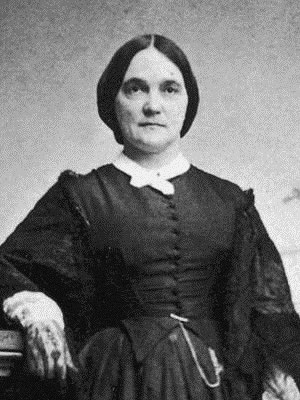
American · Literature
Mary Chestnut
March 31, 1823 – November 22, 1886
Early Life and Background
Mary Boykin Chesnut (née Miller) was born on 31 March 1823 on her maternal grandparents’ plantation, Mount Pleasant, near Stateburg in the High Hills of Santee, South Carolina.[3][4][10] She was the eldest child of Stephen Decatur Miller and Mary Boykin Miller, a union that linked two influential families of the state’s planter and political elite.[4][10] Her father served as a member of the U.S. House of Representatives, later as governor of South Carolina, and then as a U.S. senator; he was an outspoken advocate of states’ rights and nullification during the intensifying sectional conflicts of the 1820s and 1830s.[4][10][17]
Growing up in this environment, Mary was immersed from childhood in the political vocabulary of tariffs, sovereignty, and slavery. The family maintained plantations in the Stateburg area and later spent time on a farm in Mississippi, reflecting the mobility and land‑based wealth typical of the slaveholding aristocracy.[8][10] As a young girl she was educated at private schools in Camden and Charleston and attended a French school for young ladies, receiving instruction that emphasized languages, literature, and social refinement rather than formal higher education, which remained largely closed to women in her era.[1][8]
Her mother’s Boykin relatives and her father’s prominence meant that Mary came of age within a network of kin and patrons deeply invested in the ideology of slavery and the defense of Southern institutions. At the same time, exposure to books and conversation fostered her intellectual curiosity and facility with language. These early experiences—planter privilege combined with political intensity and literary training—would later shape her distinctive voice as a diarist who both participated in and critically examined the world of the slaveholding elite.[3][4][9]
Marriage and Social Position
Mary met her future husband, James Chesnut Jr., when she was a teenager; accounts note that she married him at around age 17 in 1840Jefferson Davis.[3][4][17]
The marriage anchored Mary within the highest circles of Southern society. The couple lived principally in Camden, South Carolina, but also spent time in Washington, D.C., during James’s Senate service, and in Charleston and Columbia during the secession crisis and war.[4][10][17] Mary’s role as a senator’s and later a Confederate officer’s wife brought her into intimate contact with national and regional leaders, including Jefferson and Varina Davis, whom she befriended.[6][17] Her social position required mastery of the rituals of elite sociability—calls, dinners, balls—and the management of enslaved labor within their household.
Within this framework, Mary’s intellectual and emotional life was rich and complex. She read widely, kept notebooks, and cultivated a sharp, ironic tone in conversation and letters. Sources suggest that her marriage, though enduring, was not always easy; James’s political and military commitments, and their lack of surviving children, contributed to a sense of restlessness that found expression in her writing.[3][9][17] Yet it was precisely this marriage that granted her the vantage point from which she would later observe, with unusual clarity, the unraveling of the world she inhabited.
Secession Crisis and the Beginnings of the Diary
By the late 1850s, sectional tensions over slavery and the expansion of the slave system had intensified. James Chesnut emerged as an ardent supporter of secession, and Mary moved with him through the political maelstrom of conventions and legislative sessions.[4][17] After Abraham Lincoln’s election in November 1860, South Carolina called a convention that voted unanimously to secede from the Union in December.[14][17] James resigned from the U.S. Senate rather than continue to serve under a federal government he regarded as hostile to Southern interests.[1][4]
In this charged atmosphere, Mary turned more deliberately to writing. On 18 February 1861, as South Carolina and other Deep South states constructed the new Confederate government, she began the Civil War diary that would become her major work.[14] She wrote initially in small, dated volumes, recording her impressions of the secession winter in Charleston and Columbia as politicians debated the future and families prepared for conflict. Mary accompanied James on some of his missions and witnessed high‑level meetings, while also observing the emotional turmoil of friends facing the prospect of war.[1][4]
Her earliest entries capture a mix of triumphalist rhetoric among secessionists and private foreboding. She remarked on the overconfidence of Southern leaders, the fragility of the region’s economy, and the human cost that war would bring. From the beginning, she noted the presence and labor of enslaved people within elite households, often juxtaposing white anxieties about honor and sacrifice with the unspoken realities of bondage on which their lifestyles depended.[3][9][17] This capacity to see—and at times critique—the contradictions of her class would deepen as the war unfolded.
Wartime Experience and Development of the Diary (1861–1865)
During the Civil War years, roughly 1861–1865, Mary Chesnut kept and repeatedly revised what is often called her “diary,” though scholars emphasize that it is more accurately described as a hybrid of journal, memoir, and literary reconstruction.[3][5][17] She began with contemporaneous notes, then copied, expanded, and reorganized them into longer, more polished narratives, a process she continued for years. The work thus reflects both real‑time observation and retrospective interpretation.
Mary and James were present in Charleston during the bombardment of Fort Sumter in April 1861, an event she described with vivid detail, noting how spectators watched from rooftops and harbor vantage points as the first shots of the war were fired.[4][14][17] As James served on the staff of P. G. T. Beauregard and later as an aide to Jefferson Davis, Mary traveled with him to Montgomery and Richmond, the successive Confederate capitals. Her diary records conversations with Davis, Varina Davis, and other leaders, capturing disagreements over strategy, anxieties about foreign recognition, and the personal strains of leadership.[3][6][17]
At the same time, much of her writing revolves around the domestic world of elite white women: hospital visits, mourning rituals, scarcity of goods, and the psychological toll of casualty lists. She commented on fashion, food, gossip, and scandal, offering an unvarnished view of how war permeated the most intimate aspects of life. Mary was especially attuned to the position of enslaved people. While she never repudiated slavery as an institution, she expressed unease and sometimes condemnation of the cruelty she observed, speculating at times about interracial relationships and the long‑term consequences of bondage.[3][9][12]
By August 1865, she closed the diary’s wartime narrative, though she continued to revisit and reshape it in succeeding years.[1] The result is a text that scholars describe as a “vivid picture of a society in the throes of its life‑and‑death struggle,” offering both broad political commentary and sharply etched studies of individuals confronting the collapse of a world.[3]
Postwar Life and Literary Revision
The defeat of the Confederacy left Mary and James Chesnut, like many members of the planter elite, in diminished circumstances. Emancipation and the destruction of the Confederate state transformed their social and economic world. James continued to be involved in public affairs in South Carolina during Reconstruction, but the couple’s wealth and influence were far from their prewar heights.[3][4][17]
For Mary, the postwar years were defined in large part by the labor of revision. She returned to her wartime notebooks, copying them into fair volumes and reworking scenes, descriptions, and dialogues to heighten their literary impact. Scholars have identified multiple manuscript versions, indicating that she repeatedly reshaped her narrative, moving beyond straightforward diary entries toward a crafted work of art.[3][9][17] Her aim seems to have been to produce a text that would stand as both historical record and serious literature.
Mary’s revisions reveal her ongoing effort to reconcile affection for her friends and region with a critical awareness of their failings. She intensified her portrayals of Confederate leaders’ arrogance and miscalculations, elaborated on the everyday suffering of women and enslaved people, and deepened her exploration of themes such as honor, loss, and moral responsibility.[3][9] Throughout, she maintained the distinctive voice—a mix of irony, empathy, and sharp judgment—that has led many critics to rank her among the most important American writers of the nineteenth century.
Despite these efforts, her writings remained unpublished during her lifetime. She hoped for an audience but never saw the book in print, a frustration that underscores the limited avenues for Southern women’s authorship in the postbellum decades. The manuscripts stayed with family and eventually attracted the attention of editors and historians who would bring them to broader public view in the twentieth century.[3][5][17]
Later Life and Death
In her later years, Mary lived primarily in Camden, South Carolina, maintaining connections with friends and family and continuing to write and revise. Her health gradually declined, and on 22 November 1886, she died at age 63 in Camden.[3][4][10][17] She was buried in Knight’s Hill Cemetery next to her husband, James, who had died the previous year, marking the end of a partnership that had shaped much of South Carolina’s political and military history in the mid‑nineteenth century.[11][17]
At the time of her death, Mary was known locally as an intelligent and accomplished woman but had not achieved the literary fame her diary would later generate. Her manuscripts, however, preserved an extraordinary record of the Civil War from the perspective of a well‑placed insider, waiting for later generations to recognize their significance.[3][10]
Publication History and Major Works
Mary Chesnut’s reputation rests almost entirely on the work derived from her Civil War diary. After her death, relatives and scholars undertook the complex task of editing her manuscripts. In 1905, an edited and abridged version appeared under the title A Diary from Dixie, introducing her voice to a broader public.[1][3][17] Although shaped by its editor’s choices, this volume nevertheless conveyed the diary’s power and led early twentieth‑century readers to appreciate its insight into Confederate society.
Over time, scholars became increasingly aware of the differences between Mary’s original notebooks, her later fair‑copy volumes, and the 1905 edition. In the late twentieth century, historian C. Vann Woodward, working with the full range of manuscripts, produced a new, extensively annotated edition titled Mary Chesnut’s Civil War, published in 1981.[3][17][19] Woodward’s edition sought to restore Mary’s complex structure and voice, presenting the work not merely as a diary but as a sophisticated literary creation.
In 1982, Woodward’s Mary Chesnut’s Civil War received the Pulitzer Prize for History, a recognition that effectively canonized Mary’s diary as both historical source and major work of American literature.[3][5][17] Critics hailed the book for its rich characterization, narrative drive, and nuanced portrayal of slavery and gender in the Confederacy. Some described it as the finest literary achievement by a Confederate author, and as one of the most important women’s texts about war in U.S. history.[5][9]
Today, the diary exists in several formats—original manuscripts held in archives, scholarly editions, and accessible modern reprints and digital versions. While Mary did not publish other major works, her diary’s scale and depth make it functionally equivalent to a multi‑volume memoir and social history, encompassing the years from secession to the war’s end and their aftermath.[3][9]
Awards, Honors, and Recognition
Although Mary Chesnut herself did not receive formal literary awards during her lifetime, the twentieth‑century reception of her diary has brought considerable posthumous recognition. The Pulitzer Prize for History awarded to Woodward’s edition in 1982 signaled that her work had moved beyond regional interest to occupy a central place in American historiography.[3][5][17] Literary scholars have lauded her as a major writer whose blend of diary, memoir, and social critique anticipates later genres of women’s life writing.
Institutions such as the National Park Service, the American Battlefield Trust, and public history projects associated with Civil War battlefields regularly feature Mary in interpretive materials.[4][6][14][17] Documentaries, including segments in Ken Burns’s The Civil War, and educational resources from organizations like the Bill of Rights Institute, use her diary to illustrate the complexity of Confederate society and women’s perspectives on war.[6][12][17]
Within South Carolina, her contributions are commemorated as part of the state’s cultural heritage. Essays and monographs, such as those published through university presses and civil war curricula, explore her life and writings in detail, further cementing her status as one of the most important diarists of the Civil War.[9][18]
Personal Life and Relationships
Mary’s personal life was shaped by her marriage to James Chesnut Jr. and by her friendships within the Confederate elite. The couple did not have surviving children, a fact that may have intensified her investment in writing as a legacy. Her close relationship with Jefferson and Varina Davis provided her with access to the intimate side of Confederate leadership; she observed both their public roles and private strains.[6][17]
Mary’s writings reveal the importance of female friendship networks among planter women. She recorded conversations with other women about grief, fear, and doubts regarding slavery and the war, highlighting how these relationships provided emotional support and avenues for critical reflection. At the same time, she chronicled rivalries, scandals, and social tensions within elite circles, documenting the fragile cohesion of a class under pressure.[3][9][17]
Her attitude toward enslaved people, while shaped by the paternalistic worldview of her class, was complex. She sometimes expressed sympathy and described instances of harsh treatment with disapproval, yet she never fully renounced the belief system that justified slavery.[3][9][12] This ambivalence has made her diary a key text for studying how white Southern women navigated moral questions about bondage and race.
Legacy and Historical Impact
Mary Boykin Chesnut’s principal legacy lies in her Civil War diary, which has become a cornerstone source for understanding the social history of the Confederacy. Historians use her work to analyze the mentality of the slaveholding aristocracy, the inner workings of Confederate political leadership, and the daily lives of Southern women during wartime.[3][4][17] Her vivid descriptions of events such as the secession debates, the bombardment of Fort Sumter, the deprivations of the home front, and the psychological collapse accompanying defeat provide an unparalleled window into the era.
From a literary perspective, scholars regard her diary as a masterpiece of nineteenth‑century American prose. Its narrative complexity, character development, and thematic richness place it alongside works by contemporaries such as Harriet Beecher Stowe and Kate Chopin, while its hybrid genre anticipates later forms of autobiographical writing by women.[5][9][17] Critics have emphasized her skillful use of irony, dialogue, and scene construction to convey both the grandeur and the moral bankruptcy of the slaveholding class.
Mary’s diary also plays a crucial role in challenging romanticized myths of the “Lost Cause.” While she sometimes echoes the rhetoric of honor and sacrifice, she also exposes the cruelty of slavery, the arrogance of leaders, and the deep fractures within Confederate society. Her portrayal of interracial relationships, sexual exploitation, and the vulnerability of women and enslaved people complicates sanitized narratives of the Old South.[3][9][12]
For women’s history, her work is particularly significant. It documents how elite white women experienced war not only as spectators and sufferers but as acute observers and interpreters. Mary’s efforts to turn her life into literature reflect broader struggles for women’s intellectual authority in a society that restricted their public roles. Her diary has thus become a key text in studies of gender, authorship, and memory in the nineteenth‑century United States.[3][9][17]
Assessment
Mary Boykin Chesnut occupies a unique position as both participant in and critic of the slaveholding world. Born into privilege and married to power, she nonetheless used her pen to probe the contradictions and tragedies of the society that sustained her. Her diary’s combination of immediacy and crafted reflection continues to offer fresh insights to historians, literary scholars, and general readers.
Although she did not hold political office or receive recognition as a professional author in her lifetime, the long arc of her diary’s publication and reception illustrates how women’s voices can gain influence across generations. From its beginnings in February 1861 to its Pulitzer‑recognized edition in the 1980s, her work has moved from private manuscript to public testament, reshaping our understanding of the American Civil War and the world of the Southern planter elite.[3][5][17]
Dated achievements
3 indexed.
- Mar311823Literature
Birth of Mary Boykin Miller Chesnut
Born into a prominent planter family in South Carolina.
View details Mary Boykin Chesnut Biography - Britannica - Feb181861Literature
Mary Chesnut begins her Civil War diary
Mary Chesnut starts her famous Civil War diary.
View details