← All women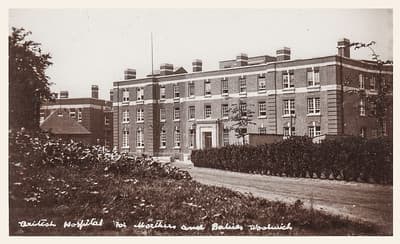
American · Medicine · Activism
Mary Breckinridge
February 17, 1881 – May 16, 1965
Early Life and Family Background
Mary Carson Breckinridge was born on February 17, 1881, in Memphis, Tennessee, into one of the South’s most prominent political families.[1][2][5] Her father, Clifton Rodes Breckinridge, served as a U.S. Congressman and later as American minister (ambassador) to Russia, while her mother, Katherine Carson Breckinridge, came from a socially distinguished lineage.[1][2] Her grandfather, John C. Breckinridge, had been Vice President of the United States under James Buchanan and a Confederate general, making the Breckinridge name synonymous with political power and public life.[2][9]
Mary was the second of four children.[1][2] Her childhood was marked by mobility and exposure to international affairs due to her father’s diplomatic career. She spent periods of her youth in Washington, D.C., and abroad, including time in Russia when her father served at the U.S. legation.[1][2] This transnational upbringing gave her fluency in French and a cosmopolitan outlook unusual for American women of her generation.[1][7]
Despite the privileges of class and education, Mary’s early life was also shaped by the strict gender norms of the late nineteenth century. Expectations for upper‑class Southern women centered on marriage, motherhood, and charitable work rather than professional careers. Biographical accounts emphasize that Mary initially followed this conventional path, but her experiences of personal loss and observation of poverty and inadequate health care would later push her beyond those constraints.[2][6][7]
Education and Formative Influences
Mary received private schooling appropriate to her class, including study at Miss Porter’s School, a renowned girls’ preparatory school in Farmington, Connecticut, and training in languages and social accomplishments.[1][7] As a young woman she moved in diplomatic and political circles, gaining familiarity with public issues and the workings of government.
A turning point in her life came with the illness of a friend’s child. According to nursing historians, this episode awakened Mary’s sense of the need for skilled, organized nursing care and influenced her decision to seek formal training as a nurse.[2][5] Her choice was striking in its context: at the beginning of the twentieth century, nursing was one of the few socially acceptable professions for women, but it remained physically demanding, poorly paid, and still achieving full professional status.
Mary enrolled at St. Luke’s Hospital School of Nursing in New York City, one of the leading hospital‑based training programs of the era.[5] She completed the rigorous curriculum and graduated in 1910, formally entering the nursing profession.[5][2] Nursing school exposed her to the emerging ideals of scientific, standardized nursing practice associated with figures such as Florence Nightingale and with the growing field of public‑health nursing led by organizations like the Visiting Nurse Service of New York.
Early Marriages, Motherhood, and Personal Tragedy
Mary’s early adult life intertwined marriage, motherhood, and her developing sense of vocation. In 1904, at age 23, she married Henry Ruffner Morrison, an Arkansas lawyer.[1][10] The marriage lasted only about two years; Morrison died suddenly in 1906, leaving Mary a young widow.[2][10] Sources note that this loss was the first of several profound personal tragedies that would shape her subsequent commitment to maternal and child health.[6][10]
In 1912, she married again, to Richard Ryan Thompson, president of Crescent College and Conservatory for Young Women in Eureka Springs, Arkansas.[1][2] The couple had two children: a son, Clifton, who died in 1916 from appendicitis, and a daughter, Polly, who died in 1918 from gastroenteritis.[1][6][10] Losing both of her children in early childhood profoundly affected Mary. Several biographical narratives describe how these tragedies, combined with the earlier death of her first husband, led her to renounce conventional expectations of marriage and family and to devote herself wholly to work on behalf of other women’s children.[6][10]
Mary’s second marriage deteriorated as her professional ambitions and commitment to nursing grew. She eventually left Thompson, and the marriage was dissolved.[2][6] In the context of the early twentieth‑century United States—especially within Southern society—divorce was socially stigmatized, particularly for women. Mary’s willingness to accept that stigma in order to pursue her vision of a new kind of nursing and midwifery underscores both her determination and the obstacles she faced in reshaping her life.
Transition to Public‑Health Nursing and World War I Service
After leaving her husband, Mary intensified her work in nursing. During the 1918 influenza pandemic, she supervised nurses, gaining firsthand experience of large‑scale public‑health crises and the limits of existing health systems.[2] Her work during this period drew her attention to rural and poor communities that received little or no organized care, foreshadowing her later focus on Appalachia.
Following World War I, Mary joined the American Committee for Devastated France, a private relief organization that provided health and social services in war‑torn regions.[5][7] In 1918, she worked as a public‑health nurse in European villages heavily affected by the fighting.[5][7] This experience was pivotal: in France and Great Britain she encountered established systems of nurse‑midwifery, where professionally trained midwives delivered babies, provided prenatal and postpartum care, and integrated their work into broader public‑health initiatives.[5][8]
Mary closely studied these European models. She saw that in rural areas with limited physician access, trained midwives could dramatically reduce maternal and infant mortality. At the same time, she observed that in the United States—especially in rural regions—childbearing women often relied on untrained birth attendants or lacked skilled support altogether.[8][11] The contrast convinced her that the nurse‑midwife concept could be translated to American conditions and used to address the high maternal death rates she found appalling.[8][10]
Advanced Training in Public Health and Midwifery
Determined to adapt European midwifery standards to the United States, Mary undertook additional formal study. She completed advanced courses in public‑health nursing at Teachers College, Columbia University, emphasizing community‑based preventive care, statistical record‑keeping, and program evaluation.[5][7] These studies provided the theoretical framework she would later apply in designing the Frontier Nursing Service’s district nursing model.
Recognizing that midwifery skill was central to her vision, Mary traveled to London and studied at the British Hospital for Mothers and Babies, earning a formal midwife certificate.[2][5][7] At the time, British midwifery training was among the most rigorous in the world, with standardized curricula, supervised clinical practice, and formal certification. American medicine, by contrast, had largely marginalized midwifery, treating childbirth as an increasingly physician‑dominated domain and often associating midwives with immigrant or marginalized communities.
Mary’s decision to obtain British credentials placed her at the forefront of professional midwifery in the United States. She became one of a very small number of American nurses with high‑level formal midwifery training, positioning her to introduce new standards of practice. Her blend of public‑health expertise and midwifery skill would prove decisive in the design of her rural health‑care system.
Founding the Kentucky Committee for Mothers and Babies and the Frontier Nursing Service
In 1925, after returning to the United States, Mary focused on the mountainous region of southeastern Kentucky, particularly around Hyden in Leslie County. Existing accounts describe how she assessed conditions there—high maternal and infant mortality, widespread poverty, limited road access, and scarce physicians—and concluded that the area was ideal for demonstrating the potential of nurse‑midwifery.[5][8][9]
On 28 May 1925, Mary founded the Kentucky Committee for Mothers and Babies, the organization that would soon evolve into the Frontier Nursing Service (FNS).[12] The Committee’s mission was to provide comprehensive family medical care, including prenatal and postnatal services, general nursing, and vaccinations, to mothers and babies in rural mountain communities.[12][5] The service relied on highly trained nurses—many with British midwifery qualifications—who could function autonomously in isolated districts.
Later in 1925, Mary established Wendover, Kentucky, as the headquarters of the new enterprise. She developed her home, the so‑called “Big House”, into a combined clinic, headquarters, and residence for nurse‑midwives.[9][5] From Wendover, FNS organized district nursing routes that reached deep into the Appalachian hollows. Nurses traveled primarily on horseback, carrying medical supplies and records in saddlebags and visiting patients in their homes.[9][8]
Mary’s model integrated several innovative elements:
- Use of trained nurse‑midwives as primary providers for childbirth and maternal care.[5][11]
- Horseback‑based district nursing to reach remote settlements beyond road and rail networks.[8][9]
- Systematic collection of clinical data to evaluate outcomes and demonstrate effectiveness.[11]
- Emphasis on preventive public‑health services alongside curative care.
In time, FNS would be recognized as the first sustained and organized rural nurse‑midwifery service in the United States, a deliberate adaptation of European midwifery standards to American rural needs.[5][8][11]
Development of the Frontier Nursing Service and Clinical Outcomes
Throughout the late 1920s and 1930s, Mary built FNS into a comprehensive rural health‑care system. She recruited nurses and midwives from the United Kingdom and the United States, requiring high levels of training and setting strict standards of practice.[5][9] Many nurses lived at Wendover and served specific geographic districts, forming close relationships with the families they attended.
Mary placed particular emphasis on clinical record‑keeping. As documented in medical histories, FNS maintained detailed logs of pregnancies, deliveries, complications, and outcomes.[11] These data allowed systematic comparison of maternal and infant mortality rates in the FNS service area with state and national figures. By 1939, analyses showed that the region served by FNS had dramatically lower maternal and infant mortality than Kentucky and the United States as a whole, highlighting the effectiveness of the nurse‑midwifery model.[11]
FNS’s work was far broader than childbirth assistance. Nurses provided general medical care, including treatment of minor illnesses and injuries, vaccination campaigns, health education, and referral for more complex cases.[5][12] Mary also cultivated relationships with physicians and hospitals, ensuring that midwives could obtain consultation or transfer patients when necessary. Her approach sought to demonstrate that midwives and physicians could collaborate rather than compete, thereby improving outcomes in underserved areas.
Mary’s leadership extended to administration and fundraising. For several years, FNS was largely underwritten by her personal funds and the donations she solicited from wealthy patrons and philanthropic organizations.[6] She traveled widely to lecture and raise money, framing FNS as both a humanitarian project and a pioneering experiment in rural health systems. Her social connections and credibility as a well‑born Southern woman helped attract support, but she also faced skepticism from segments of the medical establishment who resisted the expansion of midwifery.
Creation of the Frontier Graduate School of Midwifery
Recognizing the need to train more nurse‑midwives, Mary established the Frontier Graduate School of Midwifery in 1928 as part of the FNS enterprise.[5][6] Later accounts sometimes cite 1939 in connection with the school’s formal development, particularly as the need for midwives increased during World War II, but the roots of the educational program were in the late 1920s.[5][7]
The school accepted registered nurses for advanced study in midwifery and public‑health nursing. Its curriculum combined classroom instruction, supervised deliveries, and district nursing experience in the Appalachian region. This integrated approach allowed trainees to learn both clinical skills and the organizational principles of rural health care, such as case documentation, community relations, and coordination with physicians.[5]
Mary’s midwifery school was the first in the United States to provide sustained, systematic training and certification in nurse‑midwifery.[13][5] Over the decades, it evolved through several institutional forms and eventually became Frontier Nursing University, a graduate institution offering distance‑education programs in nurse‑midwifery and nurse practitioner fields.[5] This educational legacy ensured that Mary’s model would influence generations of practitioners beyond Kentucky.
Scale of Service and Later Institutional Developments
By 1959, under Mary’s leadership, FNS and its predecessor, the Kentucky Committee for Mothers and Babies, had safely delivered approximately 10,000 babies, often referred to as "saddlebag babies" because nurses carried their equipment on horseback.[yearOnly context] The service had also provided health care to thousands of additional residents across the region.[yearOnly context] These numbers reflect both the scale of the operation and its sustained presence in Appalachian communities.
After Mary’s death, FNS continued to expand and institutionalize her vision. In 1967, the organization opened the Mary Breckinridge Hospital at Wendover, named in her honor.[yearOnly context] The hospital extended the maternal and child health mission by offering inpatient services while maintaining the community‑based ethos of the original district nursing model. The enduring use of her name for the hospital symbolized the recognition of her role as founder and visionary.
Awards, Honors, and Recognition
Mary’s contributions to nursing and public health were acknowledged over time by professional organizations and historians. She was eventually inducted into the American Nurses Association Hall of Fame, recognizing her as one of the profession’s most influential figures.[8] Her pioneering work in midwifery and rural health also led to numerous celebratory profiles in nursing history and public‑health literature, which emphasize both the innovation and measured effectiveness of her programs.[2][7][11]
In 1995, three decades after her death, Mary was inducted into the National Women’s Hall of Fame in Seneca Falls, New York.[6] The Hall cited her as the nation’s foremost pioneer in the development of American midwifery and lauded her achievement in bringing modern health care to remote rural areas. This honor placed her alongside other major figures in women’s history and affirmed the gendered significance of her work: a woman using a profession dominated by women—nursing—to challenge and reshape patriarchal medical structures and rural health policy.[6]
Mary has continued to be the subject of historical scholarship and biography. Her own memoir, Wide Neighborhoods: A Story of the Frontier Nursing Service, and subsequent historical works analyze the creation of FNS, its outcomes, and its implications for health‑system design.[11] Contemporary nursing schools and midwifery programs frequently invoke her name when discussing the roots of nurse‑midwifery and community‑based care.
Personal Life, Beliefs, and Leadership Style
Mary’s personal life, marked by early privilege and deep grief, influenced her leadership style and philosophy. Biographers emphasize that she converted her losses—widowhood, the deaths of her children, and the dissolution of her second marriage—into a motivation to protect other women and children from preventable suffering.[6][10] She famously declared that having lost her own children, she would devote herself to the children of others, making maternal and child health the central focus of her professional life.
As a leader, Mary combined patrician social skills with practical, sometimes austere expectations of her staff. She demanded high standards of discipline, clinical skill, and moral commitment from the nurses and midwives of FNS. At the same time, she lived among them at Wendover and shared in the hardships of travel, weather, and limited resources.[9][11] Her correspondence and memoir reveal both strategic vision and a willingness to adapt the service to changing conditions.
Mary’s religious and ethical commitments also informed her work. She saw FNS as a moral enterprise grounded in responsibility to the poor and vulnerable, but she framed her mission in terms that appealed broadly to secular philanthropists and professional audiences. This dual language—moral and scientific—helped secure support across diverse constituencies.
Legacy and Historical Impact
Mary Carson Breckinridge’s legacy can be understood along several dimensions:
- Professional Midwifery in the United States: She is widely credited with introducing and professionalizing nurse‑midwifery in the United States, creating the first sustained rural service staffed by trained midwives and the first formal school dedicated to midwifery training.[5][10][13]
- Rural Health‑System Design: FNS demonstrated that a network of district nurses and midwives, supported by a central headquarters and meticulous record‑keeping, could provide comprehensive care in areas lacking hospitals and physicians.[5][8][11] Her model influenced later rural health initiatives and continues to inform debates over primary‑care delivery in underserved regions.
- Evidence‑Based Public Health: By collecting and analyzing outcome data, Mary showed that midwifery‑based care could reduce maternal and infant mortality at comparatively low cost.[11] Her work provided an early example of using epidemiological evidence to advocate for policy and programmatic change.
- Women’s Professional History: Mary’s career illustrates how a woman in the early twentieth century could transform a gendered occupation—nursing—into a platform for structural innovation and leadership. She navigated and challenged gender norms by becoming an administrator, fundraiser, and public intellectual, not simply a bedside nurse.[2][6][7]
- Institutional Continuity: The continuing existence of Frontier Nursing Service and Frontier Nursing University, along with the Mary Breckinridge Hospital, ensures that her influence is not only historical but institutional.[5] These organizations trace their origins directly to her vision and maintain a focus on rural and underserved populations.
Despite the demonstrated effectiveness of her model in Appalachia, historians note that nurse‑midwifery did not fully take root across the United States during her lifetime.[12] Factors such as resistance from segments of the medical profession, regulatory barriers, and differing regional needs limited broader adoption. Nonetheless, the renewed interest in midwifery and community‑based care in the late twentieth and early twenty‑first centuries has led scholars and practitioners to revisit Mary’s work as a precursor to contemporary reforms.
Later Life and Death
Mary remained actively involved in FNS administration and advocacy well into her later years. She continued to oversee programs, mentor younger nurses and midwives, and engage in fundraising and public speaking. Even as transportation and medical technologies evolved, she defended the core principles of district nursing and midwifery that had proven effective in Appalachia.[5][11]
On May 16, 1965, Mary Carson Breckinridge died in Hyden, Kentucky, the center of the region she had served for four decades.[1][5][7] She was 84 years old. Accounts of her death emphasize that she spent her final days surrounded by the community and institutions she had built, a fitting close to a life devoted to rural mothers and children.
Following her death, FNS staff, local families, and the broader nursing community commemorated her contributions. Later‑generation scholars would situate her among the most influential figures in American nursing and women’s history. The ongoing work of Frontier Nursing Service and Frontier Nursing University, along with continued recognition in professional halls of fame and historical writing, ensures that Mary’s name remains central to discussions of midwifery, rural health, and women’s leadership in medicine.
Dated achievements
2 indexed.
- Feb171881Medicine
Birth of Mary Carson Breckinridge
Mary Carson Breckinridge was born in Memphis, Tennessee.
View details A Century of Stories: Mary Breckinridge - May161965Medicine
Death of Mary Carson Breckinridge
Mary Carson Breckinridge died in Hyden, Kentucky.
View details