← All women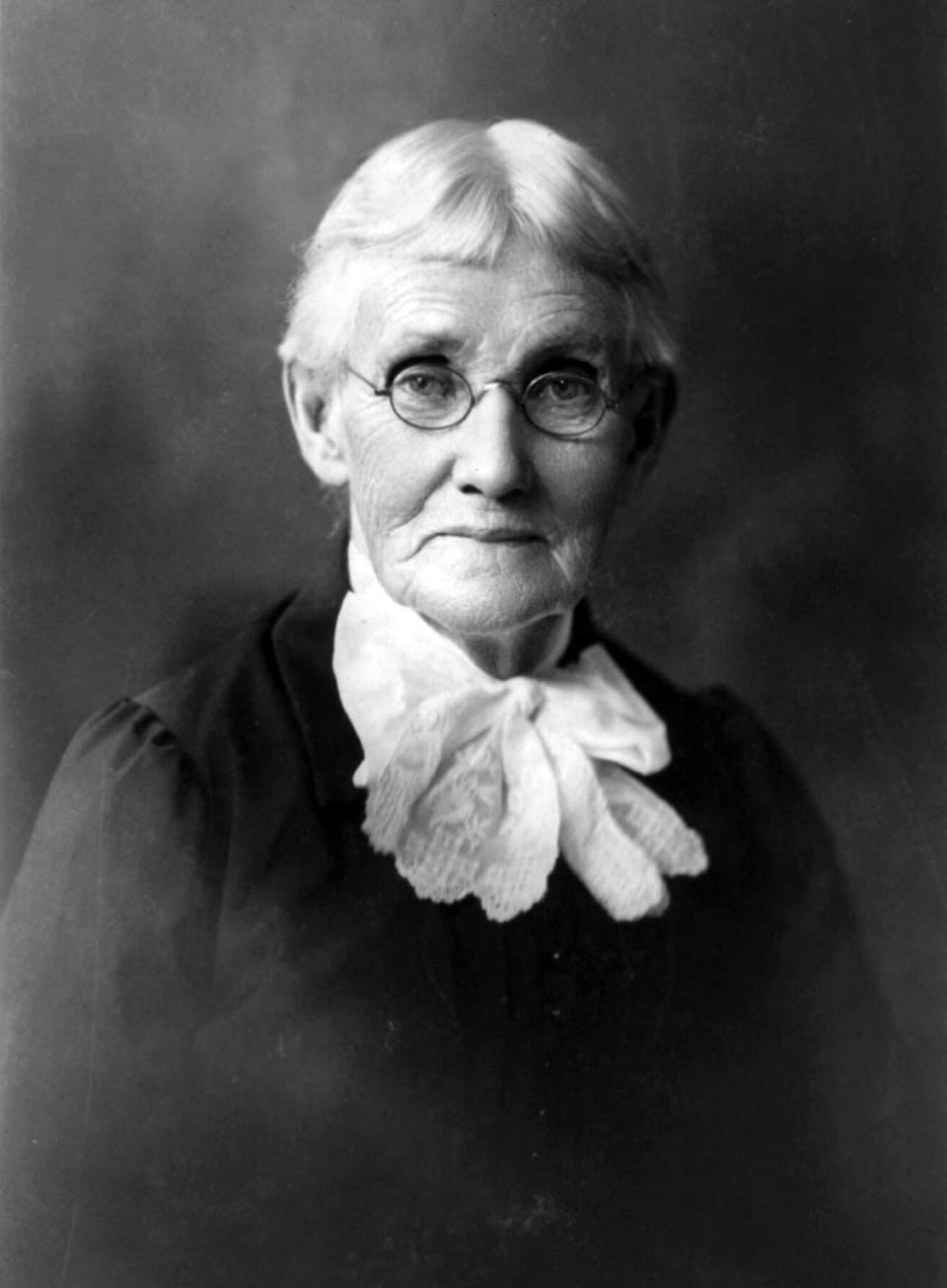
American · Medicine · Activism
Mary Ann Bickerdyke
July 19, 1817 – November 8, 1901
Early Life and Background
Mary Ann Ball was born on July 19, 1817, in a log cabin near Mount Vernon, in Knox County, Ohio. Her mother died when Mary Ann was still a small child, and she was subsequently raised by her grandparents and later an uncle, growing up in the modest, hardworking circumstances typical of rural Ohio farm families in the early nineteenth century. This early experience of loss and self-reliance would shape the resilient, practical character for which she later became famous.
As a young woman, Mary Ann attended Oberlin College, one of the few American institutions of the era to admit women, though she did not complete a formal degree there. She also studied botanic and eclectic medicine — an alternative medical tradition that relied on herbal remedies and was more accessible to women than the male-dominated allopathic medical schools of the time. This informal training in nursing and herbal medicine gave her practical skills that, decades later, would prove indispensable on Civil War battlefields.
In 1847, she married Robert Bickerdyke, a widower, and the couple settled in Cincinnati before eventually moving to Galesburg, Illinois, a town with strong abolitionist and religious reform sentiments connected to Knox College. Robert Bickerdyke died in 1859, leaving Mary Ann a widow with two young sons to support. She worked as a "doctress," providing home remedies and nursing care to Galesburg's residents, developing a reputation as a capable, if unconventional, healer in her community.
Career Beginnings: The Call to War
When the Civil War erupted in April 1861, Galesburg's Congregational church, like many Northern congregations, organized efforts to support Union troops. In June 1861, the town's physician, Dr. Benjamin Woodward, read aloud in church a soldier's letter describing the wretched, disease-ridden conditions at the Union Army camp at Cairo, Illinois — a low, swampy site where inadequate sanitation was killing far more soldiers than enemy fire. Moved to action, Mary Ann Bickerdyke — then in her mid-forties, widowed, and with grown sons who could manage without her — volunteered to personally deliver a wagonload of supplies collected by the congregation and to assess conditions herself.
She departed for Cairo on June 9, 1861, arriving to find hospital tents filled with filth, soldiers lying in their own waste, contaminated food, and virtually no organized system of care. Bickerdyke immediately set to work scrubbing hospital wards, reorganizing kitchens, improving food quality, and imposing basic sanitary discipline. She had no official military appointment and no formal nursing credential, yet she acted with the authority of someone who would not be turned away. Within weeks, mortality rates in the camps she oversaw began to improve.
Major Accomplishments During the Civil War
Bickerdyke's effectiveness caught the attention of General Ulysses S. Grant and General William Tecumseh Sherman, both of whom came to trust and rely on her extraordinary organizational abilities. She was eventually appointed as an agent of the United States Sanitary Commission, though she frequently operated with an independence that unsettled army bureaucracy. She earned the enduring nickname "Mother Bickerdyke" from the soldiers she cared for, who regarded her with a mixture of awe and deep affection.
Over the course of the war, Bickerdyke followed Union armies through nineteen major battles and engagements, including Fort Donelson, Shiloh, Vicksburg, and the Atlanta Campaign, as well as Sherman's March to the Sea. She established and ran field hospitals, organized diet kitchens to provide proper nutrition for wounded and recovering soldiers, coordinated the laundering of bedding and bandages on a massive scale, and personally scoured battlefields at night with a lantern searching for wounded men who might otherwise have been left to die.
She was famously unafraid to confront officers of any rank when she believed soldiers were being mistreated or neglected. In one widely recounted episode, when a surgeon complained to General Sherman that Bickerdyke was undermining his authority, Sherman reportedly replied that she outranked him and there was nothing he could do about it, as she answered only to God and President Lincoln. This anecdote, though perhaps embellished over time, captures the remarkable degree of latitude and respect she commanded despite holding no formal military rank — an extraordinary circumstance for a woman in the mid-nineteenth century military hierarchy.
Bickerdyke also organized and managed convalescent kitchens and laundry operations on an industrial scale, at times overseeing operations that produced meals and clean linens for thousands of soldiers daily. She recruited and trained other women as nurses and cooks, effectively building an informal logistics and care network that filled gaps left by the underdeveloped official army medical corps.
Awards, Honors, and Recognition
Although Bickerdyke received no formal military honors during her lifetime — reflecting the era's limited institutional recognition of women's wartime contributions — she was celebrated informally and extensively by the soldiers and officers she served. She was one of only a small number of women granted the right to ride in Union Army veteran parades after the war, an honor reflecting the deep respect of the men she had nursed.
In 1886, Congress granted her a modest pension of $25 per month in recognition of her wartime service, a rare formal acknowledgment for a woman's Civil War contributions. After her death, the town of Galesburg, Illinois — supported by veterans' organizations — erected a bronze statue in her honor at Linwood Cemetery in 1906, depicting her cradling a wounded soldier. This memorial remains a site of historical pilgrimage and recognition to this day.
Personal Life
Bickerdyke's personal life was marked by considerable hardship interwoven with her public service. Widowed in 1859 with two sons, James and Hiram, she left them in the care of others in Galesburg while she pursued her nursing mission, a choice that was unusual and even controversial for a mother of the period. Her devotion to the soldiers she served often meant long absences from her own family, and she continued advocacy work for veterans well into her later years, sometimes at financial cost to herself.
After the war, she remained active in veterans' affairs, working with the Grand Army of the Republic (GAR) to help former soldiers secure pensions, jobs, and medical care. She also worked briefly in California to help resettle veterans and later assisted the Salvation Army in its charitable work, continuing her lifelong pattern of hands-on humanitarian labor.
Legacy and Historical Impact
Mary Ann Bickerdyke's legacy endures as one of the preeminent examples of grassroots, largely self-appointed female leadership in American military medicine. Unlike more institutionally sanctioned figures such as Dorothea Dix, who served as the Superintendent of Army Nurses, Bickerdyke operated largely outside formal channels, relying on sheer competence, moral authority, and the backing of grateful soldiers and sympathetic generals to accomplish her work. She is often cited alongside Clara Barton as one of the two most famous female relief workers of the Civil War.
Her work helped demonstrate, in a very public and undeniable way, the critical importance of sanitation, nutrition, and organized logistics in military medicine — principles that would influence the future professionalization of nursing and the development of the American Red Cross and modern military medical corps. Her example also contributed to a broader cultural shift in perceptions of women's capabilities, showing that women could exercise authority, organizational command, and even implicit challenge to military rank when the cause was just.
Later Life and Death
In her later years, Bickerdyke settled in Kansas, continuing her advocacy for veterans' welfare even as her own health declined. She died on November 16, 1901, in Bunker Hill, Kansas, at the age of 84. She was returned to Galesburg, Illinois, for burial, the town from which her wartime mission had begun four decades earlier. Her statue in Linwood Cemetery continues to stand as a testament to her service, and her name remains prominently featured in histories of Civil War nursing, women's contributions to American military history, and the broader narrative of humanitarian relief work during wartime.
Dated achievements
2 indexed.
- Jul191817Medicine
Birth of Mary Ann Bickerdyke
Mary Ann Bickerdyke was born on July 19, 1817, in Knox County, Ohio, initiating the life of one of America's pioneering war nurses.
View details Bickerdyke, Mary Ann (1817–1901) - Nov081901Medicine
Death of Mary Ann Bickerdyke
Mary Ann Bickerdyke passed away on November 8, 1901, in Bunker Hill, Kansas, concluding her legacy as a transformative figure in military nursing.