← All women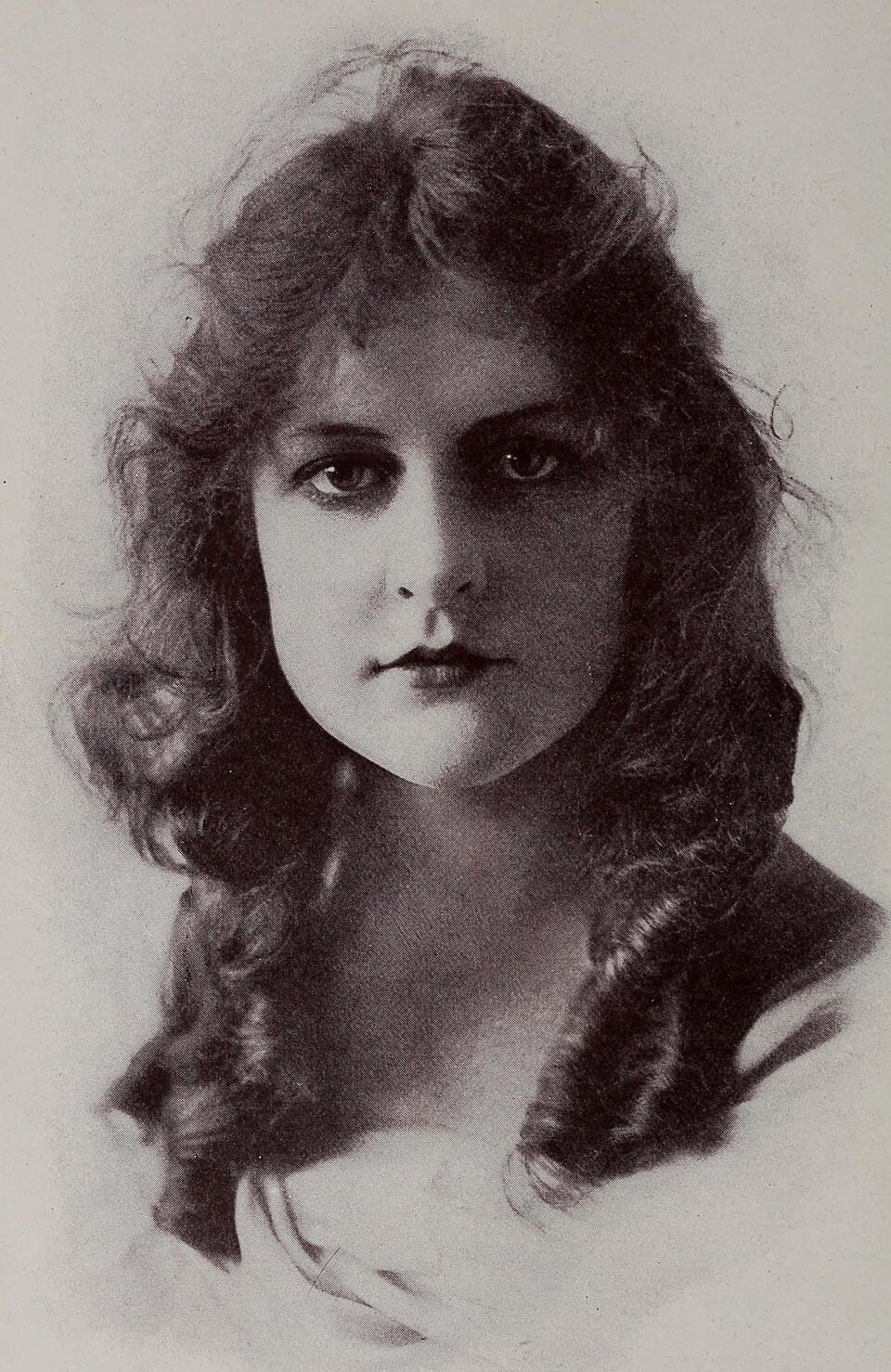
Swedish, American · Politics · Activism
Mary Anderson
August 27, 1872 – January 29, 1964
Early Life and Background
Mary Anderson was born on 27 August 1872 on her parents’ farm outside Lidköping, in Västra Götaland, Sweden.[1] Growing up in a rural district, she experienced the realities of small-scale agriculture and domestic labor in a working-class family. Formal education opportunities for girls in such settings were limited, and Anderson’s early life was defined more by practical work and economic necessity than by schooling.[1]
Biographical accounts describe a childhood shaped by hard work and modest means, conditions that later informed her sympathy for exploited workers and especially for women in low‑paid jobs.[1] As industrialization and migration reshaped Europe and North America at the end of the 19th century, many Swedes left rural districts for cities or for the United States; Anderson would eventually join this movement and become part of the wider Scandinavian immigrant community that contributed significantly to American labor activism.
Emigration to the United States and Early Work
In 1896, Anderson emigrated from Sweden to the United States, settling in the Midwest.[1] Shortly after arriving, she took up a series of low‑paid positions, including work in factories and garment shops.[1] These jobs immersed her in the rough conditions of industrial labor: long hours, piece‑rate wages, hazardous environments, and limited bargaining power for workers, particularly women.
While exact job titles and employers are less documented, sources emphasize that Anderson herself experienced the same exploitation she later fought.[1] Her firsthand knowledge of sweatshop conditions and her status as an immigrant worker gave her a strong sense of solidarity with other women in similar positions. In this context she became involved with the International Ladies’ Garment Workers’ Union (ILGWU), one of the key unions organizing women in the needle trades.[1]
Union Organizing and Rise in the Labor Movement
By the late 1890s, Anderson had become an active union member. She participated in organizing efforts among garment workers, helping to bring women into collective action to demand fairer wages and safer workplaces.[1] Her ability to communicate with rank-and-file workers and her practical understanding of their needs made her a respected figure in union circles.
In 1900, Anderson’s growing prominence was recognized when she was elected a national organizer for the ILGWU.[1] This role required extensive travel, meeting with local unions, and assisting in campaigns to unionize shops and coordinate strikes. As a national organizer, she helped link local struggles to broader strategies, strengthening women’s presence within the labor movement.
The ILGWU was among the largest unions representing women workers, and Anderson’s leadership therein was significant in a period when few women held national posts in labor organizations. Her work contributed both to broader union growth and to the development of women’s labor activism, laying the foundation for her later transition to government service.
Entry into Federal Service: Women in Industry Service
The outbreak of World War I and the accompanying expansion of war industries led to increased numbers of women entering the workforce, often in jobs traditionally held by men. Concerns over working conditions for these women prompted the U.S. Department of Labor to create new units focused on their welfare.
In 1911, Anderson began working for the Women in Industry Service, a newly formed agency within the Department of Labor tasked with studying and improving conditions for women workers.[1] Her appointment marked a transition from union organizing to federal public service, but she carried with her the same commitment to practical, worker-oriented reforms.
Within this agency, Anderson contributed to investigations into wages, hours, and health and safety issues in industries that employed large numbers of women, such as textiles and manufacturing.[1] Her field experience proved invaluable; she could interpret data not just in statistical terms but in terms of lived experience on the shop floor.
By 1918, Anderson had risen to the position of assistant director of the Women in Industry Service.[1] In this capacity, she helped guide federal wartime policy on women’s employment, balancing the demand for labor with concerns about exploitation and overwork. Her leadership during the war years demonstrated that women from working-class backgrounds could successfully administer national programs.
Creation of the Women’s Bureau and Anderson’s Appointment
After World War I, federal officials recognized that issues affecting women workers were not merely temporary wartime concerns but permanent aspects of a modern industrial economy. As a result, the temporary Women in Industry Service was reorganized.
In 1920, Congress and the Department of Labor established the Women’s Bureau as a permanent unit dedicated to the welfare of wage-earning women.[1] The Bureau received a broad mandate to conduct research on women’s employment, gather data on working conditions, and advocate for policies that would safeguard women’s health, economic security, and rights at work.
On 5 June 1920, Mary Anderson was appointed the first director of the Women’s Bureau.[2] Biographical accounts emphasize that she was the first woman "up from the ranks" of labor to head an executive department-level bureau in the federal government.[2] Her appointment marked a historic breakthrough: an immigrant former factory worker now led a significant federal unit shaping national labor policy for women.
As director, Anderson oversaw staff who conducted studies on wages, hours, occupational safety, and industrial legislation affecting women.[2] She insisted that recommendations be grounded in detailed empirical research and in conversations with women workers themselves, rather than in abstract assumptions. Her tenure set the tone for the Bureau’s reputation as a reliable, fact-based resource on women’s labor issues.
Major Policy and Research Contributions
Under Anderson’s leadership, the Women’s Bureau produced influential reports that documented the realities of women’s work across industries and regions. Though specific titles are not exhaustively listed in general biographies, themes included the status of women in manufacturing, the needs of women in agriculture and service industries, and the impact of new labor legislation on their wages and hours.[1][2]
One major arena of her work was the promotion of minimum wage and maximum hour legislation for women. Anderson and her staff studied both the economic and health consequences of excessively long workdays, advocating for state and federal laws that would set reasonable limits and protect women from exploitative schedules.[2] She also supported occupational safety reforms, drawing attention to hazards in factories where women worked with machinery, chemicals, or poorly ventilated environments.
Another area of contribution was the documentation of discrimination against women workers and the barriers they faced in advancement and pay equity.[1] While the language of the period was different from later feminist terminology, Anderson’s research and advocacy laid groundwork for later equal pay campaigns by highlighting persistent wage gaps and occupational segregation.
Throughout the 1920s and 1930s, Anderson’s Bureau often served as an information resource for Congress, state legislatures, and reform organizations when they deliberated labor standards.[2] The Bureau’s studies provided empirical evidence that reformers could use to argue for protective labor laws, and Anderson herself was frequently consulted as an expert on women’s work.
International Representation and Global Influence
Anderson’s expertise was not confined to domestic policy. In 1922, she represented the United States at the first International Labour Organization (ILO) conference on women workers.[1] Her participation signaled that U.S. experience with women’s labor reform had international relevance and that American officials were engaged in broader debates about standards for women’s work worldwide.
At the ILO, Anderson contributed to discussions on issues such as maternity protection, night work, and conditions in industries employing large numbers of women. Although the detailed proceedings are not summarized in concise biographies, her presence as a delegate highlighted the growing recognition of women experts in international labor policy.
This international role helped diffuse ideas about labor standards and reinforced the notion that regulation of working conditions was part of a transnational movement. It also amplified Anderson’s influence, as she exchanged information with counterparts from Europe and other regions, bringing comparative perspectives back to the Women’s Bureau.
Service Under Five Presidents and Later Career
Mary Anderson remained director of the Women’s Bureau for roughly a quarter-century, serving under five U.S. presidents
Biographical sources note that she continued as director until 1944, when she retired from the Bureau.[1][2] During the New Deal era, she and the Bureau contributed research and advice that informed programs such as wage and hour standards, though specific programmatic details are more extensively documented in specialized labour history literature than in brief biographical sketches. After leaving government service, Anderson remained involved with labor and women’s organizations, continuing to advocate for fair treatment of women in industry and supporting initiatives to extend and strengthen labor standards.[1] Her enduring reputation as a practical, worker-centered reformer meant that her views carried weight even in retirement. Available biographical summaries focus primarily on Anderson’s public career and provide limited detail about her personal life. They emphasize her identity as a Swedish immigrant, a former garment worker, and a union organizer who rose to a high government post.[1][2] There is no widely cited evidence in these sources of marriage or children, suggesting either that she remained single, that her family life was not prominently recorded, or that later chroniclers prioritized her professional achievements. What is clear is that Anderson’s life was structured around work and activism. Her move from Sweden to the United States, her years in low‑paid jobs, her union organizing, and her decades in Washington, D.C., formed a continuum of engagement with labor issues. The absence of extensive personal detail in standard references reflects the era’s tendency to document public roles more than private relationships for women reformers. Biographical sources describe Anderson as highly respected within the American labor movement and among public officials.[1][2] While specific awards or formal honors are not extensively enumerated in the brief biographical sketches consulted, her appointment as founding director of the Women’s Bureau itself functioned as a recognition of her expertise and leadership. Later historical accounts of U.S. labor policy and women’s history continue to cite Anderson as a key figure in the institutionalization of women’s labor issues within the federal government.[1][2] Her contributions are often discussed in scholarly works on the Women’s Bureau and in histories of women’s employment during the first half of the twentieth century, amounting to a form of posthumous recognition. Mary Anderson’s legacy rests on her role in creating and shaping the Women’s Bureau as a permanent part of the Department of Labor and on her broader impact on labor policy for women. She demonstrated that a woman who had personally experienced industrial exploitation could successfully lead a major federal agency.[2] Through the Bureau’s research and advocacy, Anderson helped to normalize the idea that women’s employment required specific attention in public policy. The Bureau’s reports provided evidence that supported minimum wage and maximum hour laws, occupational safety regulations, and recognition of gender-based disparities in wages and job opportunities.[1][2] Her work contributed to gradual improvements in working conditions for millions of women in manufacturing, service, and other sectors, and it laid a foundation for later debates about equal pay, equal opportunity, and anti-discrimination laws. While the language and frameworks of Anderson’s time differed from later feminist policy, her focus on concrete protections for women workers aligned with the broader trajectory of women’s rights.[1] Anderson’s immigrant background also underscores the role of migrants in building U.S. social reform institutions. Coming from a Swedish farm to the heart of the federal government, she embodied a transnational story of mobility and activism. Historians of labor and women’s history often cite her as a central figure when tracing the evolution of federal attention to women’s work. After retiring as director of the Women’s Bureau in 1944, Anderson continued to reside in Washington, D.C., maintaining connections to the labor and women’s communities she had served.[1][2] Her long life allowed her to see significant changes in women’s legal and economic status, including the postwar expansion of women’s employment and early stirrings of mid‑20th‑century women’s rights advocacy. On 29 January 1964, Mary Anderson died of a stroke at her home in Washington, D.C.[1] She was 91 years old. Her death marked the end of a career that had spanned from the age of sweatshops and early union struggles to the era of modern federal labor standards. Though she did not become a household name outside specialist circles, Anderson’s impact remains embedded in the institutional history of the Department of Labor and in the ongoing work of the Women’s Bureau. Her life demonstrates how persistent effort within both unions and government can gradually reshape the legal and social environment for women workers.Personal Life
Awards, Honors, and Recognition
Legacy and Historical Impact
Later Life and Death
Dated achievements
3 indexed.
- Aug271872Activism
Birth of Mary Anderson
Mary Anderson was born on her parents’ farm outside Lidköping, Sweden, later becoming a leading U.S. labor organizer.
View details Mary Anderson Biography - Jun051920Politics
Appointed first director of the U.S. Women’s Bureau
Appointed first director of the U.S. Women’s Bureau, becoming the first woman from labor to lead a federal executive department.