← All women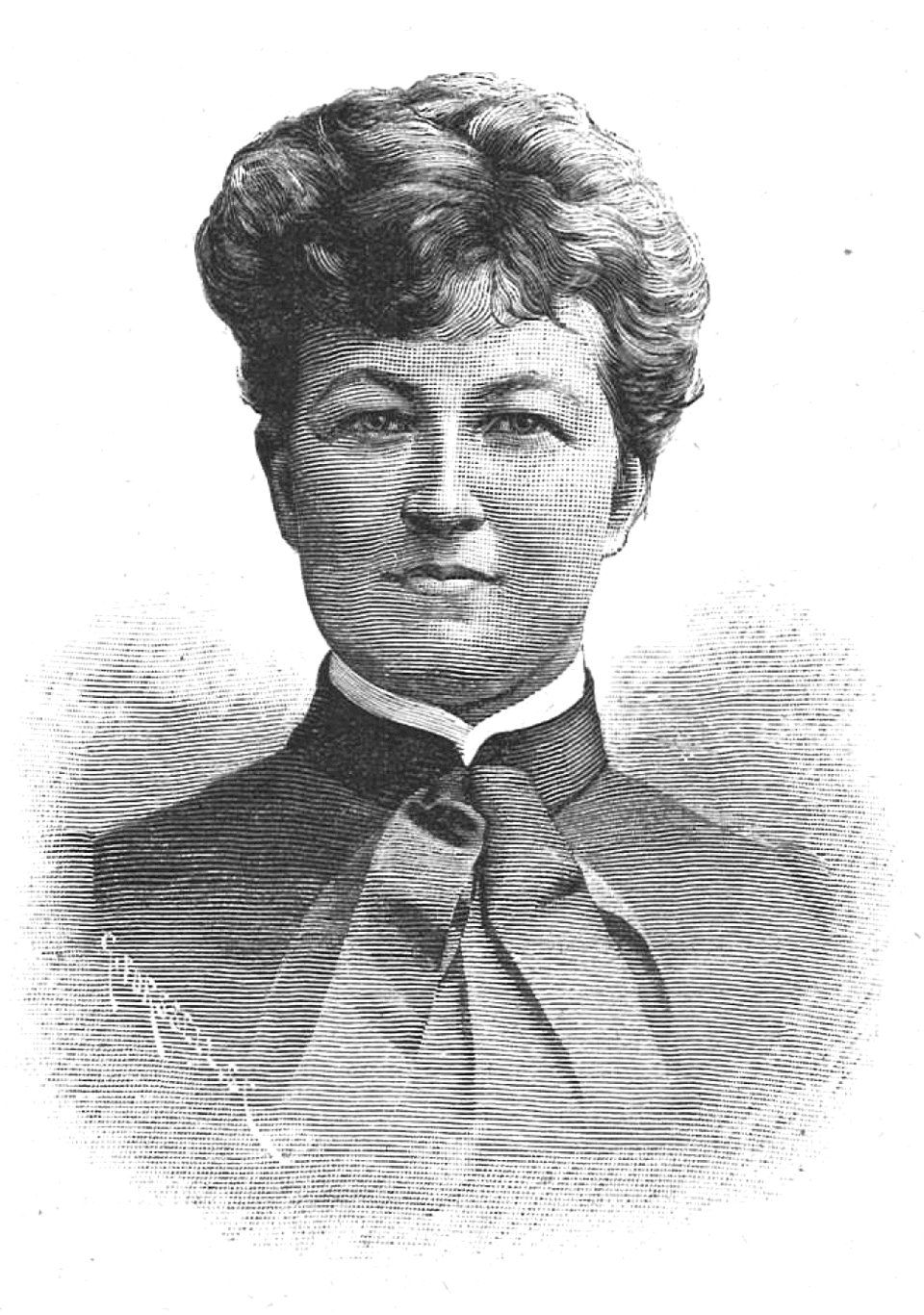
Swedish, British · Sports · Activism · Science
Martine Bergman-Osterberg
October 7, 1849 – July 29, 1915
Early life and background
Martina Sofia Helena Bergman was born on 7 October 1849 in the rural parish of Hammarlunda, in what was then Malmöhus County, southern Sweden.[1][2][6][9] She grew up in an agricultural community where girls’ schooling was limited and strongly oriented toward domestic roles.[6][9] The Swedish-language biographical tradition notes that she was known in her youth as Sofia Helena Martina Bergman and that her early surroundings gave her a keen awareness of the constraints placed on women.[9]
Little is recorded in the standard English-language sources about her immediate family, but accounts agree that she obtained enough formal education to work as a teacher, governess and librarian in Sweden before turning to gymnastics.[3][8] These occupations required literacy, organisational ability and a degree of independence unusual for women of her provincial background, and they prepared her for later responsibilities in educational administration and college leadership.
In 1879 Bergman entered the Royal Central Gymnastics Institute in Stockholm, the national centre for Swedish gymnastics founded on the system of Pehr Henrik Ling.[3][4][7][8] She studied there from 1879 to 1881, mastering both the theory and practice of Ling’s scientifically structured exercises.[3][7] The Ling system emphasised posture, breathing and graded movement, and was promoted as beneficial for health, military training and education; Bergman’s adoption of this method would later distinguish her approach to physical education from the more militarised German models then spreading in Europe.[1][2][6][7]
Training in gymnastics and move to Britain
Armed with her Stockholm training, Bergman moved to London around 1881.[1][3][7][8][13] English- and Esperanto-language sources agree that she arrived versed in Swedish gymnastics and quickly attracted attention from education authorities.[1][2][7][8][13] In the same year she was appointed Lady Superintendent of Physical Education to the London School Board, with responsibility for girls’ and infants’ schools.[3][7][8][13] This appointment placed a foreign-born woman at the helm of a new field in English public education, a notable achievement in the still restrictive gender climate of late Victorian Britain.
As superintendent, Bergman introduced Swedish drill—structured group exercises based on Ling’s method—into more than 276 state schools in London.[3] She personally trained over 1,300 teachers by the time she resigned in 1887.[3] According to institutional histories and archival summaries, her work transformed physical training from sporadic calisthenics into a systematic, curriculum-based subject in London’s public schools.[1][3][7][8] She insisted that women and girls deserved the same disciplined attention to bodily health and posture that boys were beginning to receive.
Sources emphasise that Bergman saw physical education as part of a broader agenda of women’s emancipation.[2][4][6][9][10][15] In Sweden she had already been sympathetic to emerging suffrage campaigns, and in London she quickly allied herself with reformers who believed that robust bodies were essential to women’s participation in public life.[2][9][13] Her administrative post with the London School Board gave her a platform to advocate for girls’ physical training and to demonstrate that women could hold senior professional roles within educational bureaucracies.
Founding England’s first women’s physical training college
In 1885, while still in London, Bergman founded England’s first college for physical education instructors at 1 Broadhurst Gardens, Hampstead.[1][3][5][8][15] The Hampstead College of Physical Training, as it became known, admitted women only.[1][5][10][15] Bergman believed that female instructors would better understand the needs, bodies and social constraints of their female pupils.[1][3][10][15] This decision created a new professional educational pathway at a time when women’s access to higher education and specialised training was still highly limited.
Historians of sport and education regard the Hampstead college as a turning point in the professionalization of women’s physical education in Britain.[1][3][5][7][10][15] It offered a structured curriculum including anatomy, physiology, pedagogy and Swedish gymnastics, and prepared women to work as specialist teachers rather than general classroom instructors.[3][7][10] Graduates carried Bergman’s methods into schools, colleges and later into the emerging field of physiotherapy, thus broadening women’s employment opportunities.[4][7]
During this period Bergman married, and after her marriage she became widely known as Madame Bergman-Österberg.[3][6][9][12] Her adoption of the compound surname signalled both her Swedish origins and her new social status in Britain. Contemporary accounts describe her as a charismatic, exacting principal who embodied the seriousness and respectability she wished to attach to women’s physical training.[11][12][15]
Move to Dartford and development of the college
In 1895 Bergman moved her college from Hampstead to Kingsfield, Dartford, in Kent, creating what became known as the Dartford College of Physical Training.[1][3][10][12][15] The new campus offered extensive grounds, gymnasia and playing fields, allowing her to integrate outdoor games and athletics into the curriculum.[3][10][11][15] Dartford quickly developed a reputation as the premier British institution for women’s physical training, attracting students from across the country and the Empire.[7][10][15]
Sources emphasise that Bergman saw Dartford not just as a training centre but as a community dedicated to women’s social, economic and spiritual freedom.[3][9][10][15] She expected her students to be intellectually engaged, socially conscious and committed to feminist ideals. The college culture combined rigorous physical work with lectures, discussions and participation in women’s suffrage and reform movements.[2][3][9][10]
Within the first twenty years at Dartford, Bergman herself trained 501 specialist teachers.[3] These women went on to disseminate her approach in schools, teacher-training colleges and health institutions, helping to normalise the idea that girls and women should participate actively in sport and structured exercise.[3][4][7][10] Through this network, Bergman’s influence extended far beyond the confines of her own college.
Netball, gymslips and innovations in women’s sport
Bergman’s college became a crucible for innovations in women’s sport and sportswear. She is widely credited with playing a pivotal role in the early development of netball in Britain.[1][3][10][11][14][15] After a trip to the United States, she introduced her students to basketball, which had been invented there in 1892.[1][3][11] Finding the original game unsuitable for local conditions and women’s dress, she and her students adapted its rules, creating a modified team game sometimes described as “football with the hands”.[11][14][15]
By the late 1890s, especially around 1897, Dartford students were playing a distinctive version of this game on the college grounds.[3][10][11][15] Wastepaper baskets were reportedly tied to high-jump stands to serve as goals, and rules were adjusted to emphasise passing, positional play and reduced physical contact.[11][14] Over time, this adapted game evolved into netball, which would later become a major international sport for women and girls.[1][10][11][15] While precise dates for the game’s codification are debated, multiple historical and commemorative sources associate its invention or early development directly with Bergman and her college.[10][11][14][15]
Parallel to her work on games, Bergman promoted new forms of women’s sportswear. She advocated the gymslip—a sleeveless, tunic-like garment worn over a blouse—as a practical alternative to corseted dresses for physical activity.[1][3][6][10][11][14][15] One of her students, Mary Tait, is credited in several accounts with designing the first gymslip at Dartford in 1897.[3][10][11][15] The garment allowed freer movement and symbolised a break with restrictive Victorian fashions. In many later histories of women’s sport, the gymslip is treated as an emblem of the broader feminist challenge to the sartorial limitations imposed on women.
Bergman’s insistence on suitable clothing for exercise went beyond comfort. She understood that sportswear could have social and psychological implications: appearing on the field in functional, non-corseted garments allowed women to claim space and visibility in public life.[3][6][9][10][11][15] Her interventions in dress reform aligned with contemporaneous campaigns for rational dress and contributed to the gradual acceptance of trousers, shorts and other athletic wear for women in the twentieth century.
Pioneering physical education as a school subject
A core element of Bergman’s legacy is her role in pioneering physical education as a full subject within the English school curriculum.[1][2][3][6][7][10] Before her interventions, physical exercises for girls were often sporadic, unstructured and poorly supervised. Bergman argued that physical training should be timetabled, assessed and taught by qualified instructors, especially for girls whose health had been neglected by prevailing educational priorities.[2][3][6][7]
Drawing on Ling’s system, she developed comprehensive syllabuses that combined class drills, apparatus work, games, and theoretical instruction in anatomy and hygiene.[1][3][7][10] She emphasised posture, breathing, rhythm and group discipline, aiming to build what she saw as strong, healthy and morally grounded citizens.[7][10] Her approach contrasted with more militarised German models and offered a framework that many British educators considered better suited to mixed or girls’ schools.[1][2][6][7]
Through her London School Board work and the Hampstead and Dartford colleges, Bergman helped embed physical education into mainstream schooling. Her graduates took posts across Britain, introducing structured PE lessons and advocating for the inclusion of gymnasia and playing fields in school design.[3][7][10][15] Historians credit her with creating a professional role for women in physical training and with establishing standards that would influence teacher education for decades.[7]
Women’s suffrage and feminist activism
Bergman was not only an educational reformer but also an active supporter of women’s suffrage and wider feminist causes, particularly in her native Sweden.[2][4][6][8][9][10][13] Esperanto and Spanish-language biographies describe her explicitly as a women’s suffrage advocate who donated money to pro-emancipation organisations.[2][6] The Osterberg Collection summary similarly notes her role as an early supporter of women’s rights.[8]
She viewed physical education as inseparable from women’s broader emancipation. By enabling women to develop strength, confidence and professional identity, she believed physical training would prepare them to claim political rights and social equality.[2][3][6][9][10] At Dartford she encouraged her students to be informed about suffrage debates and to engage with reform movements, reinforcing the idea that teachers of girls had a responsibility to model active citizenship.[2][3][9][10]
In Sweden, Bergman supported organisations campaigning for women’s voting rights and access to education, sending financial contributions and maintaining intellectual ties despite residing in Britain.[2][6][8][9] Her transnational activism demonstrates how feminist networks crossed national boundaries and used education and philanthropy as tools for social change during the late nineteenth and early twentieth centuries.
Awards, honours and institutional recognition
While detailed records of formal awards to Bergman are limited, her achievements have been recognised in various institutional and commemorative forms. English Heritage has installed a blue plaque at 1 Broadhurst Gardens, West Hampstead, marking the building where she founded England’s first college for women physical education instructors.[5] The plaque text highlights her pioneering role in women’s physical education and commemorates her significance in London’s educational history.[5]
The University of Greenwich includes Bergman among its notable alumni or associated figures in its “Portraits” series, celebrating her training at the Stockholm institute and her subsequent impact in Britain.[3] The institution emphasises her belief in female emancipation and her success in creating new professional opportunities for women in physical training and related fields.[3]
Archival and heritage organisations also reflect her ongoing recognition. The Bergman Osterberg Union preserves documents and artefacts from the college, while the Osterberg Collection in London archives holds records relating to her work and the development of Dartford College.[12][15] Sporting heritage initiatives and netball history projects routinely identify her as a “netball heroine” and a foundational figure in the sport’s early evolution.[10][15]
Personal life
Biographical sources note that Bergman married during her London years and that, following her marriage, she became known as Madame Bergman-Österberg.[3][6][9][12] The details of her husband’s identity and their domestic arrangements are less clearly documented in widely accessible English-language sources, reflecting both the fragmentary nature of surviving records and the tendency of contemporaries to focus on her public, professional role.
Accounts from Swedish feminist historians describe her as a person of strong will, intellectual interests and deep commitment to women’s advancement.[9] At Dartford she lived on site and maintained close, sometimes demanding, relationships with students and staff, blending the roles of principal, mentor and moral exemplar.[3][10][11][12] There is no indication in the sources consulted that she had children, and her primary energies appear to have been devoted to the college and to wider educational and feminist causes.
Her personal lifestyle was itself a statement: she adopted rational dress, insisted on daily physical activity, and held firm views on temperance, hygiene and disciplined work habits.[3][9][11] In this sense her private choices were closely aligned with the ideals she promoted publicly, reinforcing her influence as a role model for successive generations of women teachers.
Later life, retirement and death
Bergman remained at Dartford for the rest of her life, even after stepping back from active teaching duties. She retired from teaching in 1913, though she continued to oversee the college and to shape its ethos.[10][12] Her health began to decline in the spring of 1915, as noted in netball history accounts and college records.[10][12]
On 29 July 1915, Bergman died of cancer at Dartford, one day after the school’s end-of-term celebration.[9][10][12] She was 65 years oldbequeath the college to the English nation, ensuring that the institution she had built would continue as a public resource.[10][12] This transfer laid the groundwork for the college’s subsequent development and eventual integration into broader systems of teacher training.
Bergman’s death preceded by three years the partial victory of women’s suffrage in Britain, where some women gained the vote in 1918.[14] In Sweden, universal suffrage for women would follow somewhat later. Her lifetime thus spanned the period in which feminist demands were formulated and campaigned for, even if many legal changes came after she had died. Her work contributed indirect but significant support to those movements by empowering women through education and professional work.
Legacy and historical impact
Martina Bergman-Österberg’s legacy is multifaceted, encompassing women’s sport, physical education, professional training and feminist activism. She is widely recognised as a pioneer of physical education for women in Britain, having introduced Swedish gymnastics into public schools and founded the country’s first women-only physical training college.[1][3][5][7][8][10][15]
Through Hampstead and Dartford, she created a new professional role for women in physical training, enabling them to work as specialist teachers and, later, in related fields such as physiotherapy.[4][7] Her insistence on rigorous training and scientific grounding elevated physical education from marginal status to a respected discipline.[1][3][7][10] Hundreds of women she trained carried her methods into schools across Britain and beyond, embedding PE into the everyday educational experience of girls.[3][7][10][15]
Her influence on netball is particularly noted in sporting histories. By introducing basketball to her students and overseeing its adaptation at Dartford, she helped give rise to a game that would become one of the most popular sports for women in many Commonwealth countries.[1][10][11][14][15] Heritage organisations and local commemorations frequently describe her as a key figure—or even the inventor—in netball’s early development.[10][11][14][15] While the exact process of codification involved many participants, her central role in fostering the environment where the game took shape is widely acknowledged.
Bergman’s advocacy of the gymslip and other practical sportswear contributed to broader reforms in women’s clothing. By challenging corsets and heavy skirts, she aligned herself with rational dress movements and helped normalise athletic attire for women.[1][3][6][11][14][15] This aspect of her work had enduring cultural impact, influencing how generations of schoolgirls dressed for games and paving the way for modern sports uniforms.
In feminist history, Bergman stands out as an example of how educational initiatives can support political and social goals. Her support for women’s suffrage in Sweden, donations to emancipation organisations, and explicit belief in women’s social, economic and spiritual freedom link her educational reforms to broader movements for gender equality.[2][3][6][8][9][10][13] She showed that transforming the curriculum and the training of teachers could have far-reaching implications for women’s autonomy and public participation.
Today, Bergman is commemorated through blue plaques, archival collections and scholarly studies. The English Heritage plaque in West Hampstead recognises her pioneering role in physical education.[5] The Bergman Osterberg Union and the Osterberg Collection preserve and interpret her legacy for new audiences.[12][15] Academic work in the history of education and sport continues to examine her contributions, particularly her fusion of Swedish gymnastics, women’s professional training and feminist ideals.[7]
In sum, Martina Bergman-Österberg helped reshape the possibilities for women in education, sport and professional life. From her birth in a small Swedish parish in 1849 to her death at Dartford in 1915, she used physical education as a vehicle for emancipation, leaving a legacy that persists in modern netball, school PE programmes and the broader recognition of women as leaders in sport and education.
Dated achievements
2 indexed.
- Oct071849Sports
Birth of Martina Bergman-Österberg
Born in Hammarlunda, Sweden.
View details Our Netball History - Jul291915Sports
Death of Martina Bergman-Österberg
Passed away, leaving a lasting legacy in women's sports education.
View details