← All women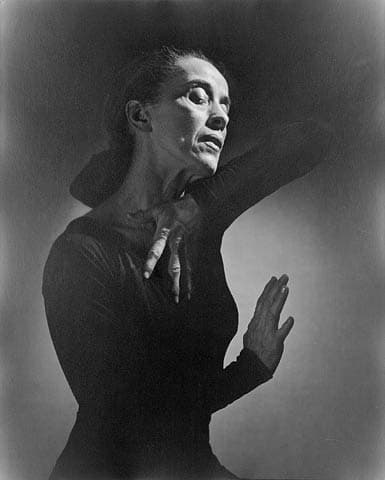
American · Arts
Martha Graham
May 11, 1894 – April 1, 1991
Early Life and Background
Martha Graham was born on 11 May 1894 in Allegheny City, Pennsylvania, an area that later became part of Pittsburgh. She was the daughter of Dr. George Graham, a physician specializing in nervous disorders, and Jane (Jennie) Beers Graham. Raised in a strict Presbyterian household, Graham’s early environment combined intellectual curiosity with moral conservatism, shaping both her discipline and her eventual rebellion against conventional forms of artistic expression.[10][1][13]
Her father’s medical practice had a lasting impact on her understanding of movement. He believed that "movement never lies," a maxim that Graham frequently cited in later years.[5][10] Observing his diagnostic attention to gesture and posture encouraged her to see the body as a direct conduit for inner emotional states rather than mere decoration. When the family relocated to California while Martha was a child, she spent much of her adolescence on the West Coast, eventually graduating from Santa Barbara High School in 1913.[10][5]
After high school, Graham attended the Cumnock School of Expression in Los Angeles from 1913 to 1916, where she studied elocution and dramatic arts rather than dance.[10] This training in expressive speaking and performance sharpened her sense of theater, narrative, and audience engagement, laying a foundation for the dramatic intensity that would later characterize her choreography.
Introduction to Dance and Career Beginnings
Graham’s formal entry into dance was relatively late; she began serious dance study around the age of 22, an age by which many professional dancers are already established.[16][17] In Los Angeles she encountered a performance by the Denishawn School of Dancing and Related Arts, founded by Ruth St. Denis and Ted Shawn, which inspired her to pursue dance training.
She joined Denishawn, one of the first American dance academies to form a professional touring company, and studied and performed there through the 1910s and early 1920s.[16][2] Denishawn’s eclectic style—drawing on ballet, Delsartean expression, and romanticized "Oriental" themes—offered Graham both technical training and touring experience. She appeared in works such as St. Denis’s "Xochitl" and various ensemble pieces, learning how choreography, costume, and lighting could be integrated.
By the mid‑1920s, however, Graham had grown dissatisfied with Denishawn’s decorative aesthetic and its reliance on exotic spectacle. She moved to New York, seeking a more austere, emotionally honest movement language. In New York she performed with the Greenwich Village Follies and began teaching and choreographing independently.[2][10]
In 1925, Graham began teaching dance at the Eastman School of Music in Rochester, New York.[10] Though this appointment is often noted in biographies, available sources specify only the year, not the exact date. Her work at Eastman allowed her to experiment with new movement ideas and to develop a small following of students who would later form the core of her own company.
Founding Her Company and Development of Graham Technique
The defining early milestone of Graham’s independent career came on 18 April 1926, when she presented her first independent concert at New York’s 48th Street Theatre, assisted by a group of dancers known as the Martha Graham Concert Group.[12][13] This concert marked a clear break from Denishawn and introduced audiences to a stark, angular style emphasizing psychological conflict and inner emotion.
Just days later, on 25 April 1926, Graham founded the Martha Graham Dance Company in New York City.[14][9] Working out of a small studio at Carnegie Hall, she created what would become the oldest continuously operating modern dance company in the United States.[9] In 1926
Throughout the late 1920s, Graham’s choreographic output grew rapidly. In 1927 she premiered the solo Revolt, exploring themes of social alienation and personal struggle.[10] In 1928 she began teaching at the Neighborhood Playhouse in New York, influencing generations of actors and dancers with her emphasis on physical truth.[10] During these years she also began formalizing what came to be known as the Graham technique. Derived from a stylized conception of breathing, the technique is built on the principles of "contraction and release"—rhythmic cycles of muscular tension and relaxation centered in the torso.[2][9] Graham’s vocabulary emphasized groundedness, spirals of the spine, falls, and recoveries, rejecting the light, airy quality of ballet in favor of weight, gravity, and visceral intensity. In the 1930s and 1940s Graham produced many of the works that solidified her status as a central figure in modern dance. In 1930 she premiered Lamentation, a solo in which she sat on a bench enveloped in a tube of fabric, using the elastic cloth and contracted torso to convey grief.[10][14] Stripped of narrative and setting, the piece focused on raw emotion, becoming one of her signature works. That same year she appeared in a performance of Stravinsky’s Rite of Spring with Leopold Stokowski and the Philadelphia Orchestra, further increasing her visibility.[10] In 1931 she premiered Primitive Mysteries, exploring ritual and spirituality through stylized movement rooted in Native American imagery.[10][12] From 1934 to 1938, she taught at the Bennington College Summer Dance Festival, a crucial venue for the development of American modern dance, where she worked alongside other pioneers such as Hanya Holm, Doris Humphrey, and Charles Weidman.[10] Graham’s collaboration with sculptor Isamu Noguchi began in 1935 with the work Frontier.[10][12] Noguchi’s spare, symbolic sets—often consisting of a few sculptural elements—complemented Graham’s focus on psychological space and became a hallmark of her productions. Their partnership extended over decades, contributing to the integration of modern sculpture and dance. Several of Graham’s works engaged directly with American themes. In 1938, she premiered American Document, which explored U.S. history and democratic ideals.[10][12] Later, in 1944, she created Appalachian Spring, commissioned by the Library of Congress and set to a score by Aaron Copland, which premiered at the Library’s Coolidge Auditorium.[10][12] The piece, depicting a pioneer couple and a revivalist preacher, became one of the most celebrated works in American dance and earned Copland a Pulitzer Prize for music; sources sometimes credit Graham with shared recognition for the work’s success.[17] Graham’s choreographic range extended to myth and biblical narratives. In 1951 she premiered Judith, a work centered on the biblical heroine.[10] The following year, 1952, she formally opened the Martha Graham Dance Company and School of Contemporary Dance, solidifying the institutional framework supporting her repertory and teaching.[10] Her international influence expanded through tours: in 1954 she and her company toured Europe, and in 1955 they toured Asia and Israel.[10] These tours helped establish modern dance as a global art form and positioned Graham as a cultural ambassador of the United States.[2] In 1958, Graham premiered Clytemnestra, her only full‑length evening work, on 1 April 1958.[2] This ambitious dance‑drama drew on Aeschylus’ Oresteia and featured elaborate sets by Noguchi and an original score. Graham’s portrayal of the title character, a mature woman grappling with power, guilt, and fate, broke with conventional casting that often reserved leading roles for younger dancers. In 1959 she contributed to Episodes, a joint program with George Balanchine that brought her modern dance idiom into dialogue with neoclassical ballet.[10] The collaboration highlighted both the contrast and compatibility between two distinct movement traditions. Graham’s artistic innovations were recognized with numerous honors. In 1932 she became the first dancer to receive a Guggenheim Fellowship, an award that typically supported scholars and composers, signaling an institutional acknowledgement of modern dance as a field of serious creative research.[10][2] That same year she performed at the opening gala of Radio City Music Hall in New York, underscoring her rising prominence.[10] In 1937 she performed at the White House, and in 1938 she was invited by the Roosevelt family to dance there again; these performances are often described as making her the first dancer ever to perform at the White House, though specific dates are not consistently documented in available sources.[10][2] By the mid‑20th century she had become a symbol of American cultural achievement. She received the Dance Magazine Award in 1957, recognizing her leadership in the field.[10] In 1976 she was awarded the Presidential Medal of Freedom with Distinction, the highest civilian honor in the United States, underscoring the national significance of her contributions.[2][17] Additional honors included induction into the National Women’s Hall of Fame, designation by TIME magazine as "Dancer of the Century," and recognition by People magazine as one of the female "Icons of the Century."[9][7] Institutions such as the Library of Congress and the Kennedy Center maintain extensive documentation and tributes to Graham’s work, reflecting the breadth of her influence.[3][4][12] Graham’s personal life intersected with her artistic career but remained relatively private in comparison with her public persona. She married Erick Hawkins, a principal dancer in her company, on 20 September 1948
The marriage lasted only a few years; the couple divorced in 1952, and Graham never remarried.[10] She had no children, devoting her energy primarily to choreography, performance, and teaching. Biographical accounts describe the intensity of her working relationships with dancers and collaborators such as Noguchi and composer Louis Horst, who served as her musical advisor and mentor for many years.[12] Graham’s personal discipline was legendary. She maintained a rigorous daily schedule of teaching and rehearsal and demanded absolute commitment from her dancers. Her later years were marked by health challenges, including alcoholism and the physical consequences of decades of demanding performance, but she continued to choreograph even after retiring from the stage.[10][2] By the late 1960s, Graham’s body began to bear the strain of her highly physical technique, which relied heavily on the torso and deep contractions. In 1970 she formally retired from performing, ending a stage career that had spanned more than fifty years.[10][2] Her retirement did not mean withdrawal from artistic life; instead, she focused on directing her company, creating new works, and supervising revivals of her repertory. Even after she stopped dancing publicly, Graham continued to choreograph into her eighties, often working with younger star dancers who would embody her roles. She revised earlier pieces, sometimes updating costumes, music, or casting decisions to reflect changing contexts. Her later choreographic work, though less frequently performed than her mid‑century masterpieces, demonstrates her ongoing interest in myth, psychology, and the expressive capacity of the human body.[12] In her final decades, Graham’s stature as an artistic icon was secure. She was frequently compared to Picasso in painting, Stravinsky in music, and Frank Lloyd Wright in architecture for the depth of her impact on her field.[5][15] International companies adopted elements of her technique, and her school trained generations of dancers who carried her principles into diverse choreographic traditions. Graham died in New York City on 1 April 1991 at the age of 96.[1][10][2] She had choreographed up to the end of her life, leaving behind a repertory of more than 180 works and a fully codified technique.[6][12] Her death prompted extensive tributes in the dance world and beyond, with obituaries emphasizing the radical nature of her contributions and her role in defining modern dance as an autonomous art form. Martha Graham’s legacy rests on several interrelated achievements. First, she helped define modern dance as a distinct discipline separate from ballet and popular entertainment. Her technique of contraction and release gave dancers a codified system for exploring inner emotional states through physicality, emphasizing gravity, breath, and the expressive potential of the torso.[2][9] Second, her repertory of more than 180 works established a canon of modern dance masterpieces. Pieces such as Lamentation, Primitive Mysteries, American Document, Appalachian Spring, and Clytemnestra demonstrated that modern dance could address grief, spirituality, national identity, and mythic narrative with equal seriousness. Third, Graham’s institutional achievements—the founding of the Martha Graham Dance Company and School, her teaching at Bennington College and the Neighborhood Playhouse, and her role as mentor to several generations of dancers—ensured that her ideas would outlive her. Her company, now one of the oldest in the world devoted to modern dance, continues to perform her repertory and commission new work inspired by her techniques.[9][2] For women’s history, Graham’s significance is particularly striking. She was among the first women to direct a major dance company for decades, to develop a widely recognized technical system bearing her name, and to receive top national honors such as the Presidential Medal of Freedom. She asserted a choreographic voice centered on female experience, creating complex roles for women that went far beyond traditional romantic or decorative types. Her insistence that "movement never lies" and that dance should reveal the "inner man"—or inner person—challenged audiences to confront psychological realities onstage.[1][5] The emotional intensity of her work, sometimes criticized in her lifetime as excessive, is now understood as a pioneering exploration of the body as a site of memory, trauma, and resilience. Decades after her death, Graham’s influence remains evident in the training of contemporary dancers, in the continued performance of her repertory, and in the many choreographers who have adapted or responded to her ideas. The ongoing preservation and reconstruction of her works by the Martha Graham Dance Company and associated archives, including the Library of Congress, reinforce her status as one of the most important figures in 20th‑century performing arts.[3][6][9]Major Works and Artistic Collaborations
Awards, Honors, and Recognition
Personal Life
Later Life, Retirement from Performance, and Continued Choreography
Death
Legacy and Historical Impact
Dated achievements
5 indexed.
- May111894Arts
Birth of Martha Graham
Martha Graham was born in Allegheny County, Pennsylvania.
View details Library of Congress Timeline - Apr181926Arts
First Independent Concert by Martha Graham
Graham's debut independent concert at the 48th Street Theater in NYC.
View details