← All women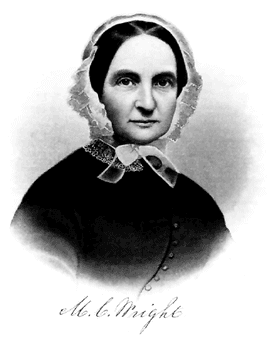
American · Politics · Activism
Martha Coffin Wright
December 25, 1806 – January 4, 1875
Early life and family background
Martha Coffin Wright (December 25, 1806 – January 4, 1875) was an American feminist, abolitionist, and women’s rights organizer whose leadership helped launch the organized woman suffrage movement in the United States. She was born in Boston, Massachusetts, the youngest of eight children in a Quaker family whose reform ideals deeply shaped her worldview. Her parents were Thomas Coffin and Anna Folger Coffin, and her older sister was Lucretia Coffin Mott, one of the era’s most influential Quaker ministers and reformers.
Wright’s childhood was marked by movement and loss. After her father died when she was eight years old, the family relocated to Philadelphia, where she came into closer contact with Quaker educational and reform networks. Those networks emphasized discipline, plain living, equality of the sexes, and opposition to slavery. The combination of family example and Quaker belief gave Wright an unusually strong foundation for public dissent at a time when most women were expected to remain outside political life.
She received a Quaker education, including study at boarding schools associated with reform-minded religious communities. Her training reflected the practical and moral seriousness of Quaker schooling, which often encouraged literacy, self-discipline, and ethical responsibility. These influences helped prepare her for the correspondence, organizing, and public speaking that would become central to her later activism.
Early adulthood, marriage, and family life
In 1829, Wright married Peter Pelham, a Boston merchant and music teacher. He died three years later, leaving her a widow with a young child. The loss returned her to the Northeast and, according to biographical accounts, to a life increasingly shaped by work and reform rather than conventional domesticity. In 1833, she married David Wright, a lawyer in Auburn, New York, and took the name Martha Coffin Wright. The marriage permanently connected her to Auburn, which became the center of her family life and reform activity.
The Wright household was large and intellectually engaged. Martha and David Wright had seven children, and their home became known not only as a family residence but also as a meeting place for reformers. Wright’s life as a mother did not remove her from public activism; instead, it gave her a practical understanding of the tensions experienced by women whose legal and social identities were constrained by marriage, motherhood, and dependence. Her experience as a wife and mother informed her belief that women should possess fuller civil and political rights.
Entry into reform and abolitionism
By the 1840s, Wright had become increasingly involved in abolitionism. Auburn, New York, was an active reform community, and the Wright home functioned as part of the Underground Railroad, helping freedom seekers escape slavery. Wright was a close friend and supporter of Harriet Tubman, another figure strongly associated with Auburn and the struggle against slavery. Her abolitionist work placed her in dangerous and morally contentious territory, since assisting freedom seekers could carry serious social and legal risk in the antebellum United States.
Wright’s reform commitments were not limited to one cause. She and David were part of a liberal network of New York reformers who opposed capital punishment and supported abolition, temperance, and women’s rights. This broader reform culture helped shape her approach to activism: she believed in linking moral principle with public action, and she moved easily among movements that sought to transform American law and society. Her correspondence and friendships reveal a woman who was both intellectually agile and strategically important to the reform cause.
Seneca Falls and the birth of the organized women’s rights movement
Wright’s most famous historical role came in 1848, when she helped plan the first women’s rights convention in the United States. During a summer visit to her home in Auburn, Lucretia Mott, Elizabeth Cady Stanton, Jane Hunt, and Mary Ann McClintock joined her in discussions that led directly to the convention at Seneca Falls, New York. Wright was six months pregnant with her seventh child at the time, a detail that underscores both the domestic demands she faced and the determination she brought to public activism.
On July 19, 1848, Wright helped open the convention, and on July 20 the meeting concluded with the signing of the Declaration of Sentiments. The declaration, modeled on the Declaration of Independence, asserted that women were entitled to the basic rights denied them by law and custom. Wright was one of the five principal organizers, and her participation made her part of the founding circle of the women’s rights movement in the United States. The convention did not instantly transform society, but it created a durable public framework for demands that had previously been expressed only in private or local settings.
Wright’s role at Seneca Falls mattered for another reason: she helped legitimize women’s public political leadership. In the 1840s, women who spoke at conventions or signed reform declarations often risked ridicule or condemnation. Wright nevertheless stood with her allies in demanding equal civil, social, and political rights. Her actions helped establish a model of collective feminist organizing that would influence suffrage campaigns through the nineteenth century and beyond.
Women’s rights leadership after Seneca Falls
After Seneca Falls, Wright remained a central figure in the women’s rights movement for more than twenty years. She presided over numerous women’s rights and anti-slavery conventions, often using her sharp wit, intelligence, and directness to advance reform causes. Contemporary accounts describe her as a lively correspondent and a persuasive speaker. Her letters are considered an important archival record of the movement because they preserve the everyday workings of reform politics, including disagreements, planning, and coalition building.
Wright’s activism extended into the post–Civil War period, when the future of suffrage reform became increasingly complex. She was instrumental in the formation of the American Equal Rights Association, which sought to connect black suffrage and woman suffrage after the war. The tensions within that movement reflected the larger struggle over whether political rights would be extended broadly or selectively during Reconstruction. Wright’s participation shows that she remained engaged in the difficult political questions of the era rather than limiting herself to symbolic leadership.
In 1874, she was elected president of the National Woman Suffrage Association. That position signaled her standing among suffrage leaders and recognized her as part of the movement’s founding generation. Even as newer figures emerged, Wright represented continuity between the early abolitionist reform world and the more organized suffrage politics of the late nineteenth century.
Personal character and public reputation
Wright was remembered as intellectually independent, forceful, and willing to speak candidly. One biographical tradition describes her as a “very dangerous woman,” a phrase that captured how unsettling her independence could seem to contemporaries. In a period when women were expected to be deferential and politically quiet, Wright’s refusal to conform marked her as unusually bold. She combined domestic responsibilities with public activism in a way that challenged prevailing assumptions about women’s proper sphere.
Her Quaker upbringing influenced not only her politics but also her moral style. She valued equality and conscience, and she carried those values into her work for abolition, women’s rights, and prison reform. Her friendships with figures such as Lucretia Mott, Elizabeth Cady Stanton, Frederick Douglass, and Harriet Tubman placed her at the center of a powerful reform network. She was not merely adjacent to these movements; she helped sustain them through organizing, correspondence, hospitality, and strategic judgment.
Death and later recognition
Wright died in Auburn, New York, on January 4, 1875, and was buried in Fort Hill Cemetery. Her death came after she had witnessed major antislavery change, including the end of slavery under the Thirteenth Amendment, though she did not live to see women gain the vote nationwide. Even so, her influence remained visible in the institutions and traditions she helped create.
In the twentieth and twenty-first centuries, Wright received growing recognition as one of the central founders of the U.S. women’s rights movement. She was inducted into the National Women’s Hall of Fame in 2007, and the U.S. House of Representatives honored her bicentennial that same year. The Women’s Rights National Historical Park in Seneca Falls commemorates her role, including a statue that depicts her pregnant to symbolize the fact that she was organizing for political equality while also carrying the responsibilities of motherhood. This memorialization captures the historical significance of her life: she helped show that women could be leaders in public reform even when law and custom sought to keep them in private life.
Legacy
Martha Coffin Wright’s legacy rests on her place at the intersection of abolitionism and women’s rights. She helped organize the first women’s rights convention, supported the Underground Railroad, advocated for equality in public meetings, and preserved the correspondence that documents the emergence of feminist reform in the United States. Her life demonstrates how nineteenth-century women used kinship, religion, home, and political conviction to create new forms of public leadership.
Although she is sometimes overshadowed by better-known contemporaries, Wright was indispensable to the early women’s movement. She helped transform the aspirations of a small reform circle into a national political cause. Her career illustrates the barriers women faced in the nineteenth century and the persistence required to overcome them. For historians of women’s activism, she remains a foundational figure whose work helped define the terms of American feminism.
Dated achievements
5 indexed.
- Dec251806Activism
Birth of Martha Coffin Wright
Martha Coffin Wright, later a noted activist, was born in Boston, Massachusetts.
View details Wikipedia: Martha Coffin Wright - Jul191848Activism
Opening of the Seneca Falls Convention
Martha Coffin Wright co‑organized the First Women’s Rights Convention at Seneca Falls.