← All women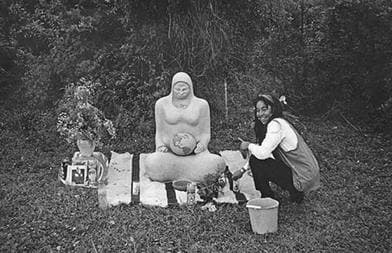
American · Arts · Activism
Marsha Anne Gomez
December 24, 1951 – 1998
Overview
Marsha Anne Gómez (December 24, 1951 – 1998) was an American sculptor, art educator, and social activist best known for her monumental series Madre del mundo (Mother of the World). Her work became closely associated with Indigenous rights, feminist organizing, and anti‑nuclear and environmental movements in the late twentieth century.[1][3][4] Gómez co‑founded organizations including the Indigenous Women’s Network and played a central role in the Alma de Mujer Center for Social Change near Austin, Texas, which became a key gathering place for Indigenous and feminist activism.[1][3] Through her art and organizing, she helped articulate an eco‑feminist vision that linked women’s empowerment, Indigenous sovereignty, and planetary survival.
Early Life and Background
Gómez was born on December 24, 1951, in Baton Rouge, Louisiana.[1][4] Her parents were Rodolph Gómez and Ruth Anne Gómez, and she grew up in a multiracial, multicultural family context in the American South.[1] Several sources note her Choctaw heritage, which later informed both her artistic practice and her political commitments.[3] The combination of a Southern upbringing and Indigenous ancestry placed Gómez at the intersection of racial, cultural, and gendered marginalization during the era of Jim Crow’s aftermath and civil‑rights struggles.
As a young person, Gómez showed an interest in both art and education. According to biographical accounts, she pursued formal studies that balanced these domains, suggesting early on that she saw art not only as a personal pursuit but as a tool for teaching and community engagement.[1] While detailed records of her childhood schooling are limited in published sources, her later choices—majoring in special education and art education—indicate a commitment to working with diverse communities and using creative expression in educational settings.[1]
Education and Formative Influences
In 1971, Gómez earned an associate’s degree from Nicholls State College (now Nicholls State University) in Louisiana, majoring in special education and minoring in art education.[1] This combination placed her at the intersection of pedagogy and creativity, reflecting an interest in inclusive schooling and the use of art in therapeutic and developmental contexts. Her studies prepared her to work with students who had varied learning needs, while giving her a foundation in visual arts.
Later, in 1981, Gómez completed a bachelor’s degree in art education at the University of Arkansas at Fayetteville.[1] Her time in Arkansas proved particularly formative for her artistic identity. Biographical narratives emphasize that it was in Arkansas that Gómez developed a lifelong interest in traditional Indigenous pottery techniques, bringing her into closer engagement with her Choctaw heritage and with broader Indigenous cultural practices.[3]
Learning these methods connected Gómez to ceramic traditions rooted in Indigenous communities of the Americas, including the pottery practices of Indigenous women in Oaxaca, Mexico, and in the San Ildefonso Pueblo of New Mexico.[3] This exposure contributed to the aesthetic language that would later characterize her sculptures: hand‑built, clay‑based work that foregrounded Indigenous female figures and relationships to land and water. The emphasis on earth materials and traditional techniques also resonated with emerging eco‑feminist ideas that linked environmental stewardship with women’s labor and Indigenous knowledge.
Migration to Austin and Career Beginnings
After completing her degree at the University of Arkansas, Gómez moved to Austin, Texas, in 1981, where she began working as a sculptor and teacher.[1] Austin at the time was a growing hub for alternative politics, feminist organizing, and Chicana and Indigenous activism. Gómez found in this environment a supportive context for integrating her artistic practice with grassroots movements.
In Austin, she took on roles as an art teacher while developing her sculptural work. She became involved with local activist networks that focused on peace, environmental justice, and women’s rights. According to accounts from Texas women’s history projects, Gómez’s practice quickly came to be identified with art that celebrated women, honored Indigenous traditions, and challenged militarism and nuclear proliferation.[3]
Her integration into Austin’s activist community also led to collaborations with other women organizers who were seeking space for Indigenous-centered work. This period laid the groundwork for her later role in founding and directing the Alma de Mujer Center for Social Change, and for co‑founding the Indigenous Women’s Network.[1][3]
Major Works: Madre del mundo and Related Sculptures
Gómez’s signature work is the sculpture series Madre del mundo (Mother of the World). Created first in 1987, the sculpture depicts a life‑size Indigenous woman seated and holding a globe in her lap, symbolizing women’s roles as caretakers of the Earth and the interconnectedness of global struggles.[1][3][4] The figure’s posture and expression suggest strength, calm, and responsibility, and the clay medium speaks to rootedness in the land.
The first version of Madre del mundo was created specifically for a Mother’s Day peace encampment at the Nevada Test Site, on Western Shoshone land, in opposition to U.S. nuclear weapons testing.[3][4] On May 8, 1988, the sculpture was prominently used at a Mother’s Day protest at the site, providing a powerful visual anchor for demonstrations against nuclear colonialism and militarism.[3][4] The sculpture visually linked the protection of children and the Earth with resistance to nuclear contamination, situating Indigenous women at the heart of anti‑nuclear activism.
Following its debut, Gómez created other versions of Madre del mundo for significant sites of environmental and nuclear struggle. One sculpture was installed at the Peace Farm in the Texas Panhandle, located across from the Pantex nuclear weapons plantCasa de Colores, an Indigenous resource center in Brownsville, Texas.[3] In 1990, an edition of Madre del mundo was installed at Alma de Mujer Center for Social Change, integrating the sculpture directly into Gómez’s organizing space.[1][3]
Through these placements, Madre del mundo became a kind of traveling icon of peace and environmental justice. The sculpture’s circulation among sites of nuclear production, Indigenous organizing, and feminist activism underscored Gómez’s belief that art could serve as a ceremonial and political presence, grounding protests in a sense of sacred responsibility.
Organizing Work: Indigenous Women’s Network and Alma de Mujer
Beyond her individual artistic practice, Gómez was a committed organizer. In 1983, she co‑founded the Indigenous Women’s Network, an organization created to connect and empower Native and Indigenous women across communities.[1][4] The network sought to support leadership development, share strategies for resisting colonial and patriarchal structures, and promote Indigenous women’s voices in social movements.
In 1986, Gómez helped co‑found what would become the Alma de Mujer Center for Social Change, a retreat and organizing space on land near Austin, Texas, associated with the Foundation for a Compassionate Society.[1][3] Alma de Mujer was envisioned as a place where Indigenous women and allies could gather for ceremonies, workshops, and strategic planning. The center emphasized Indigenous women’s heritage, spiritual practice, and activism, and it quickly became a hub for feminist, environmental, and anti‑nuclear work.
Sources note that Gómez served as the director of Alma de Mujer from its inception until her death.[1] Under her leadership, the center hosted gatherings that linked local struggles in Texas with broader national and international movements. Alma de Mujer also served as a site for arts‑based work, including the installation of Madre del mundo and other sculptural pieces that reinforced the center’s themes of earth, water, and women’s strength.
Gómez’s organizing extended beyond these institutions. She was involved with the Foundation for a Compassionate Society, a peace and social justice organization founded by feminist activist Ginny Terrell Davy (also known as Genevieve Vaughan), which supported Alma de Mujer and other initiatives.[1] Through these connections, Gómez’s work reached networks of peace activists in the United States and beyond.
Art, Eco‑feminism, and Indigenous Traditions
Gómez’s art is often described as embodying an eco‑feminist perspective, a framework that links the oppression of women and the exploitation of nature, while highlighting Indigenous knowledge.[3][4] In interviews and statements quoted by later writers, she emphasized that the energy and spirit in her work expressed respect and reverence for women, the Earth, and Indigenous ways of life.[4]
Her sculptures and pottery drew on techniques learned from Indigenous communities in Arkansas, Oaxaca, and the San Ildefonso Pueblo, combining these influences with her own Choctaw heritage.[3] Many of her works featured female figures, often in relation to elemental forces like water, fire, and earth. By centering Indigenous women, she challenged dominant art historical narratives that marginalized non‑European and non‑male artists.
In 1997, Gómez received a grant to continue studying traditional pottery techniques in San Miguel de Allende, Mexico.[3] This opportunity allowed her to deepen her engagement with Mexican Indigenous ceramics and to refine her methods. The grant also signaled recognition of her contributions as a serious artist working in the lineage of Indigenous craft traditions rather than within mainstream commercial art markets.
Gómez’s emphasis on clay and hand‑built forms aligned with her political commitments. Earth as material symbolized both vulnerability and resilience, evoking landscapes threatened by nuclear testing and industrial pollution, while honoring the enduring presence of Indigenous cultures.
Recognition, Exhibitions, and Influence
Although Gómez did not achieve the kind of museum‑centered fame accorded to many mainstream artists, she gained recognition within feminist, Indigenous, and peace movements. Her work, especially Madre del mundo, was featured in exhibitions and gatherings connected to these movements during the early 1990s.[1][3]
In 1993, her sculptures were included in events that brought together Indigenous and feminist activists, though exact dates and venues are less clearly documented in widely accessible sources.[1] Oral histories and movement archives credit Gómez’s work with strengthening the visual and spiritual dimensions of activism, especially in contexts of anti‑nuclear protest where symbolic representations of care and earth stewardship were crucial.
Her contributions are discussed in studies of Chicana and Indigenous feminisms, where authors highlight how her sculptures and organizing helped articulate a specifically Indigenous and woman‑centered critique of militarism and environmental degradation.[4] Organizations like Women in Peace and Women in Texas History include her among notable women peace activists and Texas women whose lives shaped social change.[3][4]
Personal Life
Published sources provide limited detail about Gómez’s personal life beyond her roles as artist and activist. Biographical entries note that she was a mother and that family relationships were interwoven with her artistic and political commitments.[1] However, comprehensive records of marriages, partners, or all of her children are not widely available in the public sources consulted.
One stark detail reported in biographical accounts is that Gómez was killed by her son, Mekaya, in 1998
Beyond this, her personal life is primarily glimpsed through the spaces she created, such as Alma de Mujer, where art, ceremony, and activism blended. Those who worked with her remember her as someone who embodied her principles in daily interactions, practicing hospitality, mentorship, and spiritual leadership.[3] In the late 1990s, Gómez continued directing Alma de Mujer, producing sculpture, and participating in Indigenous and feminist networks.[1][3] The grant she received in 1997 for study in San Miguel de Allende suggests that she remained actively engaged in artistic development, expanding both her technical repertoire and cultural connections.[3] Gómez died in 1998 at the age of 46.[1][3][4] Available reference sources agree on the year of her death but do not document an exact month and day. Biographical summaries indicate that she remained director of Alma de Mujer until her death and note that she was killed by her son, Mekaya.[1] The lack of detailed public documentation of the incident reflects both the privacy of family tragedies and the tendency of movement‑oriented biographies to center life’s work rather than the circumstances of death. Her passing was a significant loss to the communities she served. Alma de Mujer continued as a site of organizing and ceremony, carrying forward her vision for Indigenous women’s leadership in social change. The sculptures she left, particularly the various versions of Madre del mundo, remain in place at sites like the Peace Farm and Alma de Mujer, where they continue to be encountered by activists and visitors.[3] Marsha Anne Gómez’s legacy is multifaceted. As a sculptor, she contributed a distinctive visual language to feminist and Indigenous movements, using clay and figural forms to express care for the Earth and resistance to violence. Madre del mundo stands out as a central symbol in anti‑nuclear and eco‑feminist activism, especially in its association with the 1988 Mother’s Day protest at the Nevada Test Site and subsequent installations at nuclear‑related sites.[3][4] As an organizer, Gómez helped institutionalize spaces for Indigenous women’s leadership. The Indigenous Women’s Network, which she co‑founded in 1983, continues to be cited as an important structure for connecting Native women across regions.[1][4] Alma de Mujer Center for Social Change has been recognized in studies of Texas women’s history and feminist organizing as a pivotal retreat and community space. Her work has also influenced scholarly discussions of Chicana and Indigenous feminisms, where she is cited for articulating a worldview that links women, earth, and peace. Writers highlight her statement that the energy and spirit in her work express respect and reverence for women, the Earth, and Indigenous ways of life, a concise encapsulation of her philosophy.[4] In historical terms, Gómez is remembered as part of a generation of women who bridged art and activism, especially within Indigenous and feminist movements. Her life underscores how locally rooted practices—pottery, sculpture, retreat centers—can have broader significance in global struggles against nuclear proliferation and environmental destruction. While she did not receive major mainstream art world awards, the recognition of her work within movement communities and feminist historiography marks her as a significant figure in the history of women’s peace activism and Indigenous art. Contemporary projects that document women in peace and social movements, such as Women in Peace and Women in Texas History, have placed Gómez within their pantheons of notable activists.[3][4] These initiatives emphasize her role as a sculptor whose work helped galvanize anti‑nuclear protest and as a co‑founder of organizations that amplified Indigenous women’s voices. Her biography also appears in broader online encyclopedic sources, which summarize her artistic and organizational contributions.[1] Although detailed documentation of every exhibition and award is limited, the consistency across sources regarding her main achievements—Madre del mundo, Indigenous Women’s Network, Alma de Mujer—indicates a shared understanding of her historical importance. For historians of women’s activism, Gómez’s life illustrates the importance of culturally grounded art in sustaining movements. For Indigenous scholars, her emphasis on pottery traditions and Indigenous women’s roles highlights pathways for cultural revitalization intertwined with political resistance. Her story continues to inform discussions of eco‑feminism, nuclear colonialism, and the role of art in social change.Later Life and Death
Legacy and Historical Impact
Assessment in Women’s and Peace Histories
Dated achievements
2 indexed.
- Dec241951Activism
Birth of Marsha Anne Gómez
Marsha Anne Gómez was born on December 24, 1951, in Baton Rouge, Louisiana.
View details TSHA Handbook on Marsha Anne Gómez - May081988Activism
Madre del mundo featured at Nevada Test Site protest
Gómez's sculpture was used at a Mother’s Day protest, becoming iconic in activism.