← All women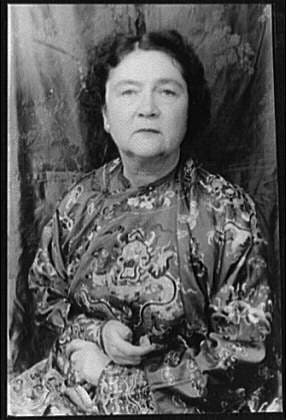
American · Literature
Marjorie Kinnan Rawlings
August 8, 1896 – December 14, 1953
Early Life and Family Background
Marjorie Kinnan Rawlings was born Marjorie Kinnan on August 8, 1896, in Washington, D.C., United States.[1][2][4] She was the daughter of Arthur Frank Kinnan, an employee of the U.S. Patent Office and patent attorney, and Ida May (Traphagen) Kinnan, both of whom came from Midwestern farming families.[3][4][9] This combination of urban professional life and rural Midwestern roots profoundly shaped Rawlings’s imagination, giving her both familiarity with country life and an awareness of the bureaucratic and literary culture of the capital.
Rawlings grew up in Washington and attended Western High School, from which she graduated in 1914.[4] Even as a teenager she demonstrated unusual literary precocity. Biographical accounts note that she began writing at an early age and published letters and award-winning short stories in the Washington Post when she was only fourteen.[3][4] These early publications marked her entry into print culture at a time when young women were typically discouraged from pursuing serious literary careers.
Encouraged by her parents and teachers, Rawlings pursued higher education at the University of Wisconsin–Madison, where she majored in English and graduated in 1918.[1][2][4][5] At Wisconsin she was active in literary and drama activities, gaining exposure to contemporary writing and theatrical performance.[5] The university environment broadened her intellectual horizons, placing her within the growing cohort of college-educated women who would shape American cultural and literary life in the twentieth century.
Education and Formative Influences
Rawlings’s education at the University of Wisconsin proved decisive for her development as a writer. She studied English literature during an era marked by the transition from Victorian to modernist sensibilities, and she participated in campus literary societies and drama clubs.[4][5] These experiences introduced her to a range of narrative techniques and styles while also normalizing the idea of women as professional writers and critics.
Her Midwestern family background, combined with her urban upbringing in Washington, gave Rawlings a nuanced understanding of class and regional differences. Later critics and biographers have noted that this early exposure to rural stories and Washington politics helped her develop the empathy and observational skills that characterize her mature work, especially her depictions of poor backwoods communities in Florida.[4][7][11] The tension between the respectability expected of a government clerk’s daughter and her fascination with marginal, rural lives became a creative driving force.
By her early twenties, Rawlings was already experimenting with journalism and fiction. Her capacity to move between genres—newspaper columns, short stories, novels, and essays—was rooted in her collegiate training and early professional attempts to make a living through writing. These formative experiences laid the foundation for the regional realism and psychological depth that would later distinguish her work.
Career Beginnings: Journalism and "Songs of the Housewife"
After graduating in 1918, Rawlings married journalist and boating enthusiast Charles Rawlings in 1919.[4][5] The couple settled in Rochester, New York, where she began her professional writing career. From 1919 to 1928, she wrote a syndicated newspaper column for United Features titled “Songs of the Housewife.”[5] This column blended domestic commentary with humor and observation, reflecting both the constraints and possibilities of being a married woman writer in the early twentieth century.
During these years, Rawlings struggled to publish her fiction. She submitted short stories and novels to editors but met with repeated rejection.[5] Nevertheless, the discipline of producing regular copy for her column honed her prose style, taught her to observe everyday life closely, and provided modest financial support. Her columns also positioned her within a growing network of editors and syndicates that would later facilitate the acceptance of her fiction.
Her early career illuminates broader patterns in women’s literary history: many women writers of her generation entered print culture through newspaper columns and magazine work framed as domestic or feminine, only later crossing into the ostensibly more prestigious realm of serious fiction. Rawlings’s eventual move from syndicated housewife columns to critically acclaimed rural novels illustrates this trajectory and the barriers women faced in claiming literary authority beyond domestic subjects.
Move to Florida and Discovery of Cross Creek
A turning point in Rawlings’s life came in 1928, when she and Charles Rawlings made what one account describes as a "rash decision" to relocate to the wilds of north-central Florida.[7] They purchased an orange grove in a tiny hamlet called Cross Creek, situated between Orange Lake and Lochloosa Lake.[1][7] The isolation and ruggedness of the area—largely inhabited by poor farmers, hunters, and fishers—initially presented practical challenges but soon offered Rawlings the immersive environment she needed as a novelist.
In Florida, Rawlings found the subject matter that would define her career. She began to observe and befriend her neighbors, learning the dialect, customs, and survival strategies of the backwoods community.[1][4][5] These relationships introduced her to characters and stories that she transformed into fiction and essays. The orange grove itself became both a working enterprise and a symbolic setting in her later autobiographical work Cross Creek.
By 1930 she had sold a collection of Florida stories to Scribner’s Magazine, a breakthrough that brought her national attention and signaled the literary potential of her Florida material.[5] The success of these stories convinced her editors that she had discovered a distinctive regional voice. The move to Cross Creek thus marks the moment when Rawlings shifted from general domestic writing to the creation of a unique, place-based literature centered on rural Florida.
Breakthrough Novel: "South Moon Under"
Rawlings’s first major critical success came with the publication of her novel South Moon Under in 1933.[5] The book, based on her observations of Florida "cracker" culture, follows a young man in the backwoods whose life is shaped by hunting, moonshining, and family loyalties. It offered a realistic portrayal of rural poverty, violence, and resilience, challenging stereotypes of the Florida backcountry.
South Moon Under received national recognition and established Rawlings as a serious novelist. Contemporary reviewers praised its authenticity and vivid descriptions of the landscape, as well as its sympathetic and complex characterization of poor white Floridians.[1][4] The novel was a finalist for the Pulitzer Prize, signaling that Rawlings’s regional subject matter could command attention at the highest levels of American literary culture.[1]
The year 1933 was personally tumultuous: Rawlings’s marriage to Charles Rawlings ended in divorce the same year her first novel was published.[4][5] The dissolution of the marriage coincided with her professional emergence, underscoring the tensions between her ambitions as a writer and traditional expectations of wives. Free from the marriage, she devoted herself more fully to her work and to life at Cross Creek.
"The Yearling" and the Pulitzer Prize
Rawlings’s best-known work is the novel The Yearling, published in 1938.[1][5] Set in rural Florida, the book tells the story of Jody Baxter, a boy who adopts an orphaned fawn, and his family’s struggle to survive in a harsh environment. The narrative explores themes of childhood, loss, responsibility, and the complex relationship between humans and nature, all rendered through detailed descriptions of the Florida scrub and its inhabitants.
The Yearling was selected for the Book-of-the-Month Club and quickly became a bestseller.[5] In 1939, it was awarded the Pulitzer Prize for Fiction, firmly establishing Rawlings as a major American novelist.[1][4] The book was later adapted into a 1946 film of the same name, further cementing its place in popular culture.[1][12] Although written before the concept of "young adult" fiction had been articulated, the novel is now commonly included in teen reading lists and is often taught in schools.[1][8]
The success of The Yearling had several important implications. It validated the literary significance of regional, rural settings at a time when urban modernist narratives dominated critical conversations. It also demonstrated that a woman writer could produce a major work of realist fiction centered on a boy’s coming-of-age, subverting the gendered assumptions about appropriate subjects for women authors. The Pulitzer Prize, awarded for a novel rooted in backwoods Florida, signaled a broader recognition of the cultural and environmental diversity of the United States.
"Cross Creek" and Autobiographical Writing
In 1942, Rawlings published Cross Creek, an autobiographical work that blended essays, character sketches, and nature writing centered on her life in the hamlet of Cross Creek.[2][5] The book offered readers intimate portraits of her neighbors—both white and Black—along with detailed descriptions of the landscape, seasons, and wildlife. It became one of her most celebrated works, admired for its lyrical prose and nuanced depiction of rural community.
In the same year she published Cross Creek Cookery, a companion volume of recipes and culinary reflections drawn from local traditions.[5] Though ostensibly a cookbook, it also served as cultural documentation of foodways in backwoods Florida, highlighting how subsistence practices and regional ingredients shape identity.
Cross Creek later became the subject of a notable libel case. One of the women depicted in the book sued Rawlings, arguing that her portrayal was defamatory.[5] The case, which Rawlings ultimately lost, raised complex questions about the ethics of autobiographical and ethnographic writing. It also exposed the gendered scrutiny faced by women authors who wrote candidly about their communities. Despite this controversy, Cross Creek is widely regarded as a landmark in American nature and regional writing, and its setting was eventually preserved as the Marjorie Kinnan Rawlings Historic State Park.[1][8]
Later Fiction and Essays
After the success of The Yearling and Cross Creek, Rawlings continued to publish works that explored rural and small-town life. Her later output included stories such as "Mountain Prelude" (1947) and "The Friendship" (1949), along with novels like Jacob’s Ladder (1950) and The Sojourner (1953).[5][10] These works expanded her geographical range beyond Florida, addressing themes of aging, family, memory, and spiritual searching.
Jacob’s Ladder and The Sojourner were written as Rawlings divided her time between Florida and other locales, including her travels with her second husband, Norton Baskin.[4][5] Critics have noted that her later writing shows an increasing interest in psychological and metaphysical questions, including what one feminist commentary describes as her exploration of "cosmic consciousness" in The Sojourner.[10]
While none of these later works matched the monumental success of The Yearling, they reveal the breadth of Rawlings’s ambitions and her refusal to be confined to a single rural setting or narrative formula. They also demonstrate her ongoing engagement with questions of identity, class, and the human place in the natural world.
Awards, Honors, and Recognition
Rawlings’s most prominent honor was the Pulitzer Prize for Fiction, awarded in 1939 for The Yearling.[1][2][4] This recognition placed her among the leading American writers of her generation and ensured her inclusion in literary histories of twentieth-century fiction. Her earlier novel South Moon Under had already attracted award attention as a Pulitzer finalist.[1]
She also received an O. Henry Prize for short fiction in 1932, signaling her skill as a short-story writer and contributing to her growing reputation prior to her major novels.[5] Over the decades following her death, Rawlings’s legacy continued to be recognized. In 1986 she was inducted into the Florida Women’s Hall of Fame, honoring her contributions both to literature and to the cultural identity of the state.[8]
Institutional tributes extend to the preservation of her home at Cross Creek as the Marjorie Kinnan Rawlings Historic State Park, which serves as a museum and educational site.[1][8] Literary societies, such as The Marjorie Kinnan Rawlings Society, further maintain her memory through conferences, publications, and scholarship.[3] These honors underscore her status as a foundational figure in American regional literature and women’s writing.
Personal Life, Relationships, and Identity
Rawlings’s personal life was complex and often turbulent. Her first marriage, to journalist Charles Rawlings, lasted from 1919 until their divorce in 1933.[4][5] The move to Cross Creek and the evolution of her literary ambitions placed strain on the relationship, and by the time South Moon Under brought her national attention, the marriage had unraveled.
In 1941 she married Norton Baskin, a hotel manager and former Army officer, in a partnership that biographers describe as more supportive of her writing.[4] Baskin managed the Castle Warden Hotel in St. Augustine, Florida, and the couple often lived apart, with Rawlings spending substantial time at Cross Creek while Baskin remained in St. Augustine.[4][7] They had no children.[4]
Accounts of Rawlings’s life also reference several romantic relationships and friendships, as well as her intense attachment to places—especially Cross Creek—which some commentators describe as her "most enduring love affair."[7][9] Her personality is frequently characterized as independent, strong-willed, and sometimes volatile. One feminist essay portrays her as a "wild woman" who lived life on her own terms, navigating male-dominated literary and social circles with unapologetic ambition and a taste for heavy drinking.[10]
Alcoholism and chain smoking played a significant role in her later years, contributing to the cerebral hemorrhage that caused her death.[3][7] These personal struggles, along with the pressures of fame and the libel suit over Cross Creek, reveal the costs of her groundbreaking career and the limited support structures available to women writers of her era.
Legacy and Historical Impact
Marjorie Kinnan Rawlings’s historical significance lies chiefly in her creation of a recognized regional literature of backwoods Florida.[2] At a time when American literary prestige was associated with urban modernism or grand historical epics, she demonstrated that the lives of poor rural Floridians—"cracker" families, African American laborers, hunters, and subsistence farmers—could be the subject of serious, nuanced fiction and essay writing.[1][2][4]
Her work helped expand the geographic and social scope of American literature, bringing attention to the ecosystems and communities of north-central Florida. By rendering the landscape in precise, lyrical language and portraying her neighbors with empathy and complexity, she challenged condescending or exoticized representations of the rural South.[1][4][5] In doing so, she contributed to a broader recognition of regional diversity and environmental consciousness in American letters.
From a women’s history perspective, Rawlings’s career illustrates how a woman writer in the early to mid–twentieth century could achieve major national acclaim while working from a remote rural base. She negotiated professional relationships with editors such as Maxwell Perkins, carved out economic independence through her orange grove, and insisted on narrative authority over the communities she chronicled.[1][5][11] Her Pulitzer Prize for The Yearling and her continued canonical status demonstrate the lasting impact of women’s voices in shaping American understandings of childhood, nature, and regional identity.
Her influence persists through ongoing scholarship, biographies such as Ann McCutchan’s The Life She Wished to Live, and adaptations of her works for film and television.[9][11][12] The historic preservation of Cross Creek and the activities of the Marjorie Kinnan Rawlings Society ensure that new generations encounter her writing and life story. Rawlings remains a touchstone for discussions of regionalism, environmental writing, and the challenges faced by women authors navigating both community expectations and national literary markets.
Later Life and Death
In her final decade, Rawlings balanced her time between Cross Creek and St. Augustine, as well as travels with Norton Baskin.[4][7] She continued to write, with The Sojourner (1953) emerging as her last novel, exploring aging, family estrangement, and spiritual searching.[5][10] She had begun turning toward a new major project—a biographical study of fellow Southern writer Ellen Glasgow—when her health suddenly failed.[3]
On December 13, 1953, Rawlings suffered a ruptured aneurysm and was taken to Flagler Hospital in St. Augustine.[3] She died the following day, December 14, 1953, of a cerebral hemorrhage, at the age of 57.[1][2][4][5] Some accounts emphasize that heavy drinking and chain smoking likely contributed to her condition.[3][7] Her death occurred while she was visiting St. Augustine with Baskin, underscoring the city’s importance as a second home.
Rawlings’s body was buried in Antioch Cemetery near Island Grove, Florida, close to the landscape that had inspired much of her work.[3][5] In the decades since her death, her homestead has become a state historic park, her works remain in print, and her life continues to inspire biographies and critical studies.[1][8][11] Her later life and death thus mark not only the end of a single writer’s journey but the solidification of a legacy that continues to shape understandings of Florida, regionalism, and women’s creative autonomy.
Dated achievements
3 indexed.
- Aug081896Literature
Birth of Marjorie Kinnan Rawlings
Marjorie Kinnan Rawlings was born in Washington, D.C., known for fiction about rural Florida.
View details Marjorie Kinnan Rawlings - Britannica - Nov301932