← All women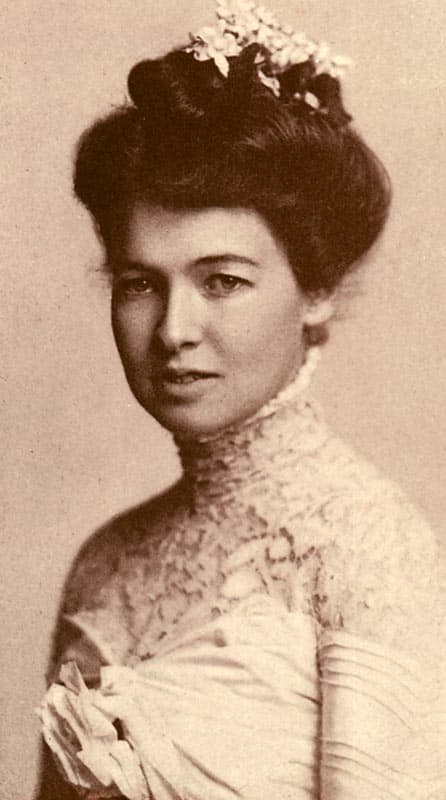
American · Sports
Marion Jones Farquhar
November 2, 1879 – March 14, 1965
Early life and family background
Marion Jones Farquhar (née Jones) was born on 2 November 1879 in Gold Hill, Nevada, and grew up in a family positioned near the center of western American wealth and politics. Her father, John P. Jones, served as a United States senator from Nevada and had accumulated substantial mining wealth through his involvement in the Comstock Lode. That background gave Marion access to education, travel, and social networks that were not available to most women of her generation. At the same time, the late nineteenth century offered women only limited athletic opportunity, and serious competition for female players was still socially novel. Her emergence as a championship tennis player therefore reflected both privilege and exceptional talent.
Sources on Farquhar emphasize her Nevada origins and later connections to California and the East Coast. She belonged to the generation of women athletes who came of age before the broad institutionalization of women’s sport. Tennis, with its mix of amateur respectability and competitive rigor, was one of the few athletic arenas in which elite women could gain public recognition. Farquhar’s early life is best understood in that context: she came from a socially prominent Western family, but she became historically important because she used that position to enter and excel in a sport that was still establishing legitimacy for women.
Rise in competitive tennis
Farquhar first established herself nationally at the 1898 U.S. National Championships, when she reached the women’s final and became the first Californian to do so. Although she lost a five-set match to Juliette Atkinson, the result marked her as a serious contender on the national stage and as a representative of the growing reach of American tennis beyond its East Coast centers. In the 1890s, elite women’s tennis was still comparatively small, and a player from California reaching the final was an unusual and notable development. The achievement also reflected the increasing geographic spread of competitive women’s sport in the United States.
The breakthrough was followed by a national title on 21 June 1899, when Farquhar won the U.S. women’s singles championship by defeating Maud Banks. Her success confirmed her as one of the strongest players of her generation and helped establish a record of sustained excellence rather than a one-time surprise. Farquhar’s style of play is remembered as technically disciplined and effective from the baseline, qualities that suited the era’s longer, strategic match play. Her rise occurred at a moment when women athletes were often expected to embody restraint and propriety, so championship tennis offered a rare arena in which skill could be recognized publicly without entirely escaping social convention.
Her career continued to expand in the early twentieth century. In 1900, she became the first non-British woman to compete at Wimbledon, where she reached the quarterfinals. The provided source set confirms the historical significance of this milestone, even though it does not preserve an exact match date for her first appearance. Wimbledon at the time remained strongly associated with British and amateur sporting traditions, so her participation represented an important step in the internationalization of women’s tennis. The following year, in 1901, she won the U.S. mixed doubles title with Raymond Little, adding to her reputation as a versatile competitor. In 1902, she won both the women’s singles championship, defeating Elisabeth Moore, and the women’s doubles title with Juliette Atkinson. Those dual victories showed her capacity to dominate across formats at the highest level.
Her final well-documented major result came in 1903, when she reached the U.S. National Championships women’s singles final and finished runner-up. Even in defeat, the result confirmed the durability of her place among the top players in the country. Taken together, these achievements make Farquhar one of the central figures of the pre-Open Era women’s game. She compiled a record that included singles, doubles, mixed doubles, and international competition at a time when women’s tournaments were still comparatively limited and the sports press often treated female athletes as curiosities rather than elite competitors.
Olympic achievement and international significance
Farquhar’s most historically important result came on 9 July 1900, when she won two bronze medals in tennis at the Paris Olympic Games, in ladies’ singles and mixed doubles. The Olympic record identifies her as the first American woman to win an Olympic medal. That distinction gives her a permanent place in both U.S. Olympic history and the history of women’s participation in global sport. The 1900 Paris Games were only the second modern Olympics and among the first to include women, so her success came in a pioneering setting still defining its rules, categories, and gender boundaries.
In practical terms, Farquhar’s medals were an achievement of athletic skill. In historical terms, they represented the arrival of American women on the Olympic stage. Early Olympic women’s events were few, and female athletes had to compete in a sporting culture that was often uncertain about women’s public physical exertion. Farquhar’s medals helped establish a precedent for later American women Olympians and signaled that women could excel at the highest international level. Because the Paris Olympics were so early in Olympic history, her bronze medals carry special weight as evidence of women’s participation before the Games became globally standardized and deeply professionalized.
Later life, marriage, and work beyond tennis
In 1903, Farquhar married architect Robert D. Farquhar. Available sources indicate that the marriage was brief and that she later resumed life under her maiden name in many historical references, though she is also commonly identified by the surname Farquhar. Her later years are notable for a life that extended well beyond tennis. According to Olympic source material, from 1920 until 1961 she lived in Greenwich Village, where she was known as a violinist and voice coach. She also translated opera librettos and, for a short time, headed the New York Chamber Opera. This later chapter demonstrates that her talents were not confined to athletics and that she moved comfortably within artistic and cultural circles as well.
Her life in Greenwich Village places her in the middle of one of the twentieth century’s most vibrant artistic neighborhoods. There, she appears to have built a reputation as a musician and teacher, suggesting an unusually broad public identity for a former sports champion. That combination of athletic and artistic accomplishment is unusual in early women’s history and reflects the varied paths available to elite women of privilege who were able to pursue several forms of serious training. Farquhar’s later career also suggests how some early women athletes were able to reinvent themselves in cultural life after competitive sport had ended.
Honors, recognition, and legacy
Farquhar’s legacy rests first on her measurable accomplishments: she won the U.S. women’s singles title in 1899 and 1902, the U.S. women’s doubles title in 1902, the U.S. mixed doubles title in 1901, and two bronze medals at the 1900 Paris Olympics. She was also the first Californian to reach the U.S. women’s final, the first non-British woman to compete at Wimbledon, and the first American woman to win an Olympic medal. These distinctions make her a genuine pioneer, not merely a champion.
Her long-term recognition culminated in her induction into the International Tennis Hall of Fame in 2006. That honor reflects how later generations came to view her as a foundational figure in American women’s tennis. Farquhar’s career is especially important because it connects several historical firsts: the regional broadening of American tennis, the internationalization of women’s competition, and the emergence of American women on the Olympic stage. She competed in an era when women athletes had to navigate social skepticism, limited support structures, and a narrow set of acceptable public roles, yet she built a record that placed her among the sport’s earliest great champions.
Marion Jones Farquhar died on 14 March 1965 in Los Angeles, California. By then, women’s tennis and women’s Olympic sport had expanded dramatically, but her place in history remained secure as one of the women who helped make that expansion possible. Her career stands as an early example of American women winning on the national and international stage, and her broader life shows the range of ways early women athletes could shape public culture beyond sport.
Dated achievements
7 indexed.
- Nov021879Sports
Birth of Marion Jones Farquhar
Marion Jones Farquhar was born in Gold Hill, Nevada.
View details Wikipedia - Marion Jones Farquhar - Jun141898Sports
First Californian in U.S. women’s final
She reached the final of the U.S. National Championships, the first Californian to do so.