← All women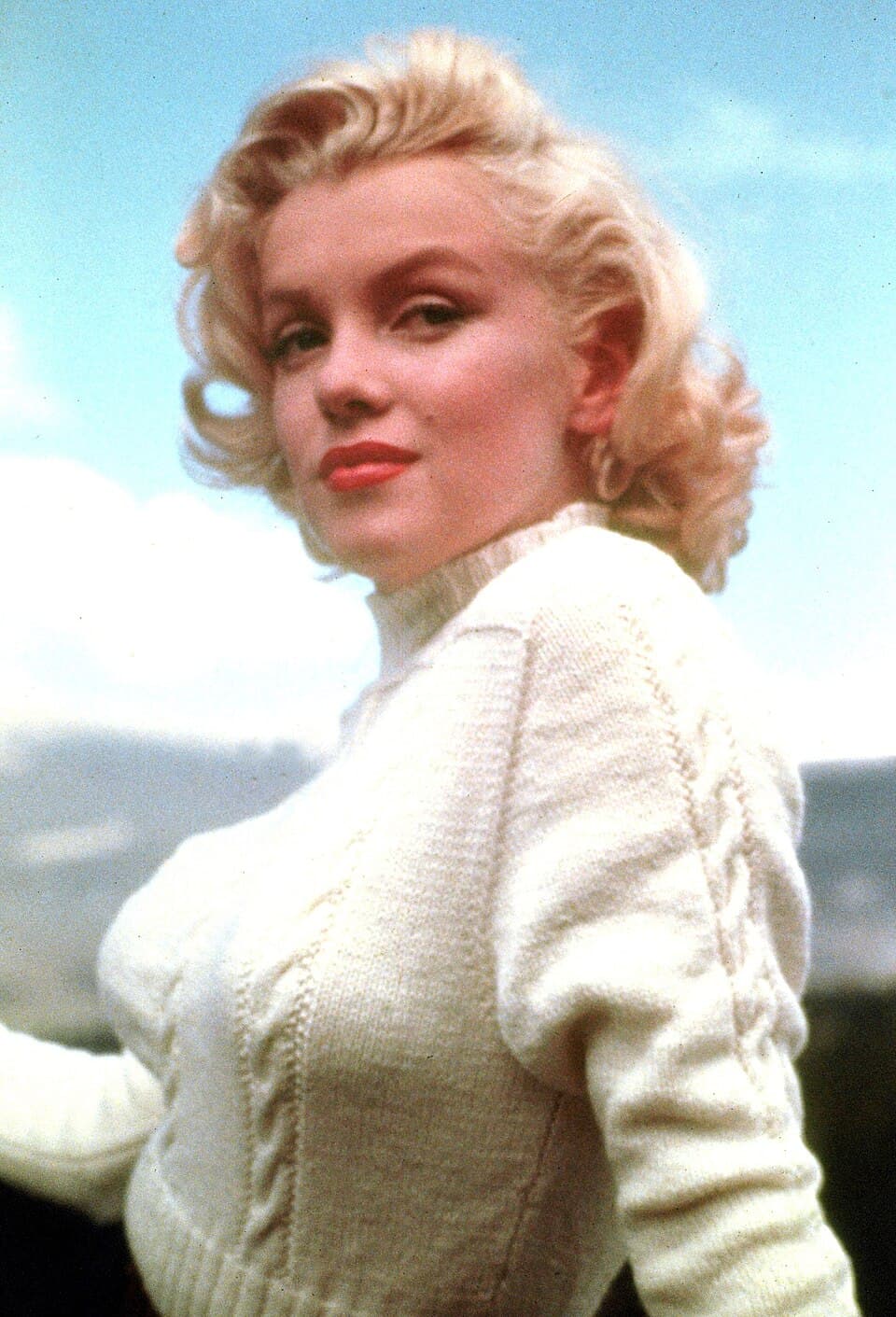
American · Arts
Marilyn Monroe
June 1, 1926 – August 5, 1962
Early Life and Background
Marilyn Monroe was born Norma Jeane Mortenson on June 1, 1926, at Los Angeles General Hospital in Los Angeles, California.[3][7][11][16] Her mother, Gladys Pearl Monroe Baker, worked as a film cutter at RKO and other studios, situating Norma Jeane’s earliest years on the fringes of the Hollywood system that would later define her life.[3][9][16] The name on her birth certificate listed her as Mortenson (or Mortensen), after Gladys’s absent husband Edward Mortenson, though her paternity has long been disputed.[1][3][16] She was later baptized under the surname Baker, reflecting Gladys’s earlier marriage.[3][7]
Monroe’s childhood was marked by instability, poverty, and emotional trauma. Gladys struggled with serious mental health issues, including what was likely schizophrenia, and could not provide consistent care.[3][16] For a brief period, Norma Jeane lived with foster parents Albert and Ida Bolender in Hawthorne, California, where she experienced a more stable environment but remained effectively separated from her mother.[1][3] In 1934 Gladys was institutionalized after a severe psychotic episode, and Norma Jeane entered a cycle of foster homes and an orphanage, despite the fact that her mother was still alive.[1][3]
These years included episodes of neglect and sexual abuse, experiences Monroe would later allude to but rarely describe in detail.[1][16] She attended various schools in the Los Angeles area and, by her own later accounts, found solace in movies and magazines, escaping into fantasy worlds where glamorous actresses lived lives of apparent ease and admiration.[1] The contrast between her insecure upbringing and the polished image of Hollywood stars laid the groundwork for her later desire to reinvent herself and seek validation through performance. The formative sense of abandonment, combined with the stigma of a mentally ill mother, also contributed to deep-seated insecurities and fear of rejection that would shadow her adult relationships and professional life.[3][16]
First Marriage and Discovery as a Model
To avoid being returned to an orphanage when her foster family moved out of state, Norma Jeane married James (Jim) Dougherty, a 21‑year‑old factory worker and neighbor, in 1942 when she was just sixteen.[1][2][3] The marriage was arranged largely for practical reasons by her guardians. During World War II, Dougherty joined the Merchant Marine and was stationed overseas, while Norma Jeane worked in a wartime aircraft factory in the Los Angeles area.[1][4]
In 1944, while employed at the Radioplane Company, she was photographed by U.S. Army photographer David Conover, who had been sent to document women’s contributions to the war effort.[4][16] Conover was struck by her photogenic quality and suggested she model professionally. This encounter marked the beginning of her modeling career, initially in pin-up style images that were popular with servicemen.[4] By 1945, she had her first professional photo shoots with photographer André de Dienes, and by 1946 she appeared on the cover of Family Circle, one of her earliest national magazine covers.[4]
As her modeling work expanded, Norma Jeane pursued a divorce from Dougherty, who opposed her ambitions to work as a model and actress.[1][2][3] The divorce was finalized in 1946, and she soon met talent scouts connected to the Hollywood studios. That same year she signed her first film contract with 20th Century-Fox, and under studio guidance she adopted the stage name Marilyn Monroe—“Marilyn” after stage star Marilyn Miller and “Monroe” from her mother’s maiden name.[1][3] She dyed her naturally brown hair a lighter blonde, further aligning her image with contemporary Hollywood ideals of glamour.
Career Beginnings in Hollywood
Monroe’s early film work in the late 1940s consisted of small, often uncredited roles. Her first contract with Twentieth Century-Fox in 1946 led to bit parts and training but not immediate stardom.[3][12] In 1947, Fox renewed her contract, and she received some of her earliest speaking roles, including a brief part as a waitress with nine lines in the film Dangerous Years (1947).[10][12] Despite these opportunities, Fox dropped her later that year, reflecting the studio’s uncertainty about how to use her.[1][3]
Monroe then signed a short-term contract with Columbia Pictures, where she appeared in the low-budget musical Ladies of the Chorus (1948), playing a showgirl.[1][3] While the film did not make her a star, it allowed her to develop her singing and dancing skills. After Columbia released her, Monroe returned briefly to modeling, including pin-up and cheesecake photography, to support herself. It was during this period, in 1949, that she posed nude for photographer Tom Kelley for a calendar, an assignment that paid much-needed cash but would later return to public attention in unexpected ways.[2][4]
Her fortunes improved around 1950, when director John Huston cast her in a small but memorable role in the crime film The Asphalt Jungle.[1][4] Playing the young mistress of a corrupt lawyer, Monroe attracted critical notice for her naturalistic presence and vulnerability. That same year she appeared in All About Eve (1950) as a naïve actress, sharing scenes with Bette Davis. Though her screen time was limited, these appearances signaled to audiences and industry observers that she could make a strong impression even in minor roles.
Rise to Stardom and Breakthrough Roles
By the early 1950s, Monroe’s combination of modeling experience, minor film roles, and relentless self-promotion began to pay off. On April 7, 1952, she appeared on her first LIFE magazine cover, photographed by Philippe Halsman, which significantly raised her national profile.[2][4] That year she also appeared in several films, including Clash by Night (1952) and Don’t Bother to Knock (1952), which demonstrated that she could handle more serious and psychologically complex roles.[1][3]
Her major breakthrough came with the release of Niagara, which premiered on January 21, 1953.[2][16] In this Technicolor thriller, Monroe played Rose Loomis, an adulterous wife plotting her husband’s murder. The film capitalized on her sensuality but also showcased her ability to convey danger and emotional intensity. The commercial success of Niagara established Monroe as a leading lady and box office draw.[2][16]
The year 1953 proved decisive. Monroe starred in Gentlemen Prefer Blondes, alongside Jane Russell, and How to Marry a Millionaire, with Betty Grable and Lauren Bacall.[1][3][16] In Gentlemen Prefer Blondes, her performance as Lorelei Lee, especially her rendition of "Diamonds Are a Girl’s Best Friend," became emblematic of her screen persona: outwardly ditzy yet cunning and self-aware. These films firmly established her as a major star and one of the top box office attractions of the decade.[3][16]
At the same time, Monroe’s earlier nude calendar photographs resurfaced when publisher Hugh Hefner acquired rights to one of Tom Kelley’s images. In December 1953, the debut issue of Playboy featured her as its first centerfold, without her active participation in the decision.[2][4] Rather than deny or condemn the images, Monroe candidly admitted she had posed during a period of financial need, a response that endeared her to the public and mitigated potential scandal.[1][2]
Peak Stardom and Conflicts with the Studio System
By 1954, Monroe was Hollywood’s preeminent sex symbol. She placed her handprints and footprints in cement at Grauman’s Chinese Theatre, commemorating her status as a leading film star, and continued to appear in high-profile productions.[4][7] However, she grew increasingly dissatisfied with being typecast in purely comedic “dumb blonde” roles and with her lack of control under the strict 20th Century-Fox contract system.[1][3]
In 1954, Monroe famously battled Fox over salary and script approval, briefly walking out and being suspended. After tense negotiations, she returned to the studio with a new contract granting her a higher salary and a measure of artistic say—an unusual concession for an actress at the time.[1][3][16] This move, reported widely, demonstrated her willingness to challenge studio authority and foreshadowed later struggles by actors for creative and financial control.
That year she starred in River of No Return (1954), a Western with Robert Mitchum, and filmed the New York location scenes for The Seven Year Itch, including the skirt-blowing moment over a subway grate that would become one of the most iconic images in film history.[1][4] The publicity photos from that shoot helped cement her as a symbol of glamorous, playful sexuality.
Seeking to improve her craft and be taken more seriously, Monroe moved to New York in the mid-1950s and studied at the Actors Studio under Lee Strasberg, engaging seriously with Method acting.[1][3] In 1955, she formed Marilyn Monroe Productions with photographer Milton Greene, an attempt to develop more challenging projects independent of Fox. Although the company produced only one completed film, it marked a significant step in Monroe’s efforts to control her career.[1][3]
Major Works and Critical Acclaim
Monroe’s desire for more substantial roles led to a series of performances that earned increasing critical respect. In Bus Stop (1956), she played Chérie, a vulnerable saloon singer kidnapped by a naïve cowboy. Critics praised her for bringing depth and pathos to the role, noting a marked improvement in her acting.[1][3][16] She followed this with The Prince and the Showgirl (1957), playing opposite Laurence Olivier, though production was marred by tensions between the two leads.
Her most celebrated performance came in Some Like It Hot (1959), directed by Billy Wilder and co-starring Tony Curtis and Jack Lemmon.[1][3][11] Monroe’s portrayal of Sugar Kane Kowalczyk, a sweet but troubled singer, combined comedic timing, musical talent, and a hint of melancholy. The film was a major critical and commercial success and would later be hailed as one of the greatest film comedies ever made.[3][11] Monroe received a Golden Globe for Best Actress in a Motion Picture – Musical or Comedy for her work in the film, a rare instance of formal recognition for her acting.[1][3]
In The Misfits (1961), written by her then-husband Arthur Miller and directed by John Huston, Monroe played Roslyn Taber, a recently divorced woman adrift in Nevada.[1][3][11] The film, co‑starring Clark Gable and Montgomery Clift, was more introspective and somber than her earlier work and is often interpreted as reflecting her own emotional state. Although not a box-office hit upon release, it has since been reevaluated as one of her most complex performances and an important work in both her career and Hollywood’s transition toward more modern themes.
Awards, Honors, and Recognition
During her lifetime, Monroe received relatively few major awards compared to her enduring fame, reflecting both the biases of the period’s critical establishment and the tendency to undervalue comedic and sexually themed performances. She won a Golden Globe for Best Actress in a Motion Picture – Musical or Comedy for Some Like It Hot and received other Golden Globe nominations and foreign press honors.[1][3]
Monroe’s more lasting honors have been posthumous. She received a star on the Hollywood Walk of Fame, recognizing her contributions to motion pictures.[7] Many of her films, such as Some Like It Hot, The Seven Year Itch, and Gentlemen Prefer Blondes, have been preserved and celebrated by critics and institutions as classics of American cinema.[1][3] Her image has been the subject of countless retrospectives, museum exhibitions, and scholarly works, and she has regularly appeared on lists of the greatest screen legends compiled by organizations like the American Film Institute.[1]
Beyond formal accolades, Monroe’s cultural recognition is evident in the sheer ubiquity of her image. Andy Warhol’s 1960s silkscreen series based on a promotional photo for Niagara transformed her visage into one of the most recognizable images in modern art, symbolizing both mass reproduction and the commodification of celebrity.[1] This artistic canonization further cemented her status as more than a movie star: she became a central icon in discussions of pop art, consumer culture, and the politics of representation.
Personal Life and Relationships
Monroe’s personal life attracted intense public interest and often overshadowed her professional achievements. After her first marriage to James Dougherty ended in 1946, she remained single through her early years in Hollywood.[2][3] In 1954, at the height of her early fame, she married baseball legend Joe DiMaggio in a highly publicized union.[3] Their relationship, however, was troubled. DiMaggio was reportedly uncomfortable with Monroe’s public sexuality and career demands, and the marriage lasted only about nine months before ending in divorce.[1][3]
Despite the divorce, Monroe and DiMaggio maintained a complicated bond; he later helped secure her release from a psychiatric clinic during a crisis in 1961, and he arranged her funeral in 1962.[1][3] In 1956, Monroe married playwright Arthur Miller, entering a more intellectual and politically engaged milieu.[3] The marriage coincided with her move to New York and her transition to more dramatic roles. However, they too faced serious strains, including Monroe’s insecurities, Miller’s own career pressures, and tensions during the making of The Misfits, whose script drew from their disintegrating relationship. They divorced in 1961.[1][3]
Monroe had no children, though she reportedly experienced multiple miscarriages and ectopic pregnancies, events that contributed to her emotional distress.[1] She was frequently prescribed barbiturates and other medications for insomnia and anxiety, creating a dangerous pattern of dependency.[3][16] Rumors of affairs with powerful men, most notably President John F. Kennedy and his brother Robert F. Kennedy, have persisted, but reliable documentation remains limited and contested; biographers agree that she moved in increasingly elite political and social circles in her final years.[1][16]
Later Life, Health Struggles, and Final Years
By the early 1960s, Monroe’s professional and personal challenges were intensifying. She underwent several hospitalizations for physical and psychological issues, including depression, gynecological problems, and substance dependence.[1][3][16] After divorcing Arthur Miller in 1961, she spent time in psychiatric care; an involuntary stay at Payne Whitney Psychiatric Clinic deeply traumatized her until DiMaggio helped secure her transfer to a different facility.[1]
Professionally, she oscillated between major opportunities and damaging setbacks. The Misfits (1961), though artistically ambitious, was overshadowed by the on-set illnesses of Monroe and her co-stars and by Clark Gable’s death shortly after filming. Monroe’s reliability came under scrutiny as she developed a reputation for lateness and difficulty remembering lines, issues often linked to her medications and anxiety.[1][3]
In 1962 she began work on Something’s Got to Give for 20th Century-Fox. Production was beset by absences and health problems, and Monroe was fired in June, although the studio later considered rehiring her amid public sympathy and concern over the film’s high costs.[1][3] Her famous appearance on May 19, 1962, singing "Happy Birthday" to President Kennedy at Madison Square Garden, showed her still capable of commanding intense public attention, yet observers also noted signs of fragility.[4][7]
Death
On the night of August 4–5, 1962, Monroe was at her home in the Brentwood neighborhood of Los Angeles. In the early hours of August 5, her housekeeper and psychiatrist discovered her unresponsive and called authorities.[1][3][16] She was pronounced dead that morning at the age of thirty-six. The Los Angeles County Coroner’s office concluded that she had died of acute barbiturate poisoning and classified the case as a "probable suicide."[3][16]
Some researchers and fans have questioned aspects of the official account, citing inconsistencies and Monroe’s connections to powerful figures, but no definitive evidence has overturned the coroner’s conclusion.[1][16] Her funeral, held at Westwood Village Memorial Park Cemetery, was arranged by Joe DiMaggio, who reportedly barred many Hollywood figures from attending and ensured that fresh roses were placed regularly on her grave for years afterward.[1][3]
Legacy and Historical Impact
Marilyn Monroe’s legacy extends far beyond her filmography. She has become a central symbol in discussions of gender, sexuality, celebrity, and power in the 20th century. As an actress, she helped redefine the comic female lead, bringing psychological nuance and vulnerability to roles that might otherwise have remained stereotypes. Films like Gentlemen Prefer Blondes, The Seven Year Itch, Some Like It Hot, and The Misfits continue to be studied and celebrated for both their cinematic qualities and Monroe’s performances.[1][3][11][16]
Culturally, Monroe emerged as one of the most recognizable icons of the postwar era. Her carefully styled image—platinum hair, red lips, breathy voice—became shorthand for glamorous femininity, yet beneath that surface lay a more complex story of class mobility, trauma, and the commodification of women’s bodies. Feminist scholars have reassessed her not simply as a victim or a passive sex symbol, but as a woman who navigated and sometimes strategically exploited a system skewed against her, while paying a steep personal price.[1][16]
Her influence is visible in multiple domains. In visual art, Andy Warhol’s silkscreens turned her face into a commentary on mass production and celebrity worship. In fashion and advertising, echoes of her style recur in campaigns and homages. In popular music and film, references to Monroe—whether in biographical portrayals or allusive characters—reinforce her status as a template for the troubled, hyper-visible female star.[1]
Monroe’s life story has inspired a vast biographical literature, ranging from critical scholarly studies to sensationalized accounts. Works like Donald Spoto’s Marilyn Monroe: The Biography and numerous documentaries attempt to separate myth from fact, yet part of her enduring power lies in the very impossibility of fully knowing her.[17][1] She stands at the intersection of public fantasy and private pain, a figure through whom society reflects its own evolving ideas about beauty, mental health, sexual autonomy, and the costs of celebrity.
As of the 21st century, Monroe remains one of the most marketable and widely recognized women in history. Her films still generate revenue, her estate licenses her name and likeness, and exhibitions dedicated to her costumes, photographs, and personal effects continue to draw large audiences.[1][9][19] For women’s history, her story illuminates the possibilities and limits faced by women in mid‑century America: the promise of economic independence and fame, the constraints of misogynistic institutions, and the persistent struggle to be recognized as more than a body or an image. Marilyn Monroe’s brief, intense life thus continues to serve as a powerful lens on the cultural, social, and gender dynamics of her time.
Dated achievements
9 indexed.
- Jun011926Arts
Birth of Norma Jeane Mortenson (Marilyn Monroe)
Birth of Norma Jeane Mortenson (later Marilyn Monroe) at Los Angeles General Hospital in Los Angeles, California.
View details Marilyn Monroe chronology (American Heritage); Marilyn Monroe biography (Britannica) - Jul171946Arts
First successful screen test and Fox contract
Marilyn Monroe passes her first successful screen test at Twentieth Century-Fox and is awarded a studio contract.