← All women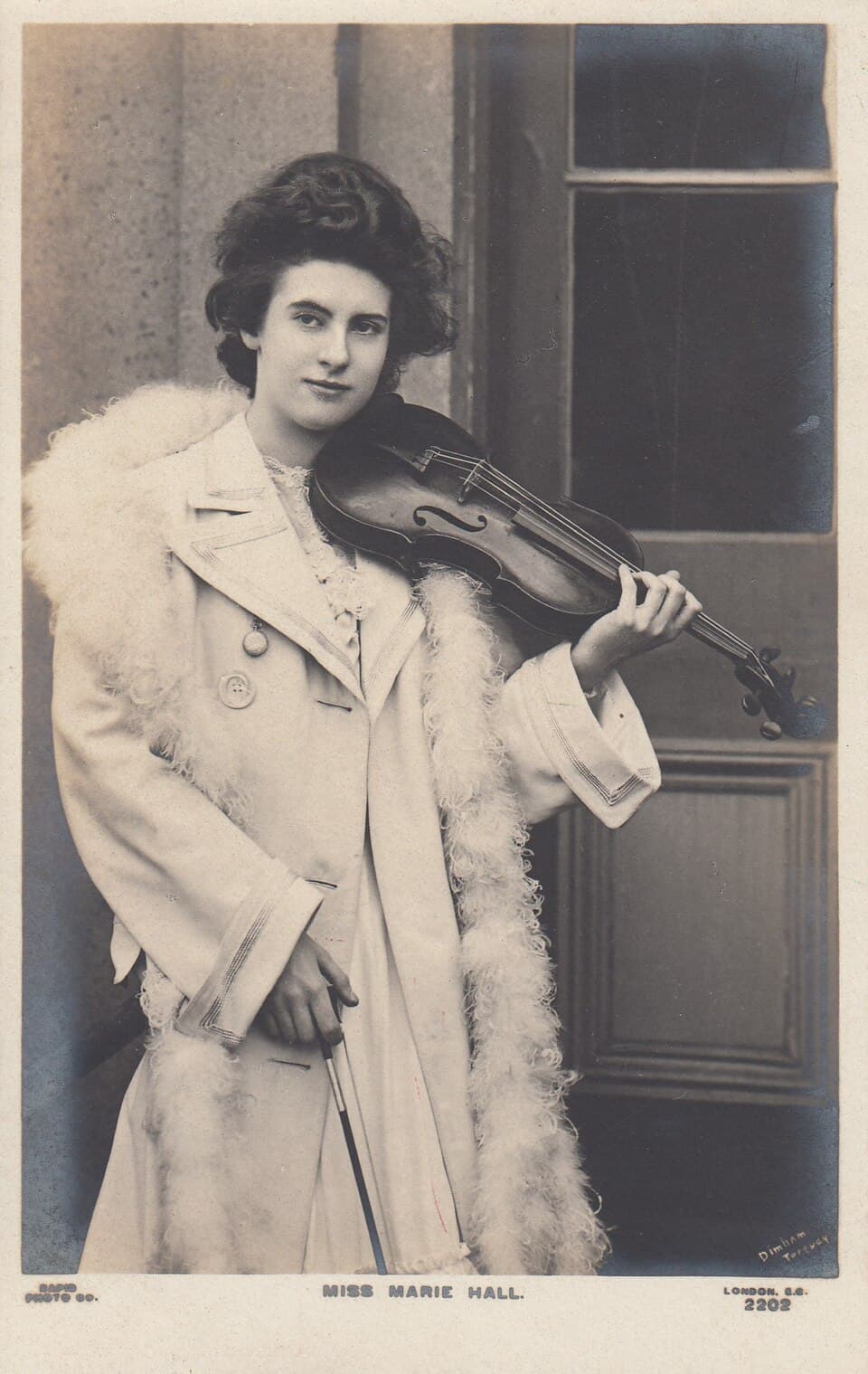
British · Arts
Marie Hall
April 8, 1884 – 1956
Early Life and Background
Marie Hall was born on April 8, 1884, in Newcastle-upon-Tyne, England. Growing up in a musical family, Hall's father was a harpist, which undoubtedly influenced her early interest in music. Displaying prodigious talent from a young age, she received her first violin lessons from her mother and later attended the prestigious Royal Academy of Music in London. Her early education fostered her passion and provided a foundation for her future career.
Career Beginnings and Development
Hall's professional debut took place at the age of 11, and her exceptional skill quickly attracted the attention of renowned musicians and composers. She studied under several influential teachers, including Jan Kubelík and later Leopold Auer in St. Petersburg, which significantly honed her technique and interpretative skills.
Major Works, Discoveries, or Accomplishments
Marie Hall's career was marked by numerous acclaimed performances throughout Europe and the Americas. She was particularly known for her interpretations of works by composers such as J.S. Bach, Beethoven, and Brahms, as well as contemporary pieces written specifically for her by Edward Elgar and others. One of her most famous contributions to music was premiering Vaughan Williams' "The Lark Ascending" in 1920, a piece she helped develop alongside the composer.
Awards, Honors, and Recognition
Throughout her career, Marie Hall was recognized for her technical prowess and expressive performances. Her contributions to the arts were celebrated in various forms, though formal awards were scarce due to the era's limitations on recognizing female performers.
Personal Life
Despite her professional success, detailed accounts of Marie Hall's personal life remain limited. It is known that her dedication to her craft and rigorous performance schedule left little time for traditional familial obligations. Her life was largely dedicated to her music and mentoring young violinists.
Legacy and Historical Impact
Marie Hall's legacy as a pioneering female violinist endures in the annals of classical music history. Her influence extended beyond her performances; she paved the way for future generations of female musicians in a male-dominated field. Hall's recordings and pedagogy continue to serve as inspiration and a benchmark for aspiring violinists.
Later Life and Death
Marie Hall continued to perform until her later years but gradually retired from public life. She passed away in 1956, leaving behind a rich legacy of recordings and a storied career that set new standards in the world of violin performance.
Dated achievements
2 indexed.
- Apr081884Arts
Born in Newcastle-upon-Tyne, England
Marie Hall was born on 8 April 1884 in Newcastle-upon-Tyne, England, into a musical family; her father was a harpist.
View details Marie Hall - Wikipedia - Nov291956Arts
Death of Marie Hall in Cheltenham, England
Marie Hall, the celebrated British violinist, died on 29 November 1956 in Cheltenham, England, at age 72.