← All women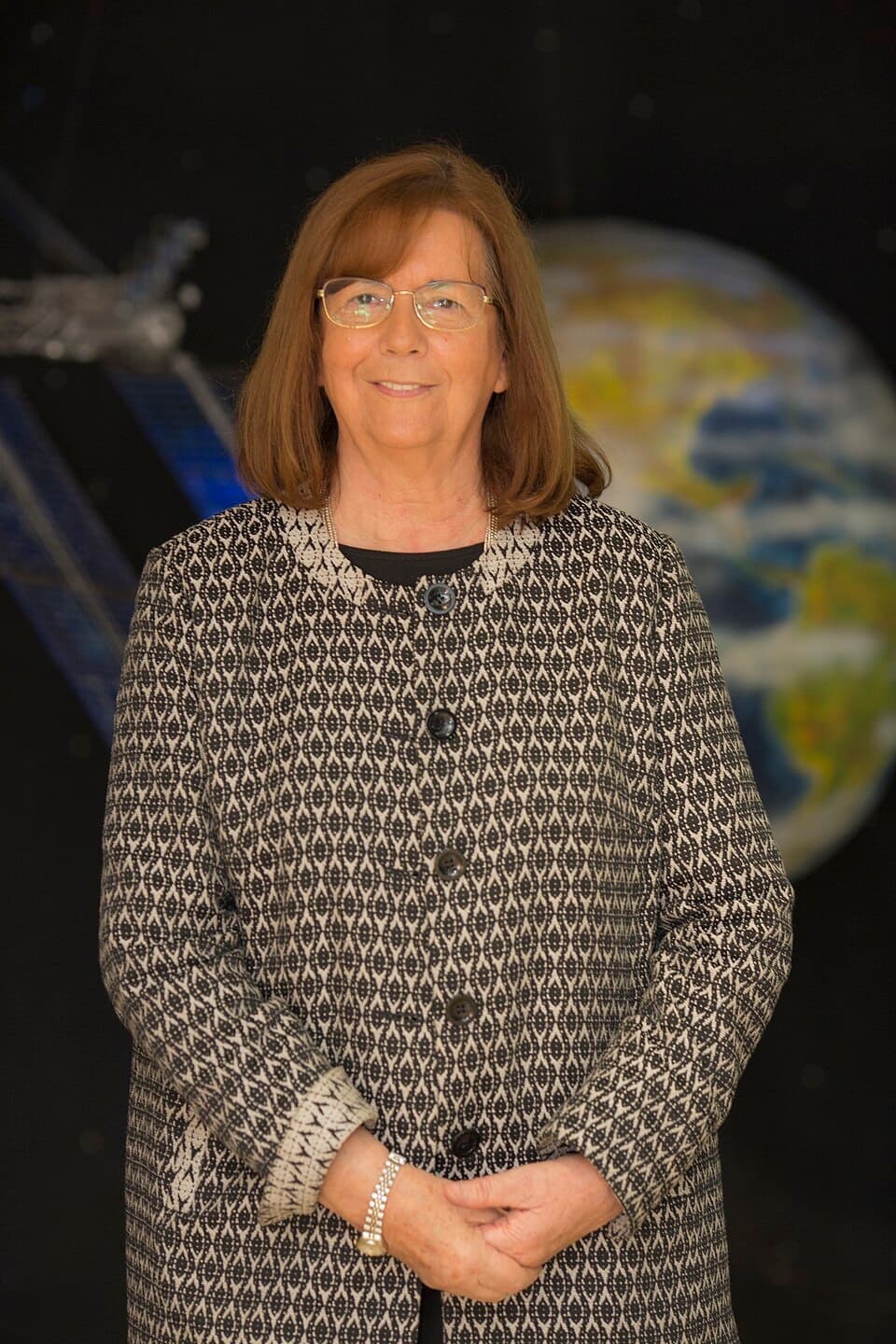
Chilean · Science
María Teresa Ruiz
September 24, 1946 – present
Early life and education
María Teresa Ruiz González was born in Santiago, Chile, on 24 September 1946. She grew up in a period when professional scientific careers were still strongly gendered, and when advanced astronomical research in Chile was only beginning to develop as an institutional field. Public profiles and institutional biographies consistently identify her as a Chilean astronomer whose later career would reshape the possibilities for women in the exact sciences.
Ruiz’s path into astronomy did not begin in a straight line. She first entered university in a different field and later changed direction after encountering astronomy through practical work and exposure to observational science. That early shift became foundational: it led her to the University of Chile’s astronomy program, where she would become the first graduate in the discipline. The move also reflected one of the recurring themes in her life story: curiosity overriding social expectations. In later interviews, she has described the cultural barriers faced by women who chose scientific careers, especially in an era when such choices were often viewed as unconventional.
Her university training extended beyond Chile. After her studies in Santiago, she pursued graduate education at Princeton University, where she earned an M.Sc. in astronomy/astrophysics and later a PhD in astrophysics. Institutional and press sources describe her as the first woman to earn a PhD in astrophysics at Princeton, a milestone that gave her international scientific credentials at a time when women were still underrepresented in elite graduate programs. These years established the technical and research foundation for the career that followed.
Career beginnings and research development
In 1979, Ruiz began working as an academic in the Department of Astronomy at the University of Chile. Her appointment marked the start of a long institutional career at the university, where she would become one of the most important figures in the development of modern Chilean astronomy. Over time, she rose to senior academic rank and helped train generations of students in a field that was becoming increasingly important to Chile’s scientific identity.
Ruiz’s research has focused especially on low-mass stars, faint stellar populations, white dwarfs, and related objects in the solar neighborhood and the Milky Way. Public profiles credit her with influential work on dim stellar populations and with discoveries that helped advance understanding of stellar evolution. Her name is also associated with the discovery of Kelu 1, a brown dwarf that drew attention because it represented one of the more significant nearby substellar objects studied from Chilean astronomy. Institutional profiles describe her as a pioneer in the study of low-luminosity stars and as a scientist whose work contributed to understanding the life cycle of stars.
Her career was not limited to research alone. Ruiz played major roles in academic institution-building. She is described in institutional sources as a founder of the FONDAP Center for Astrophysics and as director of the Center of Excellence in Astrophysics and Associated Technologies (CATA). These positions reflect an important dimension of her legacy: she helped create the structures through which astronomy in Chile could flourish on a larger scale, linking university research, national investment, and international collaboration.
In addition to her research and institutional work, Ruiz became widely known for scientific outreach. She authored or coauthored books aimed at broader audiences, including works on astronomy for children and general readers. That outreach reflected a conviction that science should be accessible to the public and that astronomy, in particular, could serve as a bridge between professional research and popular imagination.
Barrier-breaking firsts
Ruiz’s biography is especially notable for the number of historic firsts associated with her career. She became the first graduate in Astronomy from the University of Chile, the first woman to earn a PhD in astrophysics at Princeton University, the first woman to receive Chile’s National Prize for Exact Sciences, and the first woman to preside over the Chilean Academy of Sciences. These milestones are important individually, but together they define her as a pioneer whose career repeatedly opened doors for other women.
Such firsts mattered because they occurred in a scientific culture where women were frequently excluded from the most visible markers of expertise and leadership. Ruiz’s achievements did not simply reflect personal excellence; they also altered the symbolic landscape of Chilean science. By occupying spaces that women had rarely occupied before, she helped broaden expectations about who could study astronomy, lead research institutions, and represent scientific authority at the national level.
Her career thus belongs not only to the history of astronomy but also to the history of women’s access to scientific professions in Latin America. Later institutional and media profiles frequently emphasize this dual significance: she was both a researcher of international standing and a model for women seeking careers in science.
Awards and recognition
Ruiz has received some of Chile’s and the international science world’s most important honors. In 1996, she received the Cátedra Presidencial en Ciencias. In 1997, she was awarded the National Prize for Exact Sciences, becoming the first woman to receive the prize. In 2000, she obtained a Guggenheim Fellowship. In 2017, she was honored with the L'Oréal-UNESCO Women in Science award, reflecting both her scientific impact and her public role as a woman leader in science.
These awards trace a trajectory from national recognition to international distinction. They also reveal the breadth of Ruiz’s impact: she was honored not only for a single discovery but for a sustained body of work, institutional leadership, and contributions to scientific culture. Sources from the University of Chile and other institutions also mention recognitions such as the Medalla Rectoral and the Amanda Labarca distinction, further underscoring her status as one of the most decorated women scientists in Chile.
Personal life
Public sources emphasize Ruiz’s scientific career more than her private life, but interviews and profile pieces note that family and personal relationships have been an important support in her life. She has spoken in media coverage about the importance of love and family as part of her long career in science. Available sources do not provide a detailed public biography of marriage or children, so those details should not be assumed beyond what is explicitly documented.
What is clear from the available record is that Ruiz had to navigate social expectations that often discouraged women from choosing demanding scientific paths. Her own recollections in press interviews suggest that the barriers she faced were cultural as well as professional. She has been quoted on the need for women to prove that they entered science out of vocation rather than social expectation, a reminder of the gendered assumptions common in mid-twentieth-century Chile.
Legacy and historical impact
María Teresa Ruiz’s legacy lies in the combination of scientific accomplishment, institution-building, and gender barrier-breaking. She helped establish astronomy as a serious academic field in Chile, contributed to research on faint stars and brown dwarfs, and played a major role in shaping the institutions that support Chilean astrophysics today. At the same time, she became one of the most visible examples of a woman who reached the highest levels of scientific recognition in a country where such achievements had long been rare for women.
Her influence extends beyond awards and titles. Through her teaching, leadership, publications, and outreach, Ruiz helped make astronomy part of Chile’s modern scientific identity. She also became a public symbol of excellence for women in science, showing that women could lead research programs, direct major scientific centers, and receive the country’s top honors in the exact sciences.
For these reasons, Ruiz is widely regarded as a pioneer of Chilean astronomy and an important figure in the history of women in science in Latin America. Her life demonstrates how one career can reshape both a discipline and the social assumptions surrounding it.
Later career and continuing influence
Ruiz continued to be active in academic and public life well into the twenty-first century. Institutional biographies describe her as a senior academic at the University of Chile, a leader in astrophysical research centers, and a director in initiatives that link science with broader social participation. She has also remained engaged in public science communication, helping sustain a wider conversation about astronomy in Chile and beyond.
By the time of her election to the presidency of the Chilean Academy of Sciences in 2015, Ruiz was already a national scientific figure. The election confirmed a career built over decades and underscored the importance of women’s leadership in scientific institutions. Her later honors, including the 2017 L'Oréal-UNESCO award, further cemented her reputation as one of Chile’s most influential scientists.
Ruiz’s career remains a reference point for historians of science, educators, and advocates for women in STEM. Her story illustrates how expertise, persistence, and institutional leadership can combine to alter the landscape of a national scientific culture.
Dated achievements
10 indexed.
- Sep241946Science
Birth of María Teresa Ruiz González
Born in Santiago, Chile. She would become a pioneer of Chilean astronomy and a barrier-breaking scientific leader.
View details María Teresa Ruiz - Wikipedia, la enciclopedia libre - Dec311971Science
First graduate in Astronomy from the University of Chile
Became the first graduate in Astronomy from the University of Chile, a landmark first for Chilean science.