← All women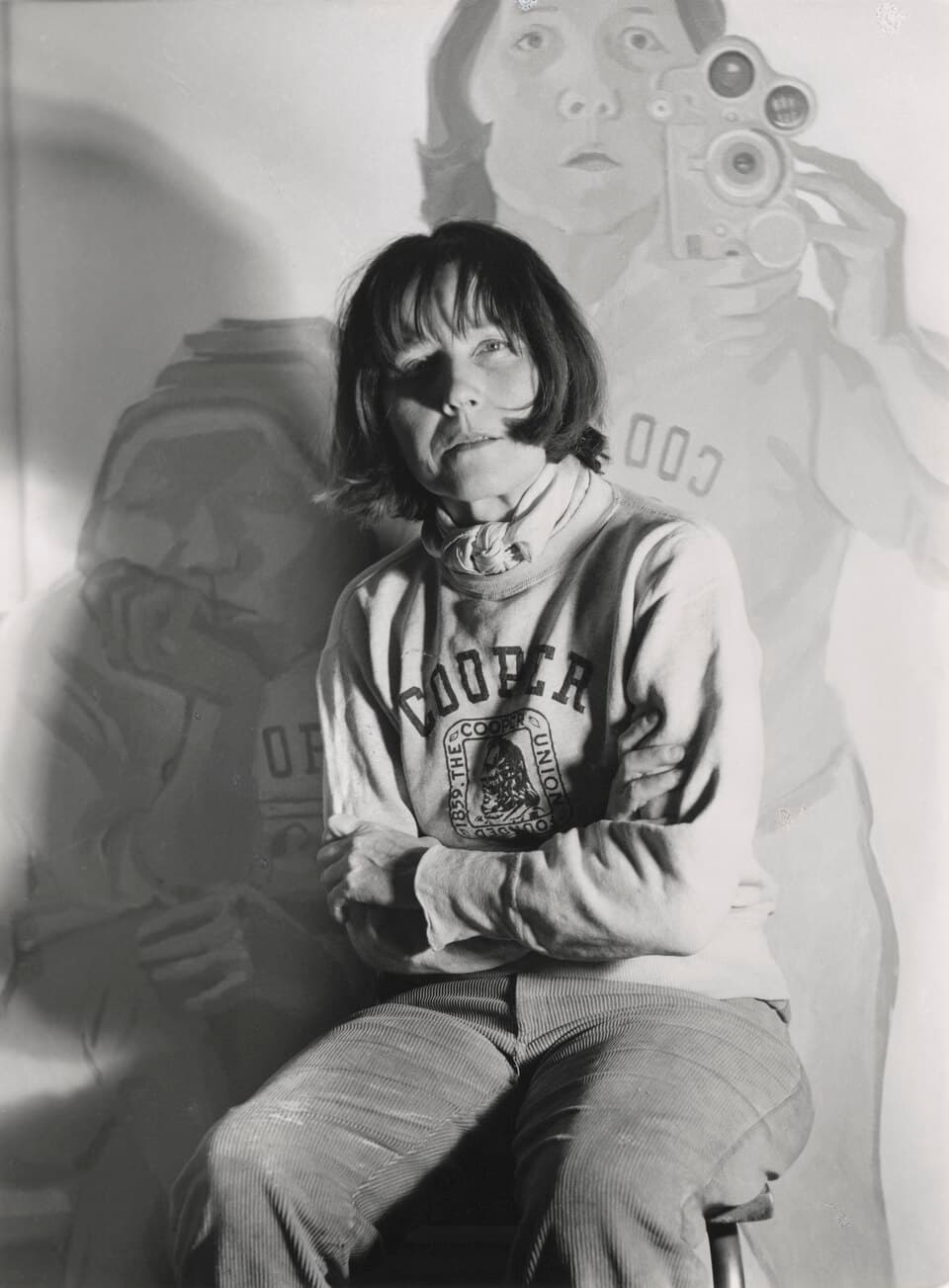
Austrian · Arts
Maria Lassnig
September 8, 1919 – May 6, 2014
"
Early Life and Background
Maria Lassnig was born on September 8, 1919, in the small village of Kappel am Krappfeld in the Austrian province of Carinthia. She was born to Mathilde Lassnig, an unmarried woman, and was raised for her earliest years by her grandmother, a baker, while her mother worked. This early experience of separation and an unconventional family structure in a deeply Catholic, rural society left a lasting impression on Lassnig, who later spoke of feelings of alienation and heightened self-awareness stemming from her childhood. Her mother later married a pharmacist named Jakob Lassnig, who formally adopted Maria and gave her his surname.
Lassnig attended school in Klagenfurt and initially trained as a primary school teacher, a common and socially acceptable path for young women of her generation. However, she felt drawn toward the visual arts and, in 1940, enrolled at the Academy of Fine Arts Vienna, where she studied painting. Her arrival at the Academy coincided with the Nazi annexation of Austria and the outbreak of World War II, a fraught and dangerous time to be pursuing art that diverged from state-sanctioned styles. Lassnig's early experimentation with Expressionist and abstract approaches drew official disapproval; her professors, working under the Nazi regime's demand for conventional, idealized figuration, criticized her "degenerate" tendencies.
Career Beginnings and Development
After the war, Lassnig became associated with the Vienna Art Club, a loose association of Austrian avant-garde artists seeking to reconnect with international modernism after years of cultural isolation under Nazi rule. In the late 1940s and 1950s she experimented with Cubism, Surrealism, and later Art Informel, engaging with movements largely centered in Paris. She spent significant time in Paris in the 1950s, absorbing the influence of Tachisme and gestural abstraction while developing her own distinctive vocabulary.
It was during the 1940s that Lassnig began to develop what would become her lifelong signature concept: \"Körperbewusstseinsmalerei\", or \"body awareness\" painting. Rather than depicting the external, visible likeness of a body or face, Lassnig sought to paint the internal sensations she felt within her own body while working—tension in a muscle, pressure behind the eyes, the ache of a limb, or the sensation of breath. This radical, introspective approach diverged sharply from both academic figuration and the prevailing abstraction of the era, and it would take decades for the art world to fully recognize its significance.
Major Works and Accomplishments
Lassnig moved to Paris in 1960, immersing herself further in the international avant-garde, and later relocated to New York City in 1968, where she lived for over a decade. In New York, she encountered feminist art movements, experimental film, and the burgeoning field of video art. She became one of the first women to teach a class in animated film production, co-founding the Women/Artist/Filmmakers, Inc. collective in 1975 and producing experimental animated films that explored bodily sensation and psychological states, paralleling themes in her paintings.
Her paintings from this period, and throughout her career, are characterized by unflinching, often grotesque or humorous self-portraiture. She painted herself as fragmented, distorted, wounded, armored, or merged with household objects and weapons—works such as Woman Laying an Egg (1987), You or Me (2005, in which she paints herself nude, aiming pistols at both the viewer and herself), and numerous other self-portraits that confront vulnerability, mortality, sexuality, and aging with rare directness for a woman artist of her generation.
In 1980, Lassnig returned to Vienna and became the first female professor of painting at a German-language art academy when she was appointed professor at the University of Applied Arts Vienna, a landmark achievement that opened doors for subsequent generations of women artists in Austria and Germany. She taught there for over a decade, mentoring numerous younger artists while continuing to develop her own painting practice.
Awards, Honors, and Recognition
Despite the originality and rigor of her work, Lassnig's recognition by mainstream art institutions came remarkably late. She represented Austria at the Venice Biennale in 1980 (sharing the pavilion, notably, as one of the first women to represent the country) and had her first major museum retrospectives only in the 1980s and 1990s. Recognition accelerated in the final decade of her life: she received the Grand Austrian State Prize, the Oskar Kokoschka Prize, and numerous other honors.
The capstone of her institutional recognition came in 2013, when she was awarded the Golden Lion for Lifetime Achievement at the 55th Venice Biennale, curated by Massimiliano Gioni, at the age of 94. This was followed by a major retrospective at MoMA PS1 in New York in 2014, which she was able to see shortly before her death. Tate, MoMA, the Guggenheim, and other leading institutions across Europe and the United States have since acquired and exhibited her works, and she is now considered one of the most influential painters of body and self-portraiture in postwar art.
Personal Life
Lassnig never married and had no children, choosing instead to dedicate her life fully to her art. She had relationships with several other artists during her time in Vienna and Paris, including a notable relationship with the French sculptor and painter Arnulf Rainer, with whom she had an intense creative and personal partnership in the 1950s. She was known for her fierce independence, wit, and refusal to compromise her artistic vision for commercial or institutional approval, even when this meant decades of financial hardship and professional marginalization.
Legacy and Historical Impact
Maria Lassnig's legacy rests on her radical reconception of self-portraiture and the painted body. By insisting on painting internal sensation rather than external appearance, she anticipated and influenced later developments in body art, feminist art, and contemporary figurative painting. Her unflinching depictions of aging, illness, vulnerability, and mortality—particularly in her final years—are considered among the most powerful and honest treatments of these themes in modern art history.
The Maria Lassnig Prize, and the Maria Lassnig Foundation established after her death, continue to support and honor experimental and pioneering visual artists in her name. Her story has become emblematic of the broader historical pattern by which women artists—working with radical, unconventional visions—were overlooked by a male-dominated art establishment for much of the twentieth century, only to be celebrated in their final years or posthumously.
Later Life and Death
Lassnig continued to paint prolifically well into her nineties, producing some of her most searing and personal self-portraits during this period, confronting the realities of an aging and failing body with the same clinical, unsentimental honesty that had defined her entire career. She died in Vienna on May 6, 2014, at the age of 94, shortly after the opening of her retrospective at MoMA PS1. Her death was widely mourned across the international art world, and her reputation has only continued to grow in the years since, with major retrospectives at institutions including Tate Liverpool, the Museum of Modern Art, and the Serpentine Galleries.
"Dated achievements
3 indexed.
- Sep081919Science
Born in Kappel am Krappfeld, Austria
Maria Lassnig was born on September 8, 1919, in Kappel am Krappfeld, Carinthia, Austria.
View details Wikipedia: Maria Lassnig - Jun012013Science
Awarded the Golden Lion for Lifetime Achievement at the Venice Biennale
In 2013, Lassnig became one of the first women to receive the Golden Lion for Lifetime Achievement at the Venice Biennale, at age 94.