← All women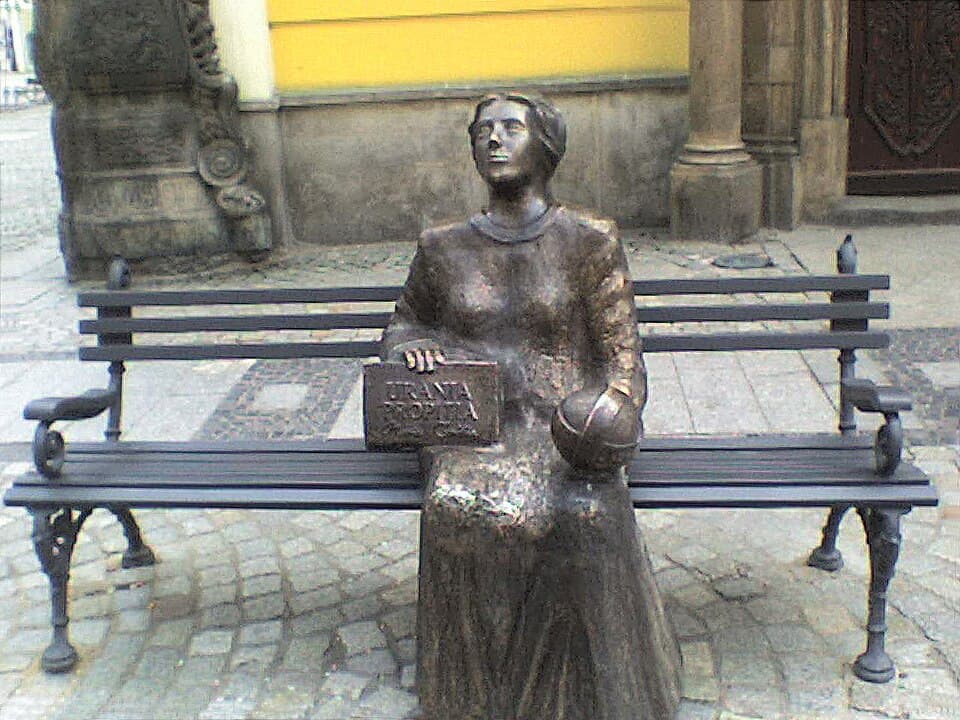
Silesian · Science
Maria Cunitz
May 29, 1610 – August 22, 1664
Early life and family background
Maria Cunitz (also rendered Maria Cunitia and in other variant spellings) was born on 29 May 1610 in Wohlau in Lower Silesia, in what is now Poland. Although several scholarly sources give only an approximate birth year and note that the exact day is uncertain, the German-language biographical tradition records 29 May 1610, and this date is often used in modern reference works. She was born into a learned Protestant household during a period of political and religious instability in Central Europe, and her upbringing appears to have been unusually intellectual for a woman of the early seventeenth century.[5][12][15]
Her father was Dr. Heinrich Cunitz, a physician. The family’s social position and learned milieu mattered greatly: women of her time rarely received advanced instruction in mathematics, astronomy, or classical languages, but Cunitz benefited from education at home. Biographical accounts describe her as gifted in both languages and natural philosophy from an early age. The combination of family support and personal ability gave her access to the textual and computational tools that would later shape her astronomical work.[10][12][15]
Maria Cunitz lived in a region deeply affected by the Thirty Years’ War, which disrupted households, academic networks, and patronage structures. In such conditions, scholarly work often depended on private libraries, family alliances, and mobility rather than institutional affiliation. Cunitz’s later career should be understood in this context: she was not a university astronomer, but a learned woman working at the margins of the formal scientific world.
Marriage and personal life
In 1630, Cunitz married Dr. Elias von Löwen, a physician from Pitschen in Silesia. Reliable sources consistently give the year of the marriage but not the exact day or month, so the event can only be dated to the year level. The marriage connected her to another educated household, and several accounts describe von Löwen as supportive of her astronomical interests.[10][12][15]
During the upheaval of war, the couple took refuge in or near a Cistercian convent estate at Ołobok (often rendered Olobok or Lugnitz in older sources), where Cunitz undertook the calculations that became her chief scientific achievement. The historical record does not support a detailed, modern-style private biography; instead, it reveals a marriage embedded in the learned culture of early modern Silesia. Sources consulted here indicate that she had no children.[10]
In older biographical literature, women scientists were often described mainly through their husbands or fathers. Cunitz’s case is different because her scientific identity survived that pattern: she is remembered for a published book under her own name, not simply for association with a learned man. That makes her personal life historically relevant not as an end in itself, but because it shows how a woman could participate in the republic of letters through family and marital networks while still asserting intellectual authority.
Scientific formation and intellectual influences
Cunitz’s astronomical formation was rooted in the work of Johannes Kepler. She studied his Rudolphine Tables, which represented one of the great achievements of seventeenth-century astronomy but were difficult to use because they required advanced mathematical skill and, in many cases, logarithmic computation. Cunitz became interested in making planetary calculation simpler and more practical. Contemporary and later sources emphasize that she not only read Kepler but also engaged with the computational structure of his astronomy.
Between roughly 1643 and 1645, she carried out the extensive calculations and revisions that would become her major work. These years are important because they show that Urania Propitia was not a casual adaptation, but the result of serious technical labor. She refined the methods for finding planetary positions on elliptical orbits and simplified the working procedure so that users without specialized training could apply the tables more easily.[12][15]
Her intellectual achievement was remarkable in a period when women were frequently denied access to advanced mathematical study. Even highly educated women were often expected to confine themselves to translation, compilation, or informal assistance. Cunitz crossed that boundary by producing a technical work that offered new tables and a clearer method for applying Kepler’s second law. In later historical writing, she is sometimes compared with Hypatia as a symbolic figure of female scientific intellect, though her own importance rests on the concrete content and usefulness of her astronomy, not on analogy alone.[3][12]
Urania Propitia and major publication
Cunitz’s central achievement was the publication in 1650 of Urania Propitia, sive Tabulae Astronomicae mirè faciles, printed in Oels in Silesia. The work presented revised astronomical tables and a simplified method for calculating planetary positions based on Keplerian theory. It is especially notable for removing much of the difficulty associated with the older tables, including the need for logarithms in many ordinary calculations.[1][5][12][15]
The book was printed in Latin and German, a significant choice in the history of scientific writing. Latin remained the standard language of learned publication, but Cunitz also used German to broaden accessibility. This made the work both technically sophisticated and more usable for readers outside the small circle of university-trained specialists. In the context of seventeenth-century print culture, that bilingual presentation was itself a meaningful act of mediation between elite scholarship and practical astronomy.[1][5][15]
Urania Propitia gained Cunitz a European reputation. The work was dedicated to Emperor Ferdinand III, and later historical accounts note that it circulated as an important simplification of Kepler’s methods. Some modern histories describe it as the earliest surviving, or possibly earliest, high-level printed scientific book written by a woman. That claim is important not only as a bibliographic milestone, but also as evidence of a barrier-breaking entry into scientific authorship at a time when women’s intellectual work was often excluded from print or attributed to male relatives.[12][15]
The work’s title, its technical sophistication, and its practical orientation all contributed to its historical standing. Cunitz did not merely summarize Kepler; she transformed his difficult tables into a more approachable tool. In doing so, she helped make the mathematical astronomy of the early modern period more usable for a wider educated public.
Historical significance and recognition
Maria Cunitz has been remembered as one of the most important women astronomers of the early modern era. Modern reference works describe her as the most notable female astronomer of her age, and later historians have emphasized the originality of her computational work.[1][2][17] She is often called the Silesian Pallas, a title that reflects both learned admiration and the tendency of early modern authors to compare women scholars to figures of classical wisdom.[12][15]
Her significance lies in several overlapping achievements. First, she demonstrated that a woman could conduct substantial mathematical astronomy at a level equal to serious male contemporaries. Second, she produced a printed technical book under her own name, an uncommon and consequential act in the seventeenth century. Third, she worked to simplify one of the most advanced astronomical systems of her time, translating Keplerian theory into a more accessible computational form.[1][3][12]
Historians of science also value Cunitz because her book shows how astronomy functioned as both a theoretical and practical discipline. By reducing computational complexity, she made the science more usable for observers and practitioners. That practical contribution connects her to broader changes in seventeenth-century science, when mathematical methods, improved tables, and printed manuals were reshaping how astronomical knowledge was learned and applied.
Later life, widowhood, and death
According to the 1911 Encyclopædia Britannica, Cunitz became a widow in 1661, though details vary across later accounts. She continued to be remembered for her scientific work, but the surviving record becomes thinner in her later years. She died on 22 August 1664 in Pitschen (Byczyna), Silesia, a date supported by several modern biographical sources, although some traditions give 24 August 1664 instead.[2][5][8][11][12][13]
Her death took place in a Europe transformed from the world of her youth, but her work retained scholarly value because it addressed enduring problems in planetary calculation. Unlike many early modern women whose contributions disappeared into family memory, Cunitz’s authorship survived in bibliographies and histories of astronomy. That survival is part of her historical importance: she remained visible enough to be rediscovered by later scholars interested in women, science, and the development of mathematical astronomy.
Legacy and posthumous honors
Cunitz’s legacy extends beyond her seventeenth-century readership. Modern histories of astronomy and women’s science consistently cite her as a trailblazer, especially because she authored a technically serious scientific book at a time when such authorship by women was extraordinarily rare. Her career has become a case study in how women contributed to early modern science through private study, family support, and print culture despite institutional exclusion.[1][8][15][17]
Her name has also been preserved in astronomical nomenclature. The Cunitz crater on Venus was named in her honor, and the main-belt asteroid (12624) Mariacunitia likewise commemorates her. These honors are significant because modern planetary nomenclature has often been used to recognize historically underappreciated women in science. The naming of a Venusian crater after her is especially apt, since the International Astronomical Union’s naming conventions for Venus have long favored women’s names, allowing figures like Cunitz to enter the geography of the solar system itself.[4][17]
For historians, Maria Cunitz remains important not as an isolated curiosity but as a serious scientific author whose work bridged the gap between elite Keplerian theory and practical astronomical calculation. She stands as an early example of women’s participation in the mathematical sciences, and her life shows how intellectual achievement could emerge even in the face of social restrictions, war, and the limited formal opportunities available to women in early modern Europe.
Dated achievements
2 indexed.
- May291610Science
Birth of Maria Cunitz
Birth of Maria Cunitz in Wohlau, Silesia, on May 29, 1610.
View details German Wikipedia: Maria Cunitz - Aug221664