← All women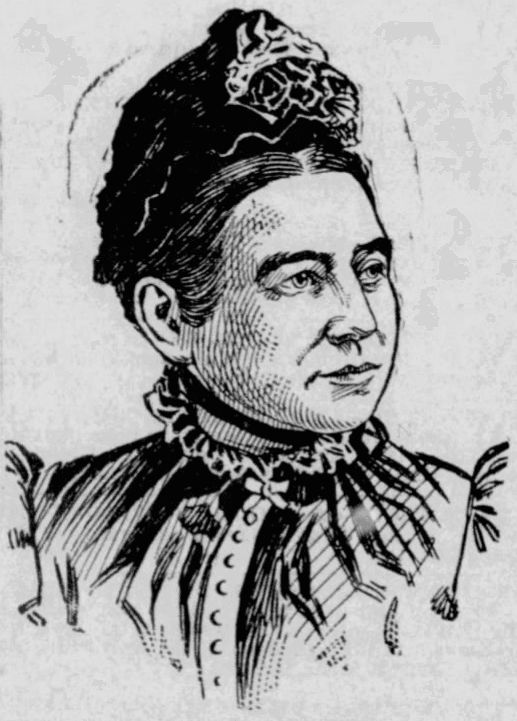
American · Science
Maria Beasley
1836 – 1913
Early Life and Background
Maria E. Beasley, often cited as Maria Hauser or Maria Kenny before marriage, was an American inventor and entrepreneur born in North Carolina around 1836.[ENwiki][ESwiki] Precise details of her birth date, family background, and childhood are not well documented in surviving primary sources, and modern accounts rely largely on retrospective biographical sketches. Nonetheless, multiple language editions of encyclopedic entries agree that she came from the American South and later worked out of Philadelphia, Pennsylvania, a major industrial center in the nineteenth century.[ENwiki][CAwiki]
Some later popular narratives describe her learning mechanical skills from relatives engaged in distilling or other trades and portray her as moving from work as a dressmaker into invention in middle age. These stories help explain how a woman from a largely rural region could develop the technical literacy needed to design complex machinery. However, they are not corroborated by the patent records themselves and should be treated as interpretive rather than strictly evidentiary.
What can be documented with more confidence is that, by the late 1870s, Beasley had acquired enough engineering knowledge and business acumen to pursue patents for industrial devices, entering the competitive, male‑dominated world of American invention at a time when few women appeared in patent registers outside of domestic technologies.
Career Beginnings and Development
Beasley’s recorded inventive career begins in the late 1870s. Between 1878 and 1898, she secured approximately fifteen U.S. patents, along with at least two British patents, covering a wide range of devices from industrial machinery to transportation safety equipment.[ENwiki][ESwiki][InTrans] Her work was notable both for its technical diversity and for the fact that she appears to have profited financially from her inventions—an outcome relatively rare among early women patentees.[StMarys]
Her first major success was a barrel‑making machine, patented in 1878, which mechanized and accelerated the cooperage process.[InTrans][Twinkl] In subsequent years she patented a barrel‑hooping machine, with sources indicating that she obtained a U.S. patent for this improvement in 1881.[ENwiki][Twinkl] These devices automated the tasks of assembling barrels and fastening metal hoops, crucial for industries that depended on barrels to transport liquids, foodstuffs, chemicals, and other bulk goods.
Accounts of Beasley’s business activities suggest that her barrel machinery formed the foundation of an industrial enterprise that produced large volumes of barrels and generated substantial income. While specific corporate records are scarce, later writers emphasize that her barrel‑making systems allowed factories to produce in a single day what traditional coopers might manufacture in a week, and that she was among the relatively few women inventors of her era to achieve significant commercial success.[Twinkl][TransportationHistory]
Having established herself as a credible inventor of heavy machinery, Beasley expanded her focus to transportation and safety technologies. By 1880, she had obtained at least one patent related to life‑raft improvements, and in the early 1880s she pursued additional designs that would culminate in her most famous patent, granted in 1882.[TransportationHistory][InTrans]
Major Inventions and Accomplishments
Barrel‑Making and Barrel‑Hooping Machines
Beasley’s barrel‑making machine, patented in 1878, is widely described as her first patented invention and the cornerstone of her industrial success.[InTrans][Twinkl] The machine mechanized the work of coopers, increasing speed and uniformity at a time when barrels were the primary containers for shipping goods ranging from flour and salt to petroleum and gunpowder. By replacing manual labor with a specialized apparatus, she helped transform cooperage from a craft into a more modern manufacturing process.
Building on this foundation, she secured a patent in 1881 for a barrel‑hooping machine, which addressed the crucial task of attaching metal hoops around barrel staves to hold them together.[ENwiki][Twinkl] The hooper worked in tandem with her barrel‑making machinery, enabling integrated, high‑volume production lines. The technical details of these machines appear in period patent literature and industrial reports, but the broader impact is clear: Beasley’s innovations contributed to the efficiency of packaging and transport across multiple sectors of the late‑nineteenth‑century economy.
Her barrel‑hooping machine achieved enough prominence to be selected for display at the World’s Industrial and Cotton Centennial Exposition in New Orleans in 1884, a world’s fair devoted to industrial and agricultural progress.[ENwiki][CAwiki] This exhibition showcased cutting‑edge industrial technology and gave Beasley’s work international visibility. As a woman presenting heavy machinery at such an event, she stood out against the gender norms of the time.
Life Raft Innovations
Beasley’s most historically visible inventions are her improvements to the life raft. According to transportation history accounts, she obtained patents related to life rafts in 1880 and 1882.[TransportationHistory][InTrans] The definitive record of the second of these is U.S. Patent No. 258,191, titled "Improvement in Life‑Rafts," for which she filed an application on 17 January 1881 and received the granted patent on 16 May 1882.[US258191]
The patent described a collapsible metal life raft composed of metal floats and airtight containers, designed to be stored flat against a ship’s structure and rapidly deployed in an emergency.[US258191][AFPM] Guard railings were incorporated to reduce the risk of passengers falling into the water, and the overall configuration aimed to maintain buoyancy even when individuals leapt onto the raft from a burning or sinking vessel.
Beasley’s design addressed several practical problems in contemporary lifesaving equipment: traditional lifeboats were bulky, occupied valuable deck space, and could be difficult to launch under chaotic conditions. Her compact raft minimized storage requirements while maximizing capacity and safety. Secondary sources note that versions of her collapsible life raft were later used aboard major ocean liners, including the Titanic, although detailed technical correlation requires careful archival research.[ESwiki][StMarys]
In addition to her U.S. patent, Beasley obtained related protection for her life‑raft design in the United Kingdom, indicating that she actively pursued international markets for her safety equipment.[ENwiki][CAwiki] This transatlantic dimension underscores her stature as more than a local inventor; she sought global relevance for her designs at a time when ocean travel and international trade were expanding rapidly.
Crucially, later analyses and institutional profiles credit Beasley as the first woman known to patent a life raft in the United States, making her a pioneer in maritime safety from a gender perspective as well.[Inventiv][AFPM] Her role challenges the assumption that women’s inventions in the nineteenth century were confined to domestic or small‑scale devices.
Transportation Safety and Other Patents
Beyond barrels and life rafts, Beasley secured patents for a variety of devices, several of which aimed to improve transportation safety. In 1886, she obtained a patent for a steam generator for trains, used in railway cars, which is noted in secondary sources as part of her contribution to rail technology.[InTrans] The specifics of this patent—such as its exact date and design details—are less widely reproduced, but it reflects her ongoing engagement with the problems of heating and power in transport systems.
Her most clearly documented rail safety invention is a "means for preventing derailment of railroad‑cars", for which she received a U.S. patent on 15 February 1898.[TransportationHistory][InTrans] This anti‑derailment device joined a broader late‑nineteenth‑century effort to reduce accidents by refining wheel and track interfaces, couplings, and braking systems. That Beasley addressed derailment specifically indicates her awareness of the most dangerous failure modes in rail travel.
Secondary sources attribute additional patents to Beasley, including designs for foot warmers, cooking pans, and other household or travel‑related items.[ENwiki][Twinkl] These inventions round out the picture of her as a versatile problem‑solver, attentive both to large‑scale industrial concerns and to the everyday comfort of passengers and consumers. However, many of these patents are not yet fully documented with exact filing or grant dates in readily accessible records.
Awards, Honors, and Contemporary Recognition
There is limited evidence of formal awards or medals being granted to Beasley by scientific societies or government bodies. Instead, her recognition appears primarily in the form of exhibition selection and commercial success. Her barrel‑hooping machine’s display at the World’s Industrial and Cotton Centennial Exposition in New Orleans in 1884 placed her among a select group of inventors whose work was considered deserving of international attention.[ENwiki][CAwiki]
Modern organizations have begun to highlight her contributions. Transportation history groups, women‑in‑STEM initiatives, and educational resources now feature Beasley as a case study in early women’s engineering achievements.[TransportationHistory][StMarys][Twinkl] These contemporary recognitions serve partly to compensate for the relative lack of formal honors during her lifetime and help integrate her into broader narratives of innovation and gender.
Personal Life
Documentary evidence about Beasley’s personal life is sparse. Some sources refer to her under different surnames—Hauser, Kenny, and Beasley—suggesting marriage and possible name changes, but detailed records of her spouse’s identity, the number of children, and domestic arrangements are not consistently available in the public historical record.[ENwiki][ESwiki][HUwiki]
Popular retellings often portray her as a woman who turned from dressmaking or other forms of women’s work to mechanical invention in her forties, challenging the conventions that confined women to domestic spheres. While these narratives illuminate the social context in which she worked, they draw heavily on anecdote and later interpretation rather than contemporaneous documentation. Careful historians therefore treat them cautiously, emphasizing what can be firmly established from patents and industrial reports.
What is clear is that Beasley operated across different states and probably over significant geographic distances, given that her patents were filed in the United States and Britain and that she exhibited her machinery in New Orleans. This mobility and public presence distinguish her from many women of her generation, whose work and lives remained largely confined to the private sphere.
Later Life and Death
Beasley’s inventive activity, as reflected by patents, extends from 1878 through at least 1898.[ENwiki][InTrans] After the 1890s, documentation of new patents or major public appearances diminishes, suggesting that she may have retired from active invention or shifted her focus to managing the fruits of her earlier work. Secondary sources generally agree that she died around 1913, with several specifying Forsyth County as the place of death, but they do not provide a reliably sourced exact date.[ENwiki][HUwiki]
The absence of precise birth and death dates in primary records complicates efforts to reconstruct her later life, including her financial status, family relationships, and daily activities after the peak of her inventive career. Nonetheless, the span of years indicated by her patents and biographical summaries points to several decades of engagement with industrial and safety problems during a period of rapid technological change.
Legacy and Historical Impact
Maria E. Beasley’s legacy rests on her dual identity as a successful industrial entrepreneur and a pioneer of transportation safety. Her barrel‑making and barrel‑hooping machines helped accelerate and standardize the production of barrels, a foundational technology for the logistics of the nineteenth‑century economy.[InTrans][Twinkl] In doing so, she contributed to the invisible infrastructure that enabled global trade in liquids and bulk goods.
Her life‑raft innovations, especially the design protected by U.S. Patent No. 258,191, had an even broader symbolic and practical impact. The collapsible, metal‑floated raft anticipated later developments in inflatable and compact lifesaving craft and demonstrated that attention to design could directly influence survival in maritime disasters.[US258191][AFPM] The fact that versions of her raft were reportedly used on major ships, including the Titanic, has drawn renewed attention to her contribution in popular and educational materials.[ESwiki][StMarys]
From the perspective of women’s history, Beasley is significant as one of the few nineteenth‑century women who not only obtained multiple patents for heavy machinery and safety devices but also appears to have earned substantial income from them.[StMarys][TransportationHistory] Her work undermines the stereotype that women’s inventive activity in this era was limited to household appliances and textiles. Instead, she stands alongside figures like Mary Kies and Mary Anderson as evidence that women engaged with core industrial and transportation problems.
Modern educational resources, museums, and women‑in‑STEM initiatives have begun to recover and disseminate her story, highlighting her as an "engineering dynamo" and an example for students interested in innovation.[InTrans][StMarys][Twinkl] As archival research continues and more patent records are digitized, it is likely that our understanding of her full portfolio and business activities will deepen.
Despite gaps in personal documentation, the surviving evidence of Maria E. Beasley’s patents, exhibitions, and technical designs supports a robust view of her as a multitalented inventor who played a substantive role in reshaping industrial production and transportation safety during a transformative period in American history.
Dated achievements
6 indexed.
- Jan171881Science
Files U.S. patent application for life raft
Maria E. Beasley filed her patent application for a collapsible metal life raft, entering marine safety innovation.
View details US Patent No. 258,191 on Google Patents - May161882Science
Documented as inventor from Philadelphia in life‑raft patent
Life‑raft patent specification recorded her as an inventor in Philadelphia, Pennsylvania.