← All women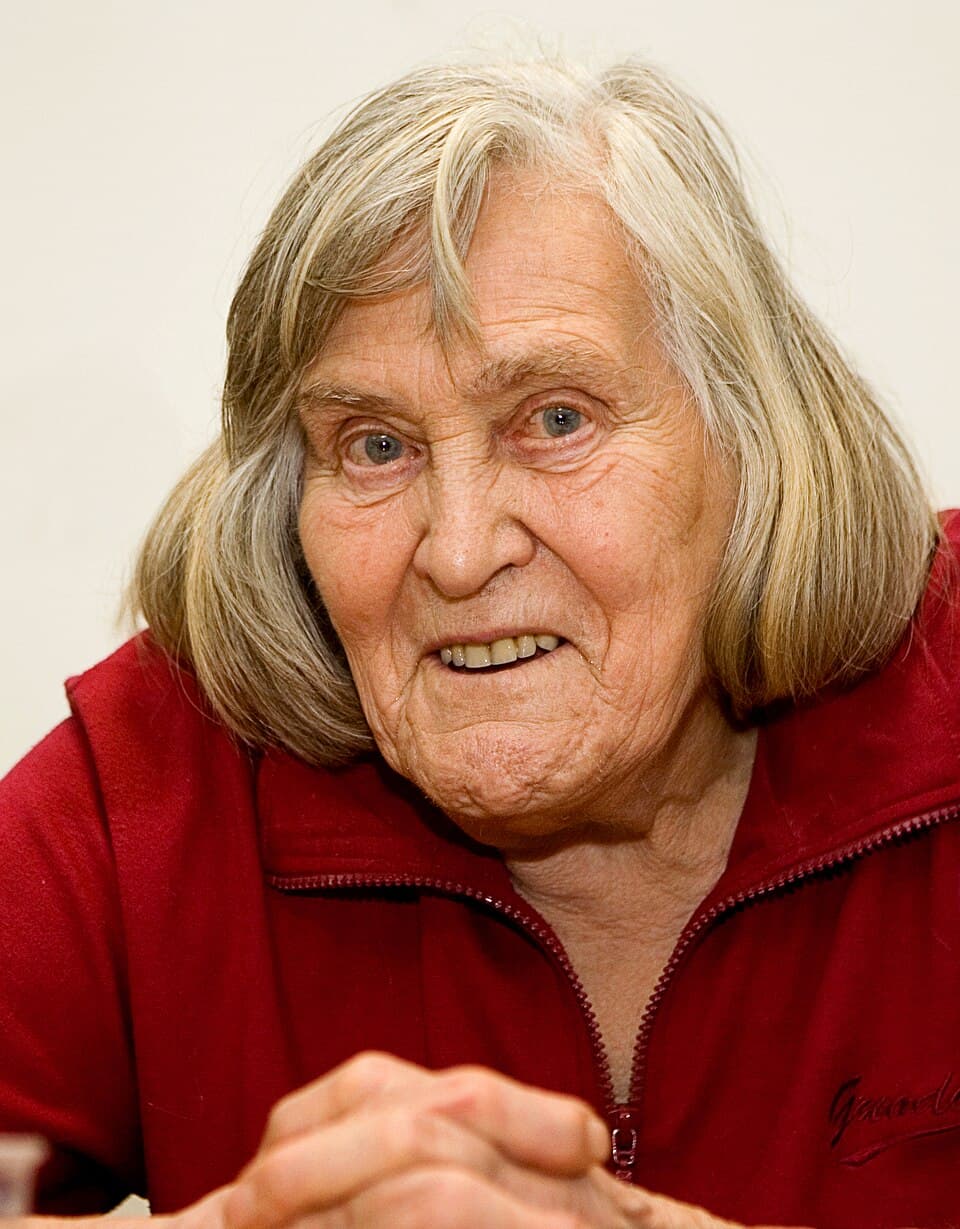
Italian · Science · Activism
Margherita Hack
June 12, 1922 – June 29, 2013
Margherita Hack was born on June 12, 1922, in Florence, Italy. She grew up in an academically-inclined family where her father was a bookkeeper and her mother a primary school teacher. From an early age, Hack demonstrated a keen interest in science and literature, fields in which her parents were also deeply engaged.
Early Life and Education
Hack attended the University of Florence, where she initially pursued a degree in classical literature before shifting her focus to physics. Her academic prowess soon became apparent as she graduated in 1945 with a degree in physics, specializing in astrophysics. Her early career was influenced by the works of renowned physicists such as Franco Rasetti and Enrico Fermi.
Career Beginnings and Development
After graduating, Hack began her career at the Arcetri Observatory in Florence, where she embarked on a journey that would lead her to become one of the most prominent figures in astrophysics. She dedicated her research to the analysis of stellar atmospheres and published numerous papers on the subject, which brought her international acclaim.
Major Works and Achievements
In 1964, Hack broke new ground as the first woman to lead the Trieste Astronomical Observatory, a position she held for over two decades. She was instrumental in revitalizing the observatory, fostering a new era of scientific research and collaboration. Her research primarily focused on the spectral analysis of stars, and she was closely associated with several European and NASA-run satellite operations.
Awards and Honors
Throughout her career, Hack received numerous accolades recognizing her contributions to science, including the prestigious Ligurian Academy of Sciences and Letters award, among others. She was also an esteemed member of the Accademia dei Lincei, Italy’s foremost scientific institution.
Activism and Advocacy
Beyond her scientific endeavors, Hack was a passionate advocate for civil rights and political freedom. She often spoke out against injustice and was known for her firm stance on issues such as secularism and women's rights. Hack's activism was as notable as her scientific achievements, and she became a beloved public intellectual in Italy.
Personal Life
Margherita Hack married Aldo De Rosa in 1944, and the couple devoted much of their lives to academia and public discourse, having no children. Their partnership was characterized by mutual support and shared passions for both intellectual pursuits and social causes.
Legacy and Impact
Hack’s legacy in astronomy is punctuated by her commitment to furthering the scientific understanding of the universe while maintaining a vivid presence in public dialogue. She inspired countless students and researchers, advocating for transparent scientific communication and education.
Later Life and Death
In her later years, Hack continued to lecture and participate in public discussions, emphasizing the importance of ethics in science. She lived a long life dedicated to knowledge and justice, passing away on June 29, 2013, leaving behind a profound legacy in both the fields of science and human rights advocacy.
Dated achievements
2 indexed.
- Jun121922Science
Birth of Margherita Hack
Margherita Hack was born on June 12, 1922, in Florence, Italy.
View details Wikipedia - Jun292013