← All women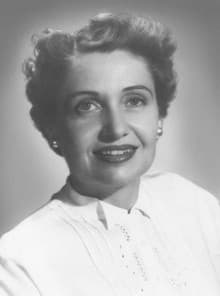
American · Science · Medicine
Margaret Rousseau
November 2, 1910 – October 28, 2001
Early Life and Education
Margaret Hutchinson Rousseau was born Margaret Hutchinson on November 2, 1910, in Brooklyn, New York. She grew up in an era when career paths in science and engineering were almost exclusively reserved for men, and young women with aptitude for mathematics and the physical sciences were routinely steered toward teaching, nursing, or homemaking instead. Despite these prevailing social norms, Hutchinson displayed an early talent and passion for chemistry and mathematics that her family supported.
She attended Mount Holyoke College, a women's liberal arts college in South Hadley, Massachusetts renowned for encouraging women's participation in the sciences at a time when few institutions did so. She graduated from Mount Holyoke in 1932 with a degree in chemistry, having distinguished herself academically. Determined to pursue engineering—an even more male-dominated discipline than pure chemistry—she went on to enroll at the Massachusetts Institute of Technology (MIT), one of the premier engineering schools in the world.
At MIT, Hutchinson pursued graduate studies in chemical engineering, an unusual and audacious choice for a woman in the 1930s. She excelled in her coursework and research, eventually completing her doctoral dissertation and earning a Doctor of Science (Sc.D.) degree in chemical engineering in 1937. In doing so, she became the first woman to earn a doctorate in chemical engineering from MIT, a historic milestone that foreshadowed a career of "firsts."
Early Career
After completing her doctorate, Hutchinson entered the chemical industry at a time when female engineers were virtually unheard of in industrial settings. She worked for a period at the Wyandotte Chemical Company and Standard Oil Development Company (a Standard Oil of New Jersey affiliate, precursor to ExxonMobil's research divisions), gaining hands-on process engineering experience. Her technical rigor and ability to translate laboratory-scale chemistry into industrial processes marked her as an engineer of exceptional capability.
These early industrial roles were critical in preparing her for the challenge that would define her career and secure her place in the history of science and medicine: the wartime effort to mass-produce penicillin.
The Penicillin Project
In the early 1940s, the discovery of penicillin's antibacterial properties by Alexander Fleming, and its subsequent purification by Howard Florey and Ernst Boris Chain, presented an urgent scientific and industrial challenge. Penicillin showed enormous promise as a life-saving antibiotic, especially for treating wounded soldiers during World War II, but it existed only in minuscule laboratory quantities. Producing it on an industrial scale required solving extraordinarily difficult problems in fermentation technology, purification, and large-scale bioprocessing—problems that had never been solved before for a biological product of this kind.
Margaret Hutchinson Rousseau joined Merck & Co., where she was assigned the extraordinary responsibility of designing the process engineering for the first commercial-scale penicillin manufacturing plant in the United States, completed in 1944 in Elkton, Virginia. As the lead process design engineer, she was responsible for translating the delicate biological fermentation process—previously conducted only in small flasks and shake cultures in academic and government labs—into a scalable, reliable industrial deep-tank fermentation system capable of producing penicillin in the enormous quantities required by the war effort.
This was an engineering challenge of the highest order: fermentation tanks needed to maintain sterile conditions, precise temperature and aeration control, and reliable mechanical agitation, all while preventing contamination that could ruin an entire batch. Rousseau's design work was central to solving these problems, and the plant she helped engineer became a model for subsequent penicillin manufacturing facilities across the country. The resulting mass production of penicillin is credited with saving the lives of thousands of Allied soldiers who would otherwise have died from infected wounds, and it laid the technical foundation for the modern antibiotics industry.
Her contribution was remarkable not only for its technical brilliance but for the fact that she accomplished it as one of the only women—if not the only woman—in such a senior technical engineering role in the pharmaceutical-industrial sector at the time. She worked alongside predominantly male engineers and scientists, overcoming skepticism about her role and proving her technical authority through the plant's ultimate success.
Professional Recognition
Rousseau's wartime achievement did not go unnoticed by her peers. In 1953, she became the first woman elected to full membership (Fellow) in the American Institute of Chemical Engineers (AIChE), a landmark recognition in a profession that had almost no women in leadership or senior technical positions. This distinction cemented her reputation as one of the foremost chemical engineers of her generation, regardless of gender, and served as a powerful symbol for women aspiring to careers in engineering.
Throughout her career, she was also recognized by various engineering and scientific societies for her contributions to industrial chemistry and process engineering. Decades later, historians of science and organizations dedicated to celebrating women in STEM—including the Chemical Engineering Hall of Fame initiatives and retrospectives such as those published by the American Society for Microbiology—have highlighted her essential role in the history of antibiotic development.
Personal Life
Margaret Hutchinson married Wilfred Rousseau, and she adopted the surname Rousseau, by which she became professionally known for the remainder of her career and in historical records. Details of her personal life outside her professional accomplishments remain relatively sparse in the historical record, reflecting the broader pattern in which women's scientific and technical contributions were often documented far less thoroughly than their male counterparts', even when their work carried world-changing significance.
She continued to work in the chemical engineering industry for years after her Merck penicillin project, applying her expertise to various industrial process design challenges, though the penicillin plant remained the defining achievement most closely associated with her name.
Legacy and Historical Impact
Margaret Hutchinson Rousseau's legacy endures on multiple fronts. As a scientist and engineer, she was instrumental in solving one of the most urgent applied science problems of the 20th century: how to convert a laboratory curiosity into an industrially manufactured, life-saving medicine at the scale needed to fight a global war and, subsequently, to treat a vast range of bacterial infections in civilian medicine. The penicillin production techniques she helped pioneer became the template for the entire modern antibiotics manufacturing industry, an industry that continues to save millions of lives annually.
As a woman in a field defined by exclusion, Rousseau's career stands as a powerful example of persistence and excellence in the face of systemic barriers. Her status as the first woman to receive a chemical engineering doctorate from MIT, and later the first woman elected to full AIChE membership, mark her as a foundational figure in the history of women in engineering. Organizations focused on chemical engineering history, including the University of Wisconsin's Chemical Engineering interfaces project and the Chemical Engineering Hall of Fame, have preserved and highlighted her story for new generations of engineers and historians.
Later Life and Death
Margaret Hutchinson Rousseau lived a long life following her groundbreaking wartime work, continuing to be recognized within engineering circles for her pioneering contributions. She died on October 28, 2001, in Chestertown, Maryland, at the age of 90. Her death was noted in engineering and scientific circles as the passing of one of the last remaining pioneers from the generation of scientists and engineers who made the mass production of penicillin possible during World War II.
Today, Rousseau is remembered as a trailblazing figure whose technical brilliance helped change the course of modern medicine, and whose career opened doors for generations of women who followed her into the field of chemical engineering.
Dated achievements
4 indexed.
- Nov021910Science
Birth of Margaret Hutchinson Rousseau
Margaret Hutchinson (later Rousseau) was born on November 2, 1910, in Brooklyn, New York.
View details Margaret Hutchinson Rousseau - Wikipedia - Jan311937Science
First woman to earn a Doctor of Science in Chemical Engineering from MIT
Margaret Hutchinson Rousseau became the first woman to receive a Doctor of Science degree in chemical engineering from MIT.