← All women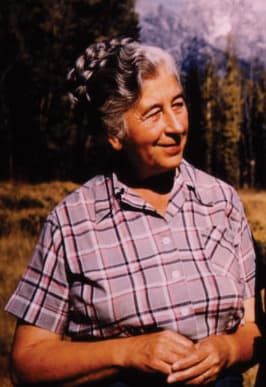
American · Activism · Exploration
Margaret Murie
August 18, 1902 – October 19, 2003
Early Life and Background
Margaret Thomas Murie was born on August 18, 1902, in Seattle, Washington. Her father, Thomas D. Thomas, passed away when she was young, and her mother remarried. She grew up in Fairbanks, Alaska, gaining an appreciation for the natural world from an early age. Margaret, often called Mardy, attended the University of Alaska, where she became the first female graduate in 1924 with a degree in business administration.
Career Beginnings and Development
After graduation, Mardy married Olaus Murie, a biologist, and together they embarked on numerous scientific and natural explorations, studying caribou in Alaska. This partnership with her husband Olaus, who was a prominent figure in the U.S. Conservation Movement, heavily influenced her lifelong dedication to environmental conservation.
Major Works, Discoveries, and Accomplishments
Mardy Murie's dedication to environmental conservation was pivotal. She is widely recognized for her advocacy work that led to the establishment of the Arctic National Wildlife Refuge in 1960. Her book, Two in the Far North, published in 1962, recounts her experiences in Alaska and was instrumental in bringing public attention to conservation issues.
In 1998, Mardy played a crucial role in the passing of the Alaska National Interest Lands Conservation Act, which protected over 100 million acres of Alaskan wilderness.
Awards, Honors, and Recognition
Her contributions to conservation were recognized through various accolades, including the Presidential Medal of Freedom in 1998. She was also awarded the Audubon Medal in 1980 and the John Muir Award from the Sierra Club.
Personal Life
Mardy and Olaus Murie shared a rich partnership both in life and work. Their family expanded with their three children, Joanne, Martin, and Donald, cultivating an environment imbued with respect for nature.
Legacy and Historical Impact
Known as the "Grandmother of the Conservation Movement," Murie's impact on environmental policy in the U.S. remains significant. Her relentless advocacy for the preservation of wilderness areas continues to inspire generations of environmentalists. Murie's vision and actions helped institutionalize the modern conservation movement within national policy agendas.
Later Life and Death
Margaret Murie's late years were spent in Moose, Wyoming, in the Tetons, where she continued her advocacy and lived immersed in the natural beauty she cherished. She passed away on October 19, 2003, at the age of 101, leaving behind a profound legacy in the conservation community.
Dated achievements
3 indexed.
- Aug181902Activism
Birth of Margaret Murie
Margaret Murie was born on this day in Seattle, Washington.
View details Today in Conservation: August 18 Margaret Murie born 1902 - Dec061960Activism
Establishment of Arctic National Wildlife Refuge
Margaret Murie contributed to the creation of the Arctic National Wildlife Refuge.