← All women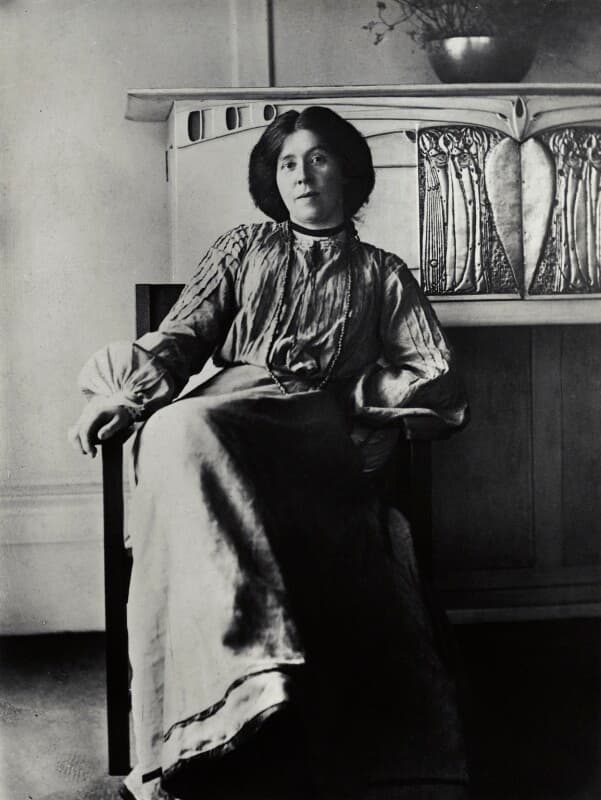
British · Arts
Margaret MacDonald Mackintosh
November 5, 1865 – January 10, 1933
Early Life and Background
Margaret MacDonald Mackintosh was born on November 5, 1865, in Tipton, Staffordshire, England. Her family subsequently moved to Glasgow, where she and her sister, Frances, attended the Glasgow School of Art. It was here that Margaret would meet several influential figures, including her future husband, Charles Rennie Mackintosh. Her early life in Glasgow exposed her to the burgeoning creative scene, deeply influencing her artistic development.
Career Beginnings and Development
MacDonald's career began at the Glasgow School of Art, where she studied under instructors who encouraged experimentation. Alongside her sister Frances, she formed the artist collective known as "The Four," which included Charles Rennie Mackintosh and Herbert MacNair. This group became integral to the Glasgow Style, characterized by its integration of fine and decorative arts.
Major Works and Accomplishments
Among her most significant works was the "White Rose and the Red Rose" panel, created for the Rose Boudoir at the House for an Art Lover, a project designed in collaboration with her husband. Her contributions to the art world were often under-acknowledged at the time due to the overshadowing prominence of her husband. Nonetheless, her artwork profoundly impacted the development of Art Nouveau and symbolist movements.
Awards, Honors, and Recognition
While she did not receive extensive formal recognition during her lifetime, MacDonald's work has since been continually reassessed and appreciated for its innovation and influence in modern design aesthetics. Several of her pieces are now preserved in international museum collections.
Personal Life
Margaret married Charles Rennie Mackintosh in 1900. The couple had a collaborative relationship both personally and professionally. Her marriage to Charles meant that much of her work was overshadowed by his fame, though it is widely regarded that she heavily influenced his designs.
Legacy and Historical Impact
Margaret MacDonald Mackintosh's legacy lies in her subtle yet profound influence on modernist design. Her work in metalwork, textiles, and gesso panels contributed to setting the stage for future generations of artists. Her style remains relevant, influencing contemporary art and design. Her recognition as a primary contributor to the success of Charles Rennie Mackintosh's projects has grown in recent years.
Later Life and Death
Margaret MacDonald Mackintosh continued to create art until her health began to decline. She passed away on January 10, 1933, in London. Her death marked the end of an era for the Glasgow Style, but her art has continued to inspire and resonate with audiences worldwide.
Dated achievements
2 indexed.
- Nov051865Arts
Margaret MacDonald Mackintosh Born
Birth of Margaret MacDonald Mackintosh in Tipton, Staffordshire.
View details Margaret Macdonald Mackintosh | Scottish Artist - Britannica - Jan101933Arts
Death of Margaret MacDonald Mackintosh
Margaret MacDonald Mackintosh died on January 10, 1933, in London.