← All women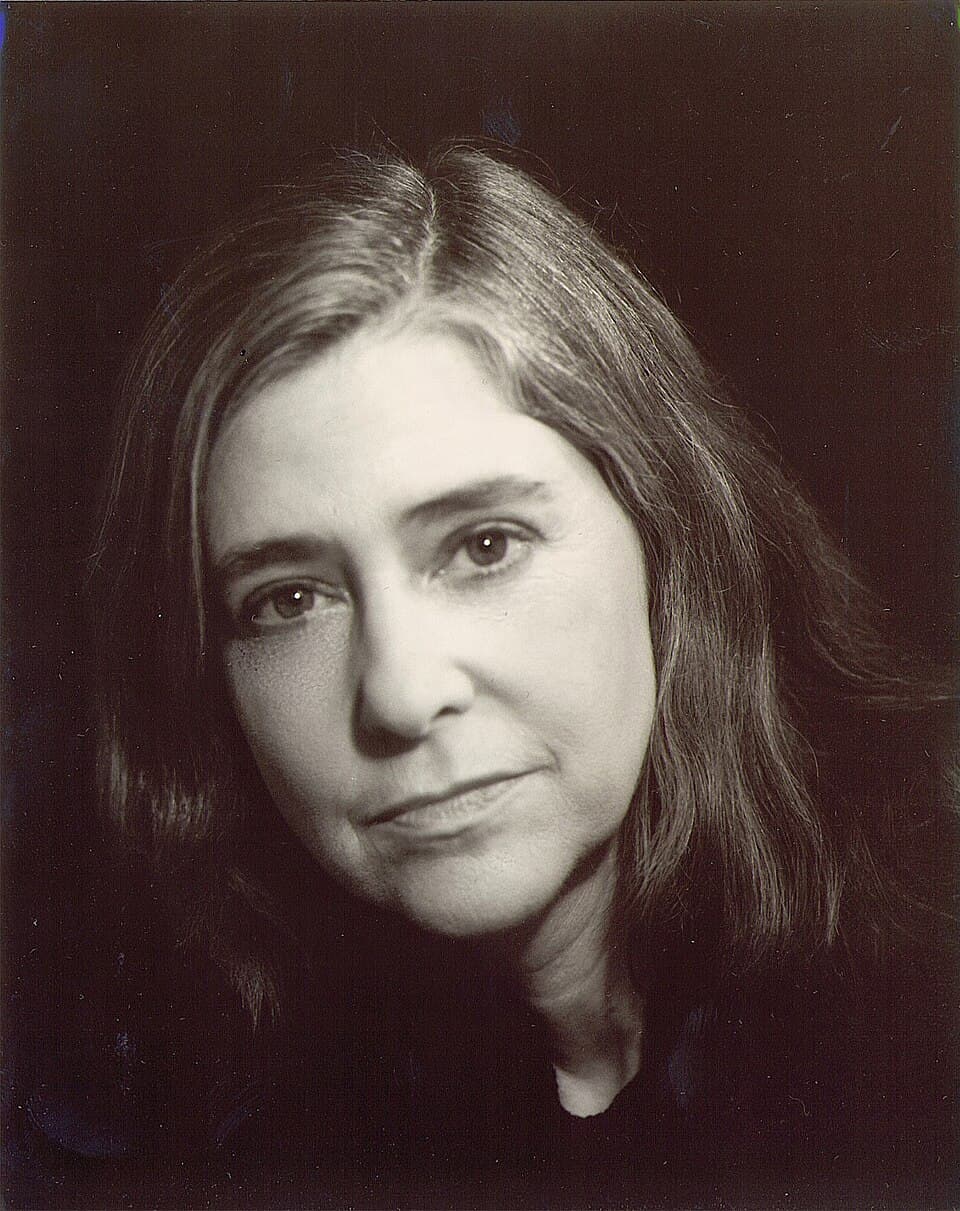
American · Science
Margaret Hamilton
August 17, 1936 – present
Early life and education
Margaret Elaine Hamilton (née Heafield) was born on August 17, 1936, in Paoli, Indiana. She grew up at a time when computers did not yet exist as personal devices, software was not yet a recognized discipline, and women were still underrepresented in mathematics and engineering. Her path into computing therefore required unusual initiative. Hamilton studied mathematics and developed an early interest in abstract problem-solving, eventually entering the field through a mixture of formal training and self-directed learning. That background would later become one of the defining features of her career: she was not simply trained by an emerging profession, but helped create it.
After completing her education, Hamilton moved into technical work at a moment when large-scale computing was beginning to emerge in research and defense. The early years of her career were shaped by the practical realities of the era’s machines, which were large, expensive, and fragile by modern standards. Programmers often worked close to hardware limits and had to think creatively about reliability, fault tolerance, and human error. Those constraints would become central to Hamilton’s most important contributions.
Early career and work before Apollo
Hamilton began her professional life in programming and systems work before joining NASA-related projects. She worked on software for meteorological applications and on systems associated with air defense, including early computing environments that demanded precision and resilience. These experiences gave her unusually deep exposure to real-time systems and to the consequences of software failure. In an era before software engineering was formally defined, Hamilton learned by doing, often in settings where the technology and the methods were still being invented.
Her ability to work across theory, implementation, and operations made her stand out. She was not only a coder; she was a systems thinker. That broader perspective would later distinguish her Apollo work, where software errors could not be treated as minor inconveniences. In spaceflight, a program had to withstand unexpected events, bad inputs, timing conflicts, and human mistakes without losing the mission.
Apollo and the invention of software engineering
Hamilton’s most famous work began when she joined the MIT Instrumentation Laboratory, which had contracted with NASA to develop guidance systems for the Apollo program. According to NASA and MIT, she became the first programmer hired for the Apollo project at MIT and the first woman on that team. She later led the Software Engineering Division, directing the development of the on-board flight software for the Apollo command and lunar modules.
Her role was decisive because Apollo’s computers had to do more than calculate trajectories. They had to guide astronauts, manage tasks in real time, and survive emergencies. Hamilton’s team developed software that could prioritize essential functions, drop lower-priority tasks when the system was overloaded, and recover from errors instead of crashing. This was a major conceptual advance at a time when software was often treated as an afterthought. Hamilton’s approach helped establish the idea that software development required the same rigor as hardware engineering.
She also helped shape the discipline’s vocabulary. Hamilton is widely credited with popularizing the term software engineering to describe the disciplined, systems-based work her team was doing. That phrase was not just a label; it was a declaration that writing code for mission-critical systems required engineering methods, testing, and accountability. Her work helped move software from a supporting craft into a recognized profession.
Apollo 11 and mission-critical software
Hamilton’s work became globally visible during Apollo 11 in 1969, when the lunar module’s computer generated high-priority alarms during descent to the Moon. The software she had helped design allowed the system to shed nonessential tasks and continue the landing sequence. This capability helped the mission proceed safely when the computer was under heavy load. The episode became one of the most famous demonstrations of software resilience in history.
The significance of that moment extends beyond the dramatic lunar landing itself. Hamilton’s software showed that a properly designed system could anticipate human and machine error in a hostile environment. The Apollo missions operated with severe limits on memory, processing power, and time, yet the software had to support life-or-death decisions. Hamilton’s team built a framework for reliability that influenced later aerospace, defense, and mission-critical computing.
She and her team also supported later Apollo missions and the Skylab program. Their work helped build confidence in software as a central component of human spaceflight. In the broader history of science and technology, this was a turning point: software was no longer merely a tool for calculation, but a core part of the infrastructure of exploration.
Hamilton Technologies and the Universal Systems Language
In 1986, Hamilton founded Hamilton Technologies and developed the Universal Systems Language (USL). This later phase of her career reflected the same principles that had guided her Apollo work: precision, formal structure, and resistance to error. USL was intended as a systems-development language that would support the design of complex software and systems with built-in correctness. Hamilton continued to advocate for rigorous methods that treated software as an engineering discipline rather than a loose collection of code snippets.
Also in 1986, she received the Augusta Ada Lovelace Award from the Association for Women in Computing. The award recognized her leadership in software and her role in a field where women had often been overlooked. By that time, Hamilton’s name had become associated not only with Apollo but also with the broader legitimacy of software engineering itself. Her later work extended her influence beyond spaceflight into systems theory and software architecture.
Awards and later recognition
Hamilton received additional recognition in the twenty-first century as historians and institutions reassessed the Apollo program. In 2003, NASA awarded her the Exceptional Space Act Award for scientific and technical contributions. The honor acknowledged the enduring importance of her role in Apollo and her broader influence on space systems engineering.
On November 16, 2016, Hamilton received the Presidential Medal of Freedom, an honor that cemented her place among the most important technological figures of the modern era. The award was especially meaningful because it publicly recognized software leadership in a domain that had once been invisible to most people outside engineering. By then, Hamilton had become an emblem of both innovation and persistence: a woman who entered a male-dominated field before it had a clear name and helped define what that field would become.
Personal life
Hamilton married and used the surname Hamilton during her professional career. She has a daughter, Lauren Hamilton, and her family life often appears in biographical accounts as part of the support structure that allowed her to pursue demanding technical work while raising a child. Historical sources emphasize that she was working at a time when balancing professional ambition with family responsibilities posed particular barriers for women, especially in technical and research fields. Her career therefore carries significance not only as a scientific achievement, but also as an example of women’s participation in high-stakes engineering during an era of strong gender constraints.
Legacy
Margaret Hamilton’s legacy rests on several overlapping contributions. First, she helped prove that software could be engineered systematically for reliability in the most demanding conditions imaginable. Second, she contributed to the success of Apollo, one of the defining technological achievements of the twentieth century. Third, she helped establish software engineering as a profession and a discipline with its own methods and standards.
Her historical importance also lies in visibility. Women have always contributed to computing, but their work has often been under-credited. Hamilton’s career stands as a powerful example of a woman whose leadership altered the course of a major national project and whose methods influenced subsequent generations of engineers. The Apollo software team’s success is now widely understood as a story not just of astronauts and rockets, but of programmers, systems designers, and the discipline of writing code that must never fail.
Hamilton’s life also speaks to the evolution of technology itself. She worked at the transition point between manual calculation, early electronic computing, and the modern software era. The principles she championed — fault tolerance, prioritized execution, disciplined design, and rigorous testing — remain central to contemporary software systems. In this sense, her legacy is not confined to the Moon landings; it lives in the structure of modern software engineering.
Dated achievements
2 indexed.
- Aug171936Science
Birth of Margaret Hamilton
Margaret Hamilton was born on August 17, 1936, in Paoli, Indiana.
View details Britannica - Margaret Hamilton, American Computer Scientist - Nov162016Science
Presidential Medal of Freedom awarded to Margaret Hamilton
Margaret Hamilton received the Presidential Medal of Freedom on November 16, 2016.