← All women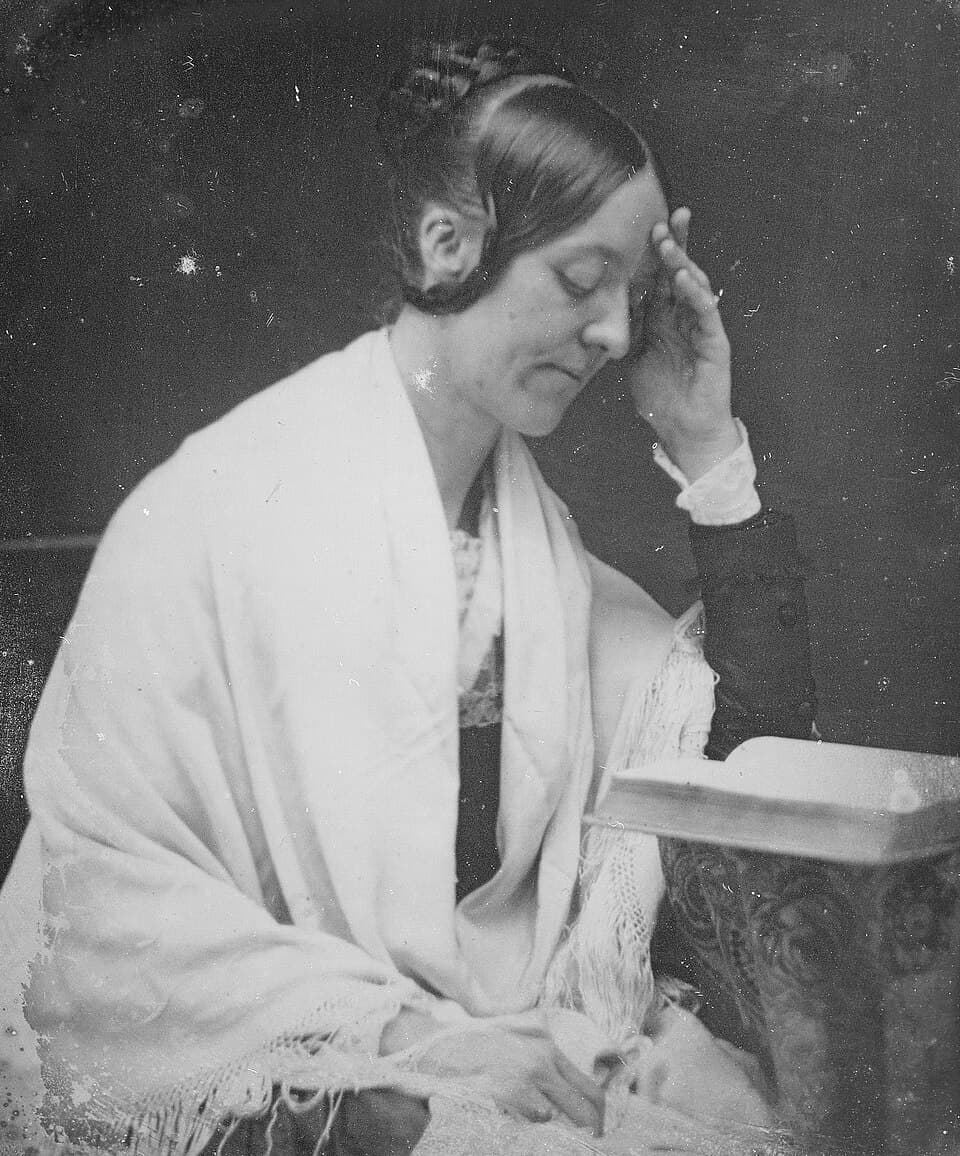
American · Literature · Activism
Margaret Fuller
May 23, 1810 – July 19, 1850
Early Life and Background
Margaret Fuller was born on May 23, 1810, in Cambridgeport, Massachusetts. The daughter of Timothy Fuller, a lawyer and politician, and Margaret Crane Fuller, she was raised in an intellectually stimulating environment. As the eldest child, her father took an active role in her education, which was rigorous and went beyond the conventional curriculum for girls of the time. Fuller was particularly influenced by classical literature and philosophy, displaying early on an exceptional ability for languages, eventually becoming fluent in Greek, Latin, French, and Italian.
Career Beginnings and Development
Fuller's career took a significant turn when she started writing for the Boston-based transcendentalist publication, The Dial, in 1840, where she served as editor until 1842. During this period, her essays, critiques, and editorials solidified her place in intellectual circles and brought attention to her forward-thinking ideas on women's rights and education. In 1843, she published her first book, Summer on the Lakes, a travelogue that displayed her keen observational skills and progressive views.
Major Works, Discoveries, or Accomplishments
In 1845, Fuller published Woman in the Nineteenth Century, an extension of her essay "The Great Lawsuit" which had appeared earlier in The Dial. This seminal work is considered one of the earliest major feminist works in the United States, advocating for the full social, political, and personal equality of women. Her exploration of women's potential and identity challenged the traditional gender roles of her time.
Later, Fuller traveled to Europe as a correspondent for the New-York Tribune, where she became the first American female foreign correspondent and was notably involved in the revolutionary wave of 1848-49. Fuller met significant European thinkers and revolutionaries, such as Giuseppe Mazzini and George Sand, while residing in Italy.
Awards, Honors, and Recognition
While Margaret Fuller did not receive formal awards during her lifetime, her impact was recognized posthumously. Her writings have been celebrated for their candor and intellectual depth, placing her as a critical figure in both American literature and early feminist movements.
Personal Life
In Italy, Fuller formed a profound personal and professional partnership with Giovanni Ossoli, a radical aristocrat. Together, they had a son, Angelo Eugene Philip Ossoli, born in 1848. The couple's experiences during the Roman Republic invasion fueled her later writings.
Legacy and Historical Impact
Margaret Fuller’s legacy lies in her fearless advocacy for women's rights and her extensive contributions to literature. Her work influenced subsequent generations of feminists and writers, with figures such as Susan B. Anthony citing her as an inspiration. Her pioneering role as a journalist opened doors for women in journalism and set a precedent for women tackling social reform.
Later Life and Death
Margaret Fuller’s life was tragically cut short when she, her husband, and her son died in a shipwreck off Fire Island, New York, on July 19, 1850. Her untimely death robbed the world of a profound and pioneering thinker whose potential contributions to reform and literary art remain a subject of speculation.
Dated achievements
2 indexed.
- May231810Literature
Birth of Margaret Fuller
Margaret Fuller was born on May 23, 1810, in Cambridgeport, Massachusetts.
View details Britannica: Margaret Fuller - Jul191850Literature
Death of Margaret Fuller
Margaret Fuller died in a shipwreck off Fire Island, New York, on July 19, 1850.
View details