← All women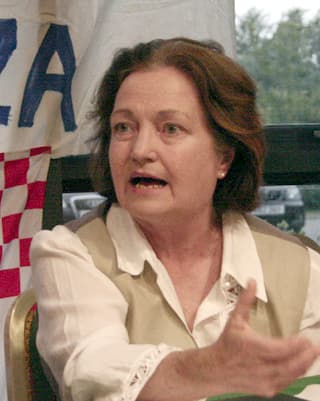
Irish · Activism · Politics
Mairead Maguire
January 27, 1944 – present
Early Life and Background
Mairead Maguire, born Mairead Corrigan on 27 January 1944 in Belfast, Northern Ireland, grew up in a working-class Catholic family during a period of mounting political and sectarian tension that would later become known as the Troubles.[1][16] Her parents valued education and faith, and she was one of eight children, raised in a close-knit community where economic hardship and religious division were everyday realities.[1] The mix of solidarity and conflict in Belfast in the 1940s and 1950s provided the backdrop for her later activism.
Maguire attended local Catholic schools and left formal education relatively early, in line with expectations for many young women of her social background at the time.[1] She took secretarial work in Belfast—employment that offered economic stability but little political influence. Despite the increasingly polarized climate in Northern Ireland, she was not initially politically active, instead participating in parish life and community activities. According to biographical accounts, she was influenced by Christian social teaching, particularly ideas about forgiveness, compassion, and the dignity of every person.[1][16]
Her early adulthood coincided with the eruption of the Troubles in the late 1960s, a violent conflict involving paramilitary organizations, British security forces, and divided political communities. As bombings, shootings, and internment became part of everyday life, Maguire, like many ordinary citizens, sought simply to live and work in relative safety. This apparent normality was shattered in 1976 by a family tragedy that would irreversibly reshape her life.
Catalyst for Activism and Founding of Peace People
On 10 August 1976, a devastating incident occurred on a Belfast street: an IRA member, fleeing from British soldiers, was shot, and his car mounted a pavement, striking three children and their mother from Maguire’s extended family.[16] All three children were killed, and their mother was critically injured and later died. This tragedy, which deeply shocked Northern Ireland, became the catalyst for Maguire’s peace activism. The horror of losing relatives in such a random, public act of violence brought the human cost of the conflict into stark relief.
Betty Williams, a local woman who witnessed the crash, began collecting signatures on a petition demanding an end to violence, and soon connected with Maguire.[1] Along with journalist Ciaran McKeown, they began organizing marches and rallies to bring together Catholics and Protestants in a common call for peace. Their initial demonstration drew thousands, and subsequent marches grew to tens of thousands, an extraordinary mobilization in a city fractured by fear and mistrust.[1][4]
In 1976 they formally co-founded Women for Peace, which quickly evolved into the Community of Peace People, often shortened to Peace People.[1][2][16] The movement sought to encourage ordinary citizens to renounce violence, reject support for paramilitary organizations, and work across sectarian lines. Maguire’s role was both organizational and symbolic: as a bereaved relative of victims of violence who refused to respond with hatred, she embodied the moral stance of nonviolence the group promoted.
The Peace People developed a written declaration emphasizing respect for life, opposition to all killing, and commitment to building a just and peaceful society in Northern Ireland.[1] They established local committees, organized community projects, and sought to address practical needs such as supporting families affected by violence. Maguire’s secretarial and organizational skills, combined with her public speaking and moral credibility, made her a central figure in this emerging movement.
Public Emergence and Early Recognition
As their marches and activities gained attention, Maguire and Williams became prominent public voices. On 15 September 1976, they were interviewed together about the Women’s Peace Movement—by then commonly called the Peace People—highlighting how rapidly the organization had grown in the weeks following the Belfast tragedy.[AWPC] They spoke about the involvement of women with little prior political experience, the importance of cross-community cooperation, and their refusal to align with any paramilitary group.
Unlike many traditional political leaders in Northern Ireland, Maguire and her colleagues framed the conflict primarily in moral and human terms rather than ideological or sectarian ones. Their insistence that ordinary citizens, especially women, could reshape the narrative of the Troubles represented a significant departure from the prevailing focus on armed actors and party politics. This approach drew both admiration and criticism: some saw them as naïve or unrepresentative, while others welcomed a nonviolent alternative to entrenched hostility.
Their work quickly attracted international attention. Reports and images of tens of thousands of people marching for peace in Belfast captured the imagination of audiences abroad, and Maguire was increasingly invited to speak about nonviolent resistance. The speed and scale of this recognition were notable given her lack of formal political position; it reflected both the global desire for hopeful stories amid conflict and the growing interest in women’s peace movements as distinct actors in international affairs.
Nobel Peace Prize and International Platform
In late 1976, the Nobel Committee announced that Mairead Corrigan Maguire and Betty Williams would receive the Nobel Peace Prize for that year, honoring their "courageous efforts in founding a movement to put an end to the violent conflict in Northern Ireland."[16] Maguire was recognized specifically as a founder of the Northern Ireland peace movement, later known as the Community of Peace People. The prize formally belonged to the year 1976, although, in accordance with Nobel practice, the ceremonial presentation took place one year later.[16]
At the time of the award, Maguire was only 32 years old, making her the youngest Nobel Peace laureate, a distinction she held until Malala Yousafzai was honored in 2014.[1][16] Her youth and non-elite background challenged assumptions about who could be an influential figure in international peace politics. She was neither a head of state nor a career diplomat but a local activist whose work had emerged from personal tragedy and community engagement.
On 10 December 1977 in Oslo, Maguire and Williams formally received the Nobel Peace Prize and delivered their Nobel lectures.[Herstory][16] In her lecture, Maguire underscored the necessity of nonviolence, forgiveness, and reconciliation, situating the Northern Irish conflict within a broader critique of militarism and war. She argued that enduring peace required more than political agreements; it demanded a transformation of hearts and minds and a commitment to human rights.
The Nobel honor transformed Maguire into a global figure. It provided her with an enduring platform to speak on issues of war and peace, and it gave international recognition to the idea that grassroots, women-led movements could fundamentally challenge violent conflict. The prize also brought increased scrutiny and expectations, as supporters and critics alike watched to see how the Peace People would evolve amid the complexities of the Troubles.
Development of Peace People and Ongoing Work in Northern Ireland
Following the Nobel award, Maguire continued to work with the Peace People in Belfast. The organization focused on practical initiatives: supporting victims of violence, fostering dialogue between communities, and advocating nonviolent alternatives to paramilitary action. They established a headquarters in Belfast and pursued educational programs, community projects, and international exchanges.[12][20]
The Peace People faced significant challenges. The entrenched nature of the conflict, the presence of armed groups, and ongoing political crises meant that the movement’s immediate impact on the level of violence was limited. Some critics argued that their approach was overly idealistic or insufficiently engaged with structural political issues. Nonetheless, Maguire and her colleagues persisted in promoting reconciliation and supporting individuals willing to renounce violence.
As the Northern Irish peace process evolved over subsequent decades, culminating in the Good Friday Agreement of 1998, the Peace People’s early efforts came to be seen as part of a broader mosaic of initiatives that prepared the ground for formal negotiations. Maguire, while not a central figure in the later political talks, remained an influential moral voice advocating for continued nonviolence and community-level engagement.[1]
Broadening to Global Peace and Human Rights Activism
Over time, Maguire expanded her work beyond Northern Ireland, becoming involved in numerous international peace and human rights campaigns. Biographical accounts highlight her participation in efforts focused on nuclear disarmament, opposition to war in various regions, and solidarity with communities affected by occupation and state violence.[1][6]
She has been associated with initiatives such as the International Peace Council and the Global Nonkilling Movement, and she was a cofounder of the Nobel Women’s Initiative, a network of female Nobel Peace laureates working together to advance peace and human rights.[6] Through these roles, Maguire has engaged with issues ranging from the Israeli–Palestinian conflict to the impact of sanctions and military interventions in the Middle East.
Maguire’s activism often involves nonviolent direct action, including participation in delegations, fact-finding missions, and public demonstrations. She has been outspoken in critiquing militarized responses to security threats and has emphasized the importance of international law, diplomacy, and grassroots movements. In interviews and writings, she consistently highlights the role of conscience and faith, rooted in Christian pacifist traditions, while also affirming universal human rights principles.[12]
Her book-related work includes coauthorship of The Vision of Peace: Faith and Hope in Northern Ireland, which collects her speeches and writings and reflects on her experiences in the peace movement.[12] This volume situates her personal narrative within wider theological and ethical reflections on nonviolence and reconciliation.
Awards, Honors, and Recognition
In addition to the Nobel Peace Prize, Maguire has received several other honors acknowledging her peace work. Sources list awards such as the Norwegian People’s Peace Prize and the Carl von Ossietzky Medal, both awarded in 1976, and later recognitions including the Pacem in Terris Award in 1990.[3][5] These honors reflect the sustained international admiration for her commitment to nonviolent activism.
Institutions such as the Royal Netherlands Academy of Arts and Sciences have highlighted her as a laureate whose work exemplifies civic courage and moral leadership in confronting violence.[KN] Universities and peace institutes have invited her as a speaker and honored her contributions, recognizing both her role in Northern Ireland and her broader influence on global peace discourse.[20]
These awards and recognitions, while diverse in origin and focus, share a common theme: they celebrate Maguire’s insistence that ordinary individuals and communities can challenge war and militarism through organized, nonviolent action. They also underscore the importance of women’s leadership in fields historically dominated by men.
Personal Life
Mairead Corrigan later married and became known as Mairead Corrigan Maguire, the name by which she is widely recognized in public life.[1] Biographical entries note that she has children and has balanced family responsibilities with her intensive schedule of activism and travel.[1] Her decision to continue using her maiden name alongside her married name in many contexts reflects both personal identity and the public association of her early activism with the Corrigan family tragedy.
Her personal life has remained relatively private compared with her public advocacy, but interviews reveal the centrality of family, faith, and community in sustaining her work. She has spoken about the emotional toll of activism, the pain of bereavement, and the importance of forgiveness in her own healing process.[16] These elements of her personal story deepen the understanding of her activism as rooted not only in political analysis but also in spiritual conviction and lived experience.
Ideas, Writings, and Public Thought
Maguire’s speeches and essays emphasize a consistent set of themes: the rejection of violence in all forms, the need for structural justice, and the transformative power of forgiveness. In her Nobel lecture and later writings, she argues that peace must be built at multiple levels—personal, community, national, and international—and that each level requires a commitment to truth, dialogue, and respect for human dignity.[16][12]
Her thinking is informed by Christian pacifism, yet she presents her arguments in a way intended to resonate across religious and cultural boundaries. She stresses that nonviolence is not passive but rather an active, courageous stance requiring organization, perseverance, and willingness to confront injustice. Her work also reflects engagement with broader human rights discourse, including support for international law, opposition to torture, and concern about the impact of economic policies on vulnerable populations.[1]
Through lectures, interviews, and her collected writings in The Vision of Peace, Maguire has contributed to ongoing debates about how peace movements should relate to formal political institutions, armed actors, and international organizations. She often highlights the tensions between maintaining moral clarity and engaging pragmatically with complex realities. Her voice adds a distinctive perspective grounded in the experience of a small, divided society and the witness of victims of violence.
Legacy and Historical Impact
Mairead Maguire’s historical significance rests on several intertwined contributions. First, she helped to demonstrate that women-led, grassroots movements could become central actors in conflicts long dominated by armed groups and political elites. The Peace People’s mass marches and public declarations offered an alternative vision of citizenship and political participation in Northern Ireland.[1][4]
Second, her receipt of the Nobel Peace Prize at age 32 signaled a broadening of who could be recognized as a global leader in peace and human rights. The prize acknowledged that moral courage and community organizing, rather than formal office or military power, could constitute world-changing action.[16] This recognition has inspired subsequent generations of activists, including other women laureates, to see local initiatives as potentially global in significance.
Third, Maguire’s long-term engagement with nonviolence and human rights across multiple regions illustrates the connections between specific conflicts and wider patterns of militarism and injustice. Her work contributes to an understanding of peace activism as inherently transnational, with lessons from one context informing action in others.[6]
In the broader history of the Troubles, Maguire and the Peace People are often remembered as early, public advocates for nonviolent resolution, standing alongside other civic and religious initiatives that helped prepare the way for later political settlements. While the immediate impact of their work on levels of violence is debated, the movement is widely recognized as a moral and symbolic landmark.[1]
Later Life and Continuing Activities
As of the mid-2020s, Mairead Maguire remains alive and continues to be associated with peace and human rights work.[1][16] She has participated in international conferences, solidarity delegations, and public campaigns addressing issues such as nuclear weapons, military interventions, and the rights of marginalized communities. Her activism has sometimes placed her at odds with prevailing governmental policies, but she has consistently framed her positions in terms of nonviolence, human rights, and international law.
Institutions like the Peace People maintain online presences that describe her ongoing role and reflect the continued relevance of the movement’s founding principles.[20] Maguire’s later life, therefore, is characterized not by retirement from public affairs but by a sustained commitment to the ideals that motivated her initial response to tragedy in 1976.
Her story—from a Belfast secretary to a Nobel laureate and global peace activist—illustrates the potential for individuals shaped by local, everyday experiences to become significant figures in international history. It also underscores the enduring importance of women’s voices and grassroots movements in the quest for peace.
Dated achievements
5 indexed.
- Jan271944Activism
Birth of Mairead Maguire
Mairead Maguire was born on January 27, 1944, in Belfast, Northern Ireland.
View details Biography of Mairead Corrigan Maguire - Aug101976Activism
Belfast tragedy catalyzing peace activism
A car attack on this day resulted in the deaths of Mairead's relatives, prompting her to pursue peace activism.