← All women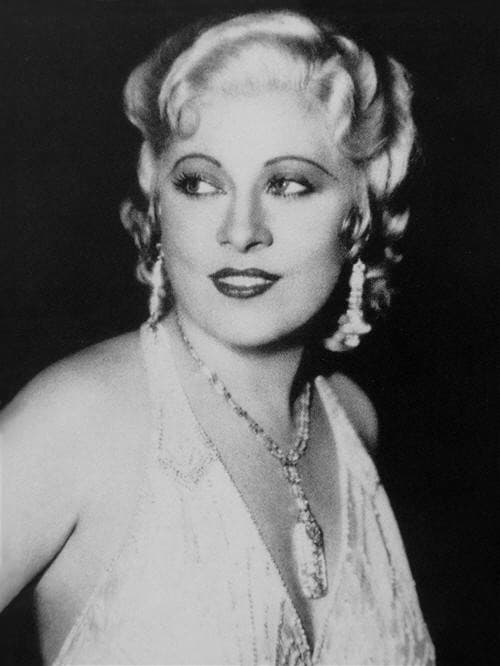
American · Arts · Literature
Mae West
August 17, 1893 – November 22, 1980
Early Life and Background
Mae West was born Mary Jane West on 17 August 1893 in the Greenpoint neighborhood of Brooklyn, New York.[1][4][14] Her father, John “Battling Jack” West, was an Irish American prizefighter and later a private investigator, while her mother, Matilda “Tillie” Doelger (or Delker) West, of German heritage, worked as a corset and fashion designer and had strong ambitions for the stage.[1][2][14] West was the eldest of three children, growing up in a working‑class but theatrically inclined household where performance was encouraged rather than discouraged.
West’s mother played a crucial role in nurturing her daughter’s talents, taking her to shows and helping her practice songs and dances.[3][6] Immersed in the variety entertainment culture of early 20th‑century New York, West absorbed vaudeville rhythms, minstrel show conventions, and the styles of both Black and white performers. This diverse environment shaped her later fusion of burlesque humor, double entendres, and commanding stage presence.
According to biographical accounts, West began performing very young, participating in amateur talent contests by age seven and appearing as "Baby Mae" in local shows.[3][7] In 1901 she reportedly won a contest at Brooklyn’s Royal Theater with her rendition of "Moving Day," an early indication of her ability to captivate audiences.[4][3] Although she did not receive formal academic training in drama, her informal education in dance halls, music theaters, and vaudeville circuits proved far more influential in shaping her career.
Career Beginnings in Vaudeville and Stage
West’s professional path started firmly within vaudeville, the dominant popular entertainment form of the era. By the mid‑1900s she was performing in small-time vaudeville and burlesque, gradually developing the comic and sensual persona that would become her hallmark.[1][3] In 1911, she secured one of her earliest documented professional stage engagements in Ned Wayburn’s revue A La Broadway at the Folies‑Bergere Theater in New York, appearing in the chorus and sharpening her skills under a prominent producer.[4]
Later the same year, on 20 November 1911, West opened in the Shubert Brothers’ Vera Violetta, marking her entry into Broadway’s mainstream theater system.[4] Working for the Shuberts exposed her to larger audiences and more demanding professional standards. Around this period, she was billed in vaudeville ads as the "Brooklyn Bonfire" and the "Original Brinkley Girl," marketing her as an alluring and spirited performer.[3][17]
Throughout the 1910s, West toured on the Keith and Orpheum circuits, refining her style and experimenting with comic material.[3] A crucial moment came when she appeared in the musical Sometime, which opened at the Shubert Theater on 4 October 1918. In this production, West introduced the shimmy to Broadway, importing a dance associated with African American performance and dance halls into the commercial mainstream.[4] Her shimmy was considered provocative and helped build her reputation as a performer who pushed the boundaries of stage decorum.
Emergence as Playwright and Producer
By the 1920s, West sought greater control over her material, moving beyond being cast by others to writing and producing her own plays. She collaborated with writer Adeline Leitzbach and turned out scripts that tackled sexuality and social transgression more directly than most contemporary works.[3][10] Among these were plays such as The Hussy and The Drag, the latter notable for its sympathetic portrayal of gay men and the queer subculture, a bold choice at a time when homosexuality was largely taboo in mainstream entertainment.[3]
Her breakthrough as a playwright came with the play Sex, which opened at Daly’s Theater in New York City on 26 April 1926Margy LaMont, a Montreal prostitute who navigates desire and respectability. Critics condemned Sex as vulgar and tasteless, yet audiences flocked to see it, and it ran for months, demonstrating West’s ability to defy conventional taste and still succeed commercially.[2][10]
West’s work brought her into direct conflict with authorities. In 1927, after ongoing pressure from moral reformers and the police, New York City raided Sex. On 19 January 1927, West was convicted of "corrupting the morals of youth" and sentenced to ten days in jail and a fine.[2][4] She served eight days on Welfare Island before being released on 27 January 1927
In subsequent years she continued to write and star in plays, including Diamond Lil (1928), which introduced the character of a swaggering, sexually confident woman in 1890s New York and laid the groundwork for her later film persona.[1][3] Diamond Lil’s success solidified West’s reputation as both a star and a playwright, unusual for a woman in the male‑dominated commercial theater. By the early 1930s, the Hollywood studios recognized West’s box‑office potential. Paramount Pictures invited her to Los Angeles, and she arrived in mid‑1932 to test her appeal on screen.[4][1] On 19 September 1932, Paramount released Night After Night, in which West made her film debut in a supporting role as Maudie Triplett.[1][5] Although on screen for a relatively short time, West re‑wrote much of her dialogue and delivered lines that instantly set her apart, including the famed response to a compliment about her diamonds: "Goodness had nothing to do with it." The success of her scenes in Night After Night led Paramount to adapt her stage hit Diamond Lil into the film She Done Him Wrong, released on 27 May 1933.[1] West starred as Lady Lou opposite a young Cary Grant, showcasing her mixture of languid sexuality, wisecracks, and self‑assuredness. The film was a major box‑office success and is credited with helping rescue Paramount from financial difficulties during the Great Depression.[2][10] It also earned an Academy Award nomination for Best Picture, further elevating West’s status. Later that year, Paramount released I’m No Angel on 29 December 1933, again pairing West with Cary Grant.[1] West wrote the story and co‑wrote the screenplay, demonstrating her continued control over her screen persona.[1][17] In the film she plays Tira, a circus performer and lion tamer who maneuvers romantic and legal entanglements to her advantage. I’m No Angel was another major hit and cemented West as one of Hollywood’s leading stars and top earners.[16] Throughout these films, West specialized in portraying women who knew their own desires, manipulated circumstances, and refused to be shamed for their sexuality. Her heavy use of double entendres and suggestive dialogue became her trademark. According to Britannica, West’s "frank sensuality, languid postures, and blasé wisecracking" set her apart from other actresses.[2] She was frequently described as a "sex symbol," although she herself insisted that she was playing a character with control over sexuality rather than simply embodying male fantasy.[1][2] West’s popularity coincided with rising pressure to regulate film content. Reform groups and religious organizations attacked Hollywood for promoting immorality, and West’s films became prime targets. Her 1930s work is often credited with helping spur enforcement of the Motion Picture Production Code, or Hays Code, which tightened restrictions on sexual and moral content from mid‑1934 onward.[1][2] Under stricter censorship, studios demanded that West tone down her scripts and persona. Later films such as Belle of the Nineties (1934), Goin’ to Town (1935), Klondike Annie (1936), and Go West, Young Man (1936) still showcased her wit but with more constrained innuendo.[1][16] Disputes with script reviewers and studio executives contributed to a gradual decline in her film output, and by the end of the 1930s, her screen presence was less dominant than earlier in the decade. Nevertheless, West remained a significant cultural figure. In the 1940s she performed on radio, drawing huge audiences and occasionally provoking controversy for bringing her suggestive style to that medium.[1] She revisited her stage persona in nightclub acts and continued to enjoy a loyal following. After a long hiatus from film, she returned in Myra Breckinridge (1970), based on Gore Vidal’s novel, playing the role of a flamboyant talent agent. In Sextette (1977), adapted from her own play, she starred as an aging, flamboyant actress surrounded by younger men.[1][5] Beyond acting, West made important contributions as a writer. She wrote or co‑wrote many of the plays that launched her career, including Sex, The Drag, Diamond Lil, and others, often with Adeline Leitzbach’s collaboration.[3][10] For her films, she frequently crafted dialogue and story outlines, ensuring that her characters delivered lines consistent with her distinctive voice. West also recorded albums, blending pop standards with her tongue‑in‑cheek delivery. In the 1950s and 1960s she made several recordings, including rock‑and‑roll–inflected projects that played on the contrast between her age and the youth‑oriented genre.[19] She authored books such as Goodness Had Nothing to Do With It (1959), a memoir that chronicled her career and philosophy, and Mae West on Sex, Health, and ESP (1975), reflecting her enduring interest in sexuality and popular psychology.[3] While West’s relationship with official institutions was often fraught, she received various honors later in life. She became an enduring icon of classic Hollywood, regularly featured in retrospectives, festivals, and scholarly works on film history and gender.[1][2] In April 1974 she received the Masquers Club George Spelvin Award, a recognition from a long‑standing Hollywood theatrical club that celebrated her contributions to entertainment.[4] She has been the subject of numerous biographies and academic studies, including works that examine her role in queer culture and feminist performance. West’s quips and persona have been widely memorialized. Anthologies of quotations frequently include her lines, such as "When I’m good, I’m very good, but when I’m bad, I’m better," and "I generally avoid temptation unless I can’t resist it."[6][12] Her name has been given to cultural artifacts ranging from inflatable life jackets nicknamed "Mae Wests" during World War II, due to their bust‑like shape, to later stage tributes and drag performances that emulate her look and mannerisms.[1][16] West’s personal life both reinforced and complicated her public image. She married Frank Wallace, a fellow vaudeville performer, in 1911, reportedly when she was 17.[17] The marriage was kept largely secret and later became a legal issue when Wallace reappeared in the 1930s, leading to court proceedings to clarify her marital status. They eventually divorced, and West never had children.[17][1] She engaged in a number of relationships, some long‑term. In the late 1920s she had a well‑publicized affair with actor George Raft during rehearsals for Diamond Lil.[4] Later, she spent decades in a partnership with Paul Novak, a bodybuilder more than forty years her junior who served as her companion and assistant.[1][5] West lived in lavish, carefully controlled surroundings, often limiting her social circle to trusted associates. Despite her screen persona as a voluptuous seductress, biographers note that West maintained strict control over her public and private images, rarely allowing access beyond her chosen confidants.[15][10] She cultivated a mythic figure of herself, presenting a blend of humor, eroticism, and self‑reliance that blurred the line between performer and character. In her later years, West continued to work sporadically while living in Hollywood. She made television appearances, participated in interviews, and oversaw reissues of her films, ensuring that new generations encountered her work.[1] Her health began to decline in the 1970s, and she suffered a series of strokes. According to PBS’s American Masters timeline, a major stroke in August 1980 significantly affected her.[4][5] On 22 November 1980, West died in Los Angeles, California, from complications of strokes.[2][4][5] She was 87. She was buried in Cypress Hills Cemetery in Brooklyn, returning in death to the borough where her life and career began.[1][10] Mae West’s legacy is multifaceted, spanning stage, film, gender politics, and queer culture. As an actress, playwright, and screenwriter, she created a persona that inverted typical power dynamics: her characters often wielded sexual knowledge and economic leverage over men, refusing shame or submission. This was particularly striking in the 1920s and 1930s, when mainstream representations of women tended to emphasize modesty or victimhood. Her plays and films played a key role in shaping debates over censorship. The prosecution of Sex in 1927 and the controversy surrounding her pre‑Code films helped draw attention to the limits of state and industry control over artistic expression. West’s ability to turn censorship battles into publicity demonstrated how one female artist could navigate and exploit oppressive mechanisms for her own ends. From the perspective of women’s history, West stands as an early example of a woman who insisted on writing and producing her own material in commercial entertainment. She secured star billing, wrote vehicles for herself, and negotiated with studios from a position of strength. Her success showed that women could be both authors and performers of sexually frank comedy that questioned double standards. In queer history, West’s sympathetic portrayal of gay men in works like The Drag and her association with drag culture—her aesthetic has long been favored by drag performers—mark her as an important figure. She interacted with gay communities and incorporated camp elements into her performances, contributing to broader understandings of gender performance and subversive humor.[3][12] Scholars and critics continue to study West’s work to understand how she negotiated race, class, and sexuality. While her persona drew on stereotypes and sometimes problematic representations, it also opened space for women to express desire and assert agency. Her influence can be felt in subsequent generations of female comedians and performers who use humor to confront gender norms. Decades after her death, West remains widely quoted, visually iconic, and central to histories of Hollywood’s pre‑Code era. Her career illustrates how one woman, emerging from a working‑class Brooklyn background, used talent, audacity, and strategic self‑fashioning to alter the landscape of American popular entertainment.Transition to Hollywood and Film Stardom
Conflict with Censors and Later Film Work
Writing, Music, and Other Ventures
Awards, Honors, and Recognition
Personal Life
Later Life and Declining Health
Legacy and Historical Impact
Dated achievements
11 indexed.
- Aug171893Arts
Birth of Mae West
Mae West is born in Brooklyn, New York on August 17, 1893.
View details Mae West Biographical Timeline - PBS - Nov201911Arts
Opening in Vera Violetta on Broadway
Mae West opens in Vera Violetta on Broadway, establishing her stage career.
View details