← All women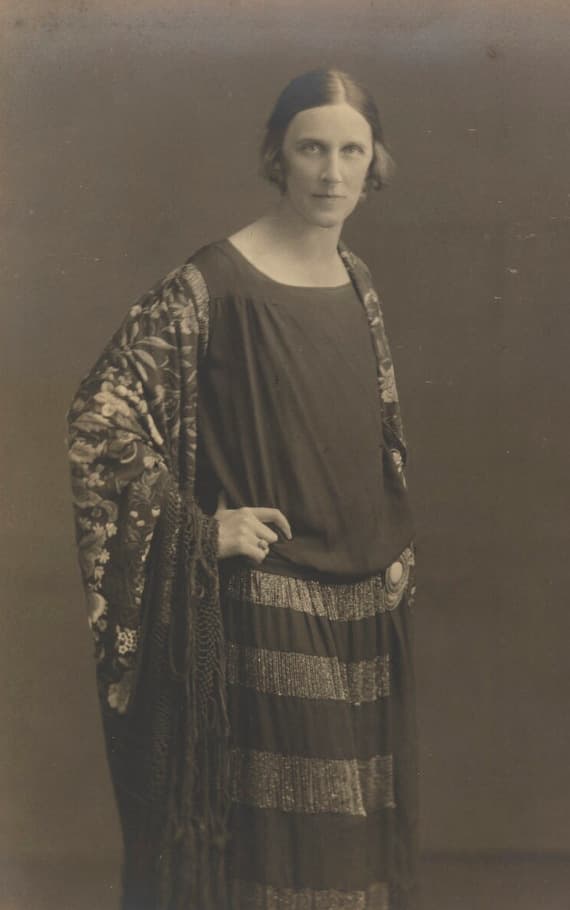
British · Arts · Literature
Mabel Lucie Attwell
June 4, 1879 – November 5, 1964
Early Life and Background
Mabel Lucie Attwell was born on 4 June 1879 in Mile End, in the East End of London, England. She was one of ten children in a large, lively family; her father worked as a butcher and her mother as a dressmaker. Growing up in a densely populated, working-class district of Victorian London, Attwell's childhood was shaped by the practical realities of a large household, but also by an early and unmistakable artistic inclination.
By her own account, Attwell was an indifferent student who found little joy in formal schooling, frequently doodling in the margins of her exercise books rather than attending to her lessons. Recognizing her talent, her family eventually supported her pursuit of art training. She studied briefly at Regent Street Polytechnic and later at Heatherley School of Fine Art in London, though she reportedly found the rigid academic approach to fine art instruction stifling and left before completing formal training. This early rejection of conventional artistic discipline in favor of her own instinctive, playful style would come to define her entire career.
Career Beginnings
Attwell began selling her illustrations while still a teenager, initially producing artwork for greeting cards and periodicals. Her breakthrough came in the early 1900s when she began illustrating for magazines and children's books, developing a signature style characterized by round-faced, big-eyed, chubby-legged children rendered with warmth, humor, and an unmistakable sweetness. This style, which came to be known as depicting "Attwell children," resonated strongly with Edwardian and later Georgian audiences who were increasingly sentimental about childhood as a protected and idealized stage of life.
In 1908, she married fellow illustrator and cartoonist Harold Earnshaw, whom she had met while studying art. The couple had three children together and would remain married until Earnshaw's death in 1937. Their shared profession created a supportive creative partnership, though Attwell's commercial success and popularity would eventually eclipse that of her husband.
Major Works and Accomplishments
Attwell's career flourished dramatically in the 1910s and 1920s. She became one of the most sought-after illustrators in Britain, producing artwork for an enormous range of publications and products. Among her most celebrated commissions was her illustrated edition of Peter Pan and Wendy (1921), an adaptation of J.M. Barrie's classic that paired her whimsical style with one of the era's most beloved stories, cementing her reputation as a premier children's illustrator. She also illustrated editions of Alice in Wonderland and numerous fairy tale collections.
From 1922 onward, Attwell produced the hugely popular Mabel Lucie Attwell Annual, published yearly and eagerly anticipated by children across Britain. These annuals combined her artwork with stories, poems, and activities, and became a staple of British Christmas gift-giving for decades. Her illustrations also extended far beyond books: she designed an extraordinarily successful and prolific range of postcards for publishers such as Valentine's, which sold in the millions and remain highly collectible today.
Beyond publishing, Attwell's designs were licensed for an astonishing variety of consumer goods, including ceramics, nursery china, textiles, advertising campaigns (notable for brands including Wrigley's and Bovril), and household items. Her chubby, dimpled child figures became a recognizable visual shorthand for the joys of childhood innocence in interwar and mid-century Britain, appearing on products marketed to parents and children alike. Her work was so commercially significant that "Attwell children" entered into cultural parlance as a term for her distinctive character type, akin to how "Kewpie dolls" became shorthand in America.
Attwell's output was remarkably prolific throughout her career; she is estimated to have illustrated hundreds of books, and her commercial artwork appeared on thousands of individual products and publications. She approached her craft with immense commercial acumen, understanding early on the value of licensing and merchandising her characters across multiple media—a business strategy well ahead of her time for an illustrator.
Awards, Honors, and Recognition
While Attwell did not receive the formal institutional honors sometimes bestowed on fine artists of her era, her recognition came instead through immense and sustained popular acclaim. She became a household name in Britain, with her illustrations recognized instantly by children and adults alike across multiple generations. Her postcards and books were bestsellers for decades, and she maintained her commercial dominance in children's illustration from the 1900s through the 1950s, an unusually long span of sustained popularity in a competitive and fast-changing field.
Her legacy has been honored posthumously through dedicated collector organizations, including the Mabel Lucie Attwell Club, which was formed to catalogue, celebrate, and preserve her extensive body of work. Museums and archives in Britain, including collections related to childhood and illustration history, have preserved examples of her original artwork, book illustrations, and merchandise.
Personal Life
Attwell married Harold Earnshaw in 1908, and the couple settled first in London before later relocating, spending significant time in Cornwall, particularly in the town of Fowey, which became closely associated with her later life and work. The couple had three children. Earnshaw, himself a working illustrator and cartoonist known for his own commercial artwork, lost an arm during World War I, after which Attwell's career increasingly became the primary financial support for the family, a role reversal not uncommon but still notable for the era.
Following Harold Earnshaw's death in 1937, Attwell continued to live and work in Cornwall, remaining professionally active well into her later years. She continued producing artwork, annuals, and licensed designs throughout the 1940s and into the 1950s, adapting her charming, timeless style even as tastes in children's illustration shifted around her.
Legacy and Historical Impact
Mabel Lucie Attwell's impact on British visual culture is difficult to overstate. She was among the first illustrators to fully recognize and exploit the commercial potential of a signature character style across multiple product categories, effectively pioneering aspects of character licensing and merchandising that would become standard practice in the illustration and entertainment industries throughout the twentieth century. Her "Attwell children" — round-faced, rosy-cheeked, and endearingly proportioned — became a defining visual representation of childhood innocence in British popular culture for much of the twentieth century.
Her illustrated editions of classic works like Peter Pan and Wendy introduced generations of children to these stories through her distinctive artistic lens, shaping how these tales were visually imagined by British readers. Her annuals and postcards remain highly collectible today, with vintage examples commanding significant prices among collectors and specialist dealers, reflecting continued public affection for her work more than a century after she began her career.
Attwell's success as a woman commercial artist in an era when few women achieved such widespread and sustained professional recognition also stands as a notable, if often understated, achievement in the history of women in the arts and publishing industries. She built and sustained a highly profitable creative enterprise across decades, navigating the business side of illustration and licensing with considerable skill.
Later Life and Death
Attwell spent her final years in Fowey, Cornwall, continuing to work and maintaining her connection to the publishing world even as she aged. She died on 5 November 1964 at the age of 85. Her death was met with warm remembrances in the British press, acknowledging her decades-long contribution to children's book illustration and popular visual culture.
In the decades since her death, dedicated collectors, historians of illustration, and fan organizations have worked to preserve and celebrate her legacy, ensuring that the whimsical world of "Attwell children" continues to be appreciated by new generations of enthusiasts, collectors, and scholars of British illustration history.
Dated achievements
2 indexed.
- Jun041879Science
Birth of Mabel Lucie Attwell in London
Mabel Lucie Attwell was born on 4 June 1879 in Mile End, London, England, later becoming one of Britain's most beloved illustrators.
View details Mabel Lucie Attwell - Wikipedia - Nov051964Science
Death of Mabel Lucie Attwell
Mabel Lucie Attwell died on 5 November 1964 in Fowey, Cornwall, England, leaving behind a vast legacy of beloved illustrations.