← All women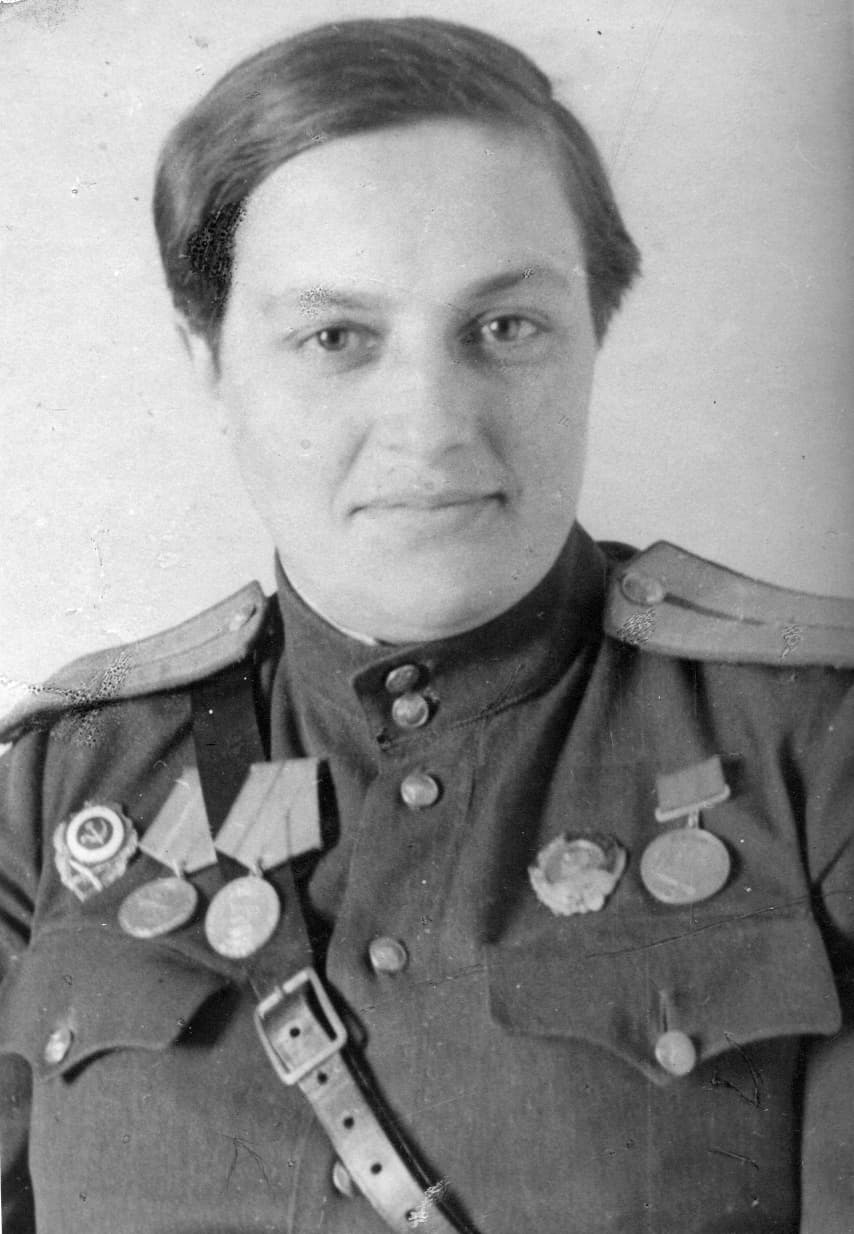
Ukrainian, Soviet · Politics
Lyudmila Pavlichenko
July 12, 1916 – October 10, 1974
Early Life and Background
Lyudmila Mykhailivna Pavlichenko was born on 12 July 1916 in Bila Tserkva, a town in the Kyiv Governorate of the Russian Empire (now Ukraine). She grew up in a modest, working-class household, and her family relocated to Kyiv during her childhood, where she attended secondary school. Contemporary and later accounts describe her as headstrong and athletically competitive from a young age; a frequently repeated anecdote holds that she took up shooting at a local sporting club as a teenager specifically to outperform a boastful male neighbor who mocked her abilities. Whatever its precise origin, her early interest in marksmanship was reinforced through Soviet civilian paramilitary training programs, notably the Osoaviakhim (Society for Assistance to Defense, Aviation, and Chemical Construction), which trained millions of young Soviet citizens in basic military skills, including rifle marksmanship, during the interwar years.
She excelled at these voluntary shooting clubs, eventually earning a sharpshooter's certificate, and she pursued higher education at Kyiv University (Kyiv Taras Shevchenko University), where she studied history. She was working toward this degree, with ambitions of becoming a teacher or academic, when the Second World War abruptly altered the trajectory of her life.
Outbreak of War and Enlistment
When Nazi Germany launched Operation Barbarossa and invaded the Soviet Union on 22 June 1941, Pavlichenko, then 24 years old and living in Kyiv, immediately sought to enlist in the Red Army. She reported to a recruitment office and, drawing on her civilian sharpshooting credentials, requested assignment as a sniper rather than accepting the nursing role initially offered to her, as was common for women volunteers. Recruiters were reportedly skeptical of a young woman's combat capability and initially attempted to steer her toward medical or auxiliary service. To prove her competence, she was made to demonstrate her shooting skill in the field; according to widely repeated accounts, she was given a rifle and tasked with eliminating two Romanian soldiers positioned near Soviet lines to prove her worth, which she accomplished, securing her posting as a sniper with the 25th Rifle Division, nicknamed the "Chapayev Division" after the Russian Civil War hero Vasily Chapayev.
Combat Service: Odessa and Sevastopol
Pavlichenko's combat career began in earnest during the defense of Odessa in the summer and autumn of 1941, where Soviet forces fought a prolonged and costly defensive campaign against advancing Axis forces, primarily Romanian troops supported by German units. In this brutal environment of trench warfare, urban combat, and constant artillery bombardment, she quickly distinguished herself, reportedly recording around 187 kills during the roughly two-and-a-half-month siege before Soviet forces evacuated the city in October 1941.
Following the fall of Odessa, her division was transferred to the Crimean Peninsula to participate in the defense of Sevastopol, a strategically vital naval base that the Red Army defended for over eight months against sustained German and Romanian assault, in what became one of the longest and most attritional sieges of the war on the Eastern Front. It was during this campaign that Pavlichenko's reputation as an elite markswoman solidified. She specialized not only in eliminating infantry but in sniper duels against enemy snipers, a particularly dangerous and skill-intensive form of combat requiring immense patience, superior camouflage, fieldcraft, and nerve, since a single mistake could mean instant death at the hands of an equally skilled opponent. She was credited with killing 36 enemy snipers during her service, a figure that speaks to her tactical sophistication beyond simple marksmanship.
By the time Sevastopol fell to Axis forces at the end of June 1942, Pavlichenko had accumulated a total of 309 confirmed kills, an extraordinary figure that placed her among the most lethal snipers, male or female, of the entire war. During the final, chaotic days of the siege, she was seriously wounded by mortar shrapnel to the face. Given both her injury and the strategic value the Soviet high command placed on preserving such a celebrated fighter for propaganda and training purposes, she was evacuated from the collapsing city by submarine rather than left to face capture or death alongside the rest of the garrison.
International Diplomacy and the American Tour
After recovering from her wounds, Pavlichenko was withdrawn from front-line combat and redirected toward training and diplomatic duties, reflecting the Soviet government's recognition that her survival and continued visibility were now more valuable than additional combat exposure. In 1942, she was selected as part of a Soviet delegation of young people sent to the United States, Canada, and Britain to build public and political support for the opening of a second front against Germany in Western Europe, a major diplomatic priority for Stalin's government at the time.
During her visit to Washington, D.C., in the late summer of 1942, Pavlichenko became the first Soviet citizen to be received at the White House, where she met First Lady Eleanor Roosevelt. The two women developed a rapport, and Roosevelt subsequently invited Pavlichenko to join her on a tour across the United States, during which Pavlichenko spoke to the press, addressed rallies, and met with political and civic leaders to describe her wartime experiences and advocate for American material and military support for the Soviet war effort.
Her American tour generated substantial media attention, much of it initially fixated on her appearance and gender rather than her military accomplishments; she was famously and repeatedly asked by American reporters why she wore a uniform rather than more feminine attire, and whether makeup was permitted at the front. Pavlichenko responded pointedly, criticizing what she viewed as an inappropriate focus on fashion given the mortal stakes of the war, and remarking that questions about lipstick were absurd when set against the reality of hundreds of thousands of deaths. At a rally in Chicago, she reportedly challenged the crowd directly, asking how much longer they intended to hide behind her back rather than opening a second front against Germany, a remark that drew enormous applause and press coverage. Time magazine and other American outlets covered her extensively during this period, dubbing her "the girl sniper" and helping introduce American audiences to the previously little-known scale of Soviet women's combat participation.
Later War Service and Recognition
Upon her return to the Soviet Union, Pavlichenko did not resume front-line sniping but instead took on a training role, mentoring a new generation of Red Army snipers and helping formalize sniper training doctrine based on her battlefield experience. Her instructional influence extended to hundreds of future snipers who passed through Soviet training programs during the remainder of the war.
In recognition of her extraordinary combat record, she was awarded the title Hero of the Soviet Union on 25 October 1943, along with the Order of Lenin and the Gold Star medal, the highest honors available in the Soviet honors system. This made her one of relatively few women, and by far the most famous female sniper, to receive this distinction during the war. She additionally received other Soviet decorations over the course of her service and postwar career, including further Orders of Lenin and various campaign medals commemorating the defense of Odessa and Sevastopol specifically.
Personal Life
Pavlichenko's personal life was marked by the disruptions typical of wartime service. She had been previously married and had a son, and some accounts note a wartime romantic relationship with a fellow soldier who was killed in combat, an experience she rarely discussed publicly but which biographers have cited as a source of personal grief that hardened her resolve on the battlefield. After the war, she remarried and continued her education, eventually completing the university history degree she had begun before the war interrupted her studies.
Postwar Career and Legacy
After the war concluded in 1945, Pavlichenko completed her academic studies at Kyiv University and went on to work as a research assistant for the Soviet Navy's Main Staff, drawing on both her academic training and her military experience. She became active in Soviet veterans' organizations, participating in efforts to document and publicize the wartime contributions of Soviet women, helping ensure that the historical record preserved the scale and significance of women's combat roles within the Red Army, roles that were often minimized or overlooked in postwar Western historiography of the conflict.
Pavlichenko's wartime record has had a lasting influence on the historical understanding of women in combat. With 309 confirmed kills, she is widely cited as the most successful female sniper in recorded military history, and her example has been referenced repeatedly in discussions of women's capacity for front-line combat roles in militaries around the world. Her international diplomatic role, particularly her friendship with Eleanor Roosevelt and her outspoken challenges to Western gender assumptions during her 1942 tour, made her one of the most visible symbols of Soviet-American wartime cooperation and of women's agency within a brutal, male-dominated theater of war.
Death and Commemoration
Lyudmila Pavlichenko died on 10 October 1974 in Moscow at the age of 58. She was buried with honors at Novodevichy Cemetery, one of Russia's most prestigious burial grounds, reserved for figures of significant national distinction, a fitting tribute to a woman regarded as one of the Soviet Union's greatest wartime heroes.
Her legacy has continued to grow in the decades since her death. American folk musician Woody Guthrie wrote a tribute song titled "Miss Pavlichenko" during the war itself, which was later recorded and released more widely in the 2010s. In 2015, a Russian-Ukrainian biographical film titled Battle for Sevastopol (released internationally under titles including Indestructible and The Fight for Sevastopol) dramatized her life and wartime service, introducing her story to new international audiences. She remains a frequently cited figure in military history, feminist history, and popular culture discussions of women warriors, and her story continues to be referenced in debates about women's roles in combat forces worldwide.
Dated achievements
2 indexed.
- Jul121916Politics
Birth of Lyudmila Pavlichenko
Lyudmila Pavlichenko was born on July 12, 1916, in Bila Tserkva, Ukraine.
View details Lyudmila Pavlichenko Biography - Britannica - Oct101974Politics
Death of Lyudmila Pavlichenko
Lyudmila Pavlichenko passed away on October 10, 1974, in Moscow, USSR.