← All women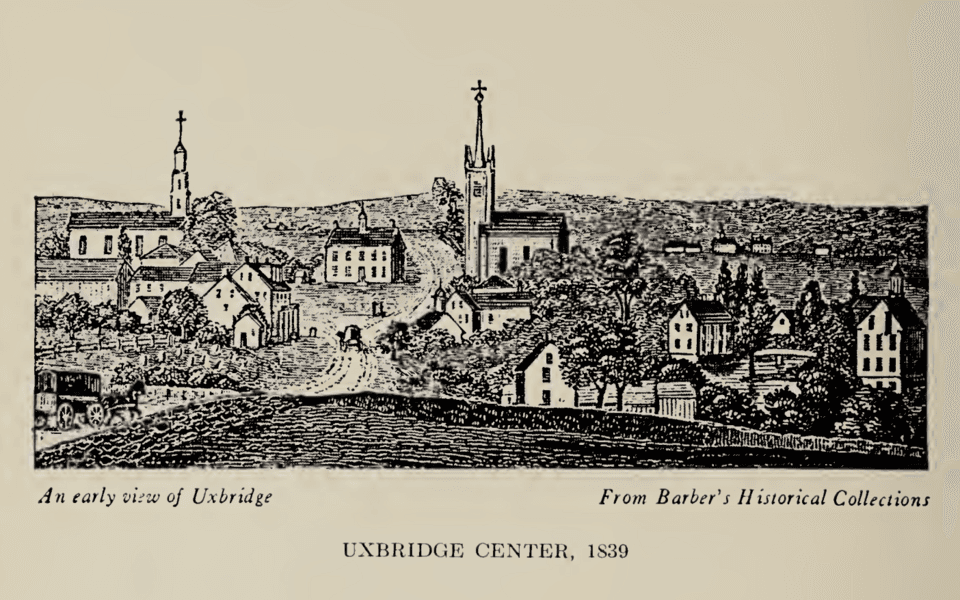
American, Colonial American · Politics · Law · Activism
Lydia Taft
February 2, 1712 – November 9, 1778
Early Life and Background
Lydia Chapin Taft was born on 2 February 1712 in Mendon, in the Province of Massachusetts Bay, then part of Britain’s North American colonies.[3][1] She grew up in a rural, agrarian community in which town meetings, property ownership, and kinship networks structured social and political life. While detailed records of her childhood are scarce, later biographical accounts identify her as the daughter of a New England family embedded in the region’s emerging civic culture.[1][3]
As a girl in early eighteenth‑century Massachusetts, Lydia would have encountered strict gender norms: women were legally excluded from formal political participation, and their work was largely confined to household, farm, and community religious activities. Education for girls was limited and rarely documented, but literacy rates in New England were relatively high compared with other colonies, and women often learned to read and write within family or church settings.[1] Lydia’s later life in a politically active household suggests she moved in circles where public affairs were discussed, even if women’s voices were not recorded in official minutes.
Mendon itself later contributed territory to the town of Uxbridge, incorporated in 1727, where Lydia would eventually live. The region’s economy centered on small farms, sawmills, and local trade. Town residents met regularly to make decisions on taxes, infrastructure, defense, and schooling—assemblies that would become the stage for Lydia’s most famous, though contested, historical association.[1][10]
Marriage, Family, and Entry into the Taft Lineage
Lydia married into the prominent Taft family, a New England lineage tracing its roots to Robert Taft Sr., an English immigrant who settled in Mendon in the late seventeenth century.[11][18] Her husband is generally identified in family histories as Josiah Taft, a grandson of Robert Taft Sr. and son of Daniel Taft.[11] Josiah became a substantial landowner and participated in colonial politics, serving as a legislator in the Massachusetts General Court.[1][11]
Through this marriage, Lydia entered a household that occupied a significant position in local society. The couple resided in or near Uxbridge, where Josiah’s extensive property holdings and public responsibilities made him one of the town’s leading figures.[1][10] Together they had several children; later accounts emphasize that at the time of Josiah’s death, their sons were not yet qualified voters under the colony’s property and age requirements.[1][10]
As a wife and mother in the Taft family, Lydia’s daily life would have involved managing domestic work, contributing to farm operations, and sustaining the social networks that underpinned her husband’s political standing. Although she did not hold office herself, she was situated close to the mechanisms of local governance. This proximity—to both property and power—proved crucial when the town faced decisions during the French and Indian War of the 1750s.
Context: Colonial Suffrage and the French and Indian War
The mid‑eighteenth century was a time of intense imperial conflict in North America. The French and Indian War (part of the global Seven Years’ War) erupted in the 1750s, prompting colonial governments to raise troops and funds. Towns like Uxbridge were called upon to contribute men and money to the war effort, decisions typically made in local town meetings composed of male freeholders—men who owned property outright.[12][10]
Under Massachusetts law and custom, women could not vote in these meetings. Suffrage was tied to property, but only male property holders, or those legally representing family estates, were recognized. Widows like Lydia often controlled property in practice, particularly after a husband’s death, yet their legal and political status remained constrained.[1][13] It was within this tension—between property ownership and gendered restrictions—that Lydia’s later‑celebrated participation in a town meeting allegedly occurred.
The Taft estate was among the largest in Uxbridge.[12][11] When Josiah died, the town faced a dilemma: his holdings significantly affected tax and funding decisions, but the usual male voter representing the property was gone, and his sons were still minors. Local tradition maintains that town leaders sought a pragmatic solution that preserved the estate’s civic weight while temporarily bending gender norms.
Traditional Account of the 1756 Uxbridge Vote
According to longstanding regional tradition, on 30 October 1756 Lydia Chapin Taft cast a vote at an Uxbridge town meeting on whether to appropriate funds for regiments fighting in the French and Indian War.[2][1][10] Because her late husband’s estate was one of the largest in town, Lydia was reportedly invited to vote in his stead so the property’s interests would be represented. Later narratives state that she voted in favor of increased funding for the war effort.[1][12]
This episode has been widely described as the first recorded instance in which a woman voted legally in colonial America.[3][7][10] The History of American Women blog, New England Historical Society, and various local histories assert that Lydia’s vote made her "America’s first woman voter," emphasizing that she participated in an official town meeting, not an informal or private consultation.[1][10][11] Some accounts add that Lydia was subsequently allowed to vote in two additional Uxbridge meetings, one in 1758 and another in 1765, concerning taxation and schooling, although exact dates are not well documented.[4][1]
These stories present Lydia’s voting as a pragmatic exception: her status as a wealthy widow temporarily trumped legal prohibitions based on gender. In doing so, they depict her as a precursor to the women’s suffrage movement, acting 164 years before the ratification of the Nineteenth Amendment in 1920.[1][12] The narrative underscores how property‑based suffrage could, under particular circumstances, grant a woman a voice within formal political structures, even if only briefly.
Debates Over Documentation and the "Myth of Lydia Taft"
Modern historical research has raised questions about the documentary basis for Lydia Taft’s supposed vote. While local tradition and many secondary accounts celebrate her as the first woman to vote legally in America, detailed examination of Uxbridge town records has found no direct mention of her voting.[8][5]
In 2015, researcher Jocelyn Sears, writing for Mental Floss and cited in later analyses, noted that Uxbridge’s surviving town meeting records do not show a meeting on 30 October 1756 and that the town did not appropriate war funds that year.[5] The blog Boston 1775, which studies Revolutionary‑era New England, similarly reports that there is "no mention of Lydia having voted" in the records examined.[8] These findings suggest that the precise details often repeated in popular accounts—exact date, issue, and outcome—may not be supported by primary sources.
As a result, some writers speak of the "myth" of Lydia Taft, acknowledging that her story functions more as a powerful legend than as a fully documented event.[5] Even so, the lack of direct documentary evidence does not negate the possibility that some form of special accommodation occurred; rather, it highlights the limitations of surviving records and the ways memory can shape historical narratives. The continued retelling of Lydia’s vote reflects the desire to identify early examples of women’s civic participation and the importance of such stories in public history.
This scholarly debate has not extinguished local pride in Lydia Taft’s legacy. Instead, it has prompted more nuanced discussions about how historians evaluate evidence, the difference between tradition and documentation, and the role of commemorative acts in fixing contested stories into public consciousness.
Additional Reported Votes in 1758 and 1765
Beyond the 1756 meeting, some accounts claim that Lydia Taft voted at two further Uxbridge town meetings—in 1758 and 1765.[4][1][11] The 1758 vote is often said to have concerned additional war‑related funding, while the 1765 vote reportedly involved school‑district or educational matters. These episodes reinforce the depiction of Lydia as a recurring participant in civic decisions rather than a one‑time exception.
However, as with the initial 1756 vote, the surviving documentation is thin. Sources that mention these later meetings generally do so in summary form and do not provide precise dates or direct quotations from town minutes.[4][11] As a result, while the 1758 and 1765 votes are part of Lydia’s popular biography, they are treated cautiously in scholarly work. They are valuable for understanding how her legend expanded over time—each added vote underscoring her agency and the significance of her property—but they remain part of a narrative whose details cannot be fully verified from extant records.
These reported votes nonetheless contribute to Lydia’s image as an early symbol of women’s civic engagement. Factually certain or not, they have been invoked by educators and writers to illustrate how exceptional women occasionally breached formal barriers centuries before suffrage became a mass movement.
Later Life and Death
After the period in which she was said to have voted, Lydia appears in the historical record primarily through family and genealogical references. She continued to live in Uxbridge as a widow and matriarch of the Taft household. Her responsibilities would likely have included managing the estate and overseeing her children’s advancement in a society increasingly shaped by imperial tensions and, later, revolutionary politics.[1][11]
By the late 1770s, the American colonies were deeply engaged in the Revolutionary War. On 9 November 1778, Lydia Chapin Taft died in Uxbridge.[3][1] Her death occurred after the Declaration of Independence but before the war’s conclusion. Contemporary notices of her passing, if they existed, have not been widely preserved, and she does not appear to have been singled out in the period as a notable political figure.
It was only in subsequent generations—particularly as the Taft family’s prominence grew and as women’s suffrage became an organized cause—that Lydia’s life was retrospectively framed as historically significant. Genealogical works and local histories recorded her birth and death dates and associated her with the story of early female voting, ensuring her inclusion in the emerging canon of women’s history.
Legacy, Commemoration, and the Taft Family Connection
Lydia’s posthumous reputation is closely tied to the broader Taft family legacy. The Tafts eventually produced numerous public officials, most famously William Howard Taft, the twenty‑seventh president of the United States and later Chief Justice of the Supreme Court.[18][11] Family histories and local commemorations have highlighted Lydia as "America’s first woman voter," connecting her to a lineage of public service and political influence.[11]
Popular histories, blogs, and regional societies have embraced this characterization. The New England Historical Society describes her as "New England’s first woman voter," while other writers portray her as an early forerunner of women’s suffrage whose vote predates the Nineteenth Amendment by more than a century and a half.[10][1][12] Educational treatments of U.S. women’s history sometimes cite her as a singular example of a colonial woman temporarily granted the right to vote because of her wealth and widowhood.[13]
At the same time, Lydia’s story serves as a case study in how historical memory is constructed. The tension between enthusiastic commemorations and critical assessments of the evidence encourages public audiences to think about how legends arise, how they reflect contemporary values, and how they interact with archival research. Lydia is thus significant not only for what she is said to have done but also for the historiographical conversations her story inspires.
The 2004 Lydia Taft Highway Designation
A major milestone in the institutionalization of Lydia’s legacy occurred on 1 April 2004, when the Massachusetts legislature approved an act designating State Highway Route 146A in Uxbridge as the Lydia Taft Highway.[1][2][3] The law specified that the Department of Highways should erect and maintain markers bearing the inscription "Lydia Taft Highway – Commemorating America’s First Woman Voter – 1756."[1]
This legislative act transformed a local historical tradition into official state commemoration. Even though researchers have questioned the documentary basis for the 1756 vote, the highway designation publicly affirms Lydia’s symbolic role as an early female voter. It demonstrates how political bodies can endorse and perpetuate particular historical narratives, often in response to community advocacy and a broader desire to recognize women’s contributions.
The naming of the Lydia Taft Highway also reflects twenty‑first‑century priorities: increased attention to gender equality, the celebration of suffrage anniversaries, and efforts to diversify the figures remembered in public spaces. Travelers encountering the highway signs are invited—implicitly—to consider the deep history of women’s political struggles and the long temporal gap between Lydia’s era and the eventual legal enfranchisement of women nationwide.
Historical Significance and Interpretation
Whether or not Lydia Taft’s vote can be definitively proven from surviving records, her story occupies an important place in the cultural history of American women’s suffrage. She is widely reported to have been the first woman to legally cast a vote in a New England town meeting.[3][7][10] As such, she has become an emblem of the rare, exceptional ways women sometimes participated in formal politics before organized suffrage campaigns.
Her case highlights several key themes:
- Property and Gender: Lydia’s alleged voting was tied to her position as a wealthy widow controlling a large estate. This underscores how economic status could occasionally open doors for women even within rigidly patriarchal systems.[1][11]
- Local Practices vs. Formal Law: The story suggests that local communities sometimes improvised solutions—such as inviting a widow to vote—in ways that bent, if not completely broke, formal rules.[10][12]
- Memory and Myth: The divergence between traditional accounts and archival research illustrates how myths can arise from partial evidence, be reinforced by family pride and local identity, and eventually gain recognition in official legislation.[5][8]
For historians of women’s rights, Lydia Taft’s narrative offers a cautionary yet compelling example. It encourages careful scrutiny of sources while affirming the importance of recovering and analyzing stories of women whose lives intersected with public power in eras that often left them invisible in official records.
Place in Women’s History
Lydia Chapin Taft is now routinely mentioned in discussions of the prehistory of women’s suffrage in the United States. She appears in women’s history blogs, regional historical society articles, educational materials, and genealogical compilations, all of which present her as an early, if exceptional, figure in the long struggle for women’s political inclusion.[1][10][13]
Her story is sometimes used to open narratives about later suffrage leaders, serving as a reminder that the road to the ballot was neither linear nor uniform. Instead, it involved isolated incidents, local experiments, and cases—like Lydia’s—where gender barriers were temporarily relaxed for practical reasons. The contrast between her individual experience and the mass mobilization of nineteenth‑ and twentieth‑century suffrage campaigns highlights the transformation of women’s political activism over time.
In this sense, Lydia Taft functions as both a historical figure and a symbolic ancestor of the suffrage movement. The legend of her vote in Uxbridge connects colonial New England town meetings to modern debates about women’s representation and the politics of historical memory. Whether viewed skeptically or celebratorily, her life story continues to offer a rich entry point into discussions of gender, power, and the making of American democracy.
Dated achievements
4 indexed.
- Feb021712Science
Birth of Lydia Chapin Taft
Lydia Chapin was born in Mendon, Massachusetts, into a prominent colonial New England family.
View details Lydia Taft – Wikipedia (German) - Oct301756Science
Traditional first legal vote cast by a woman in colonial America
Lydia Taft reportedly cast a legal vote at an Uxbridge town meeting, traditionally cited as the first by a woman in colonial America.