← All women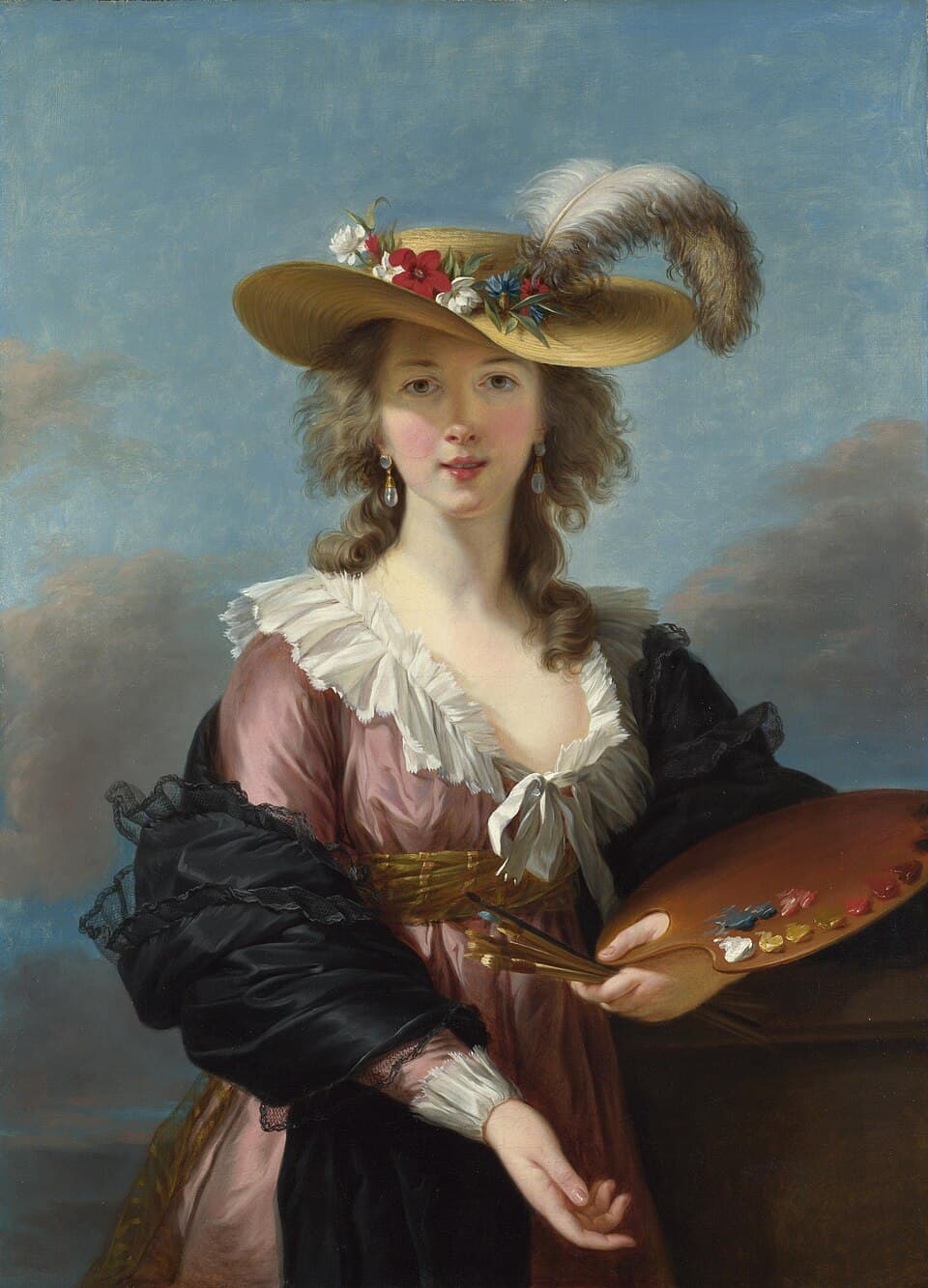
French · Arts
Louise Élisabeth Vigée Le Brun
April 16, 1755 – March 30, 1842
Early Life and Background
Louise Élisabeth Vigée Le Brun was born on April 16, 1755, in Paris, France. She was the daughter of Louis Vigée, a portraitist and pastelist, and Jeanne Maissin. Her early exposure to the art world, facilitated by her father, cultivated her fascination with painting. Tragically, her father died when she was just twelve, but her mother later remarried a wealthy jeweler, which contributed to her privileged upbringing.
Despite her father's early passing, her talents were recognized and nurtured by other artists, most notably Gabriel François Doyen. She received a limited but effective education in art, and by the age of fifteen, she was already supporting her family through the sale of her works.
Career Beginnings and Development
Vigée Le Brun's career began in earnest with her acceptance into the Académie de Saint-Luc, where she exhibited in 1774. Her marriage in 1776 to Jean-Baptiste-Pierre Le Brun, a successful art dealer, further anchored her in the art world. Through him, she gained access to the collections of the French aristocracy, honing her skills and style.
Her big break came with the patronage of Marie Antoinette, Queen of France. She became the queen’s official portraitist, painting more than twenty portraits of her. In 1783, Vigée Le Brun was elected to the prestigious Académie Royale de Peinture et de Sculpture. Her acceptance was largely due to her royal connections and skill, yet was a remarkable achievement as it was rare for women to be admitted.
Major Works and Accomplishments
Her works are characterized by an intimate and flattering portrayal of her subjects, using light and color to capture the elegance of the French nobility. Some of her notable works include "Marie Antoinette en Chemise" and "Self-Portrait with Her Daughter", which display the softer side of royal life.
Vigée Le Brun’s style was noted for its grace, and during her lifetime she created some 660 portraits and 200 landscapes, establishing herself as a prominent figure in European art.
Awards, Honors, and Recognition
Her acceptance into the Académie Royale was a testament to her skill and repute. Though formal awards of her era for women artists were sparse, her widespread recognition across Europe speaks volumes of her reputation. She was also accepted to numerous other European art academies, including those in Rome, Bologna, St. Petersburg, and Berlin.
Personal Life
She married Jean-Baptiste-Pierre Le Brun with whom she had a daughter, Jeanne Julie Louise. Her marriage was troubled by her husband’s infidelities, leading to periods of estrangement, especially during her lengthy travels across Europe.
Legacy and Historical Impact
Vigée Le Brun’s work is celebrated for its detail and delicacy. Her portraits capture the opulence of pre-revolutionary France and serve as a window to an era of elegance. Her legacy extends beyond France; her memoirs provide insight into her life and the tumultuous period she lived through.
Later Life and Death
After the French Revolution, Vigée Le Brun traveled widely across Europe, painting aristocrats and royalties, which helped sustain her career. She returned to France in 1805 and continued to paint until her later years. She passed away on March 30, 1842, in Paris, leaving behind a legacy celebrated today in many prominent art institutions.
Dated achievements
2 indexed.
- Apr161755Arts
Birth of Louise Élisabeth Vigée Le Brun
Birth of renowned French portraitist Louise Élisabeth Vigée Le Brun.
View details Wikipedia: Élisabeth Vigée Le Brun - Mar301842Arts
Death of Louise Élisabeth Vigée Le Brun
Louise Élisabeth Vigée Le Brun, prolific artist, dies in Paris.