← All women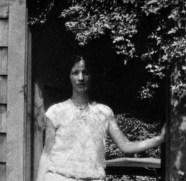
American · Literature
Louise Bogan
August 11, 1897 – February 4, 1970
Early Life and Background
Louise Bogan was born on August 11, 1897, in Livermore Falls, Maine, to Daniel Joseph Bogan and May Louise Curtis. Her father was a mill worker, and her family frequently relocated, shaping the themes of transience in her poetry. Bogan attended Boston Girls' Latin School and later studied for a year at Boston University. Her academic pursuits were cut short due to financial constraints, but her love for literature and determination endured.
Career Beginnings and Development
Bogan's career began to flourish in the 1920s, with her poetry first published in 'The New Republic' in 1923. Her first poetry collection, 'Body of This Death,' was published in 1923. Her work, noted for its formal control and emotional depth, quickly gained attention. She became a highly respected figure in the American literary scene.
Major Works and Accomplishments
Throughout her career, Bogan published several poetry collections, including 'Dark Summer' (1929), 'The Sleeping Fury' (1937), and 'Poems and New Poems' (1941). Her poetry is marked by a precise command of language and deep emotional resonance. As a critic, her reviews for 'The New Yorker' were influential in shaping public tastes and critical standards.
Awards, Honors, and Recognition
Bogan's contributions to literature were recognized with various awards, including being appointed as a Consultant in Poetry to the Library of Congress (now known as Poet Laureate) in 1945. She was also awarded a fellowship by the Guggenheim Foundation, affirming her standing in American poetry.
Personal Life
Bogan married twice, first to Curt Alexander in 1916, with whom she had her only child, before divorcing. She married poet Raymond Holden, but this marriage also ended in divorce. Her life, marked by personal turmoil, often informed her poignant poetry.
Legacy and Historical Impact
Louise Bogan's impact on American literature is profound. Her role as poetry editor at 'The New Yorker' from 1931 to 1970 gave her significant influence over the literary landscape. Her advocacy for fellow poets and critical insights helped shape modern American poetry.
Later Life and Death
Bogan continued to contribute to 'The New Yorker' until her retirement shortly before her death. She passed away on February 4, 1970, in New York City. Her legacy endures through her poetry and criticism, which remain integral to the study and appreciation of 20th-century American literature.
Dated achievements
1 indexed.
- Aug111897Literature
Birth of Louise Bogan
Louise Bogan was born on August 11, 1897, in Livermore Falls, Maine.
View details Encyclopaedia Britannica Profile