← All women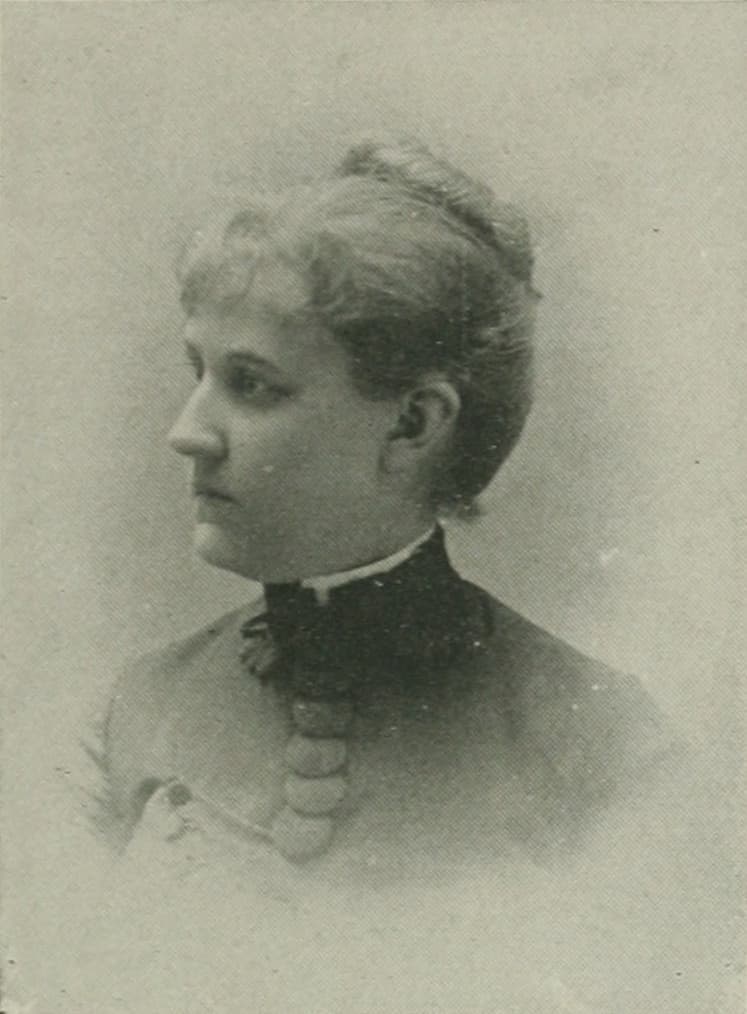
American · Arts
Louise Blanchard Bethune
July 21, 1856 – December 18, 1913
Early Life and Background
Louise Blanchard Bethune, born Jennie Louise Blanchard on July 21, 1856, in Waterloo, New York, is widely regarded as the first woman to practice as a professional architect in the United States. She was the only child of Dalson Wallace Blanchard and Emma Melina (Williams) Blanchard, both educators, which gave her an unusually supportive and academically focused upbringing for a girl in the mid‑19th century.[1][8][10]
Her father, a mathematician and school principal of French Huguenot descent, and her mother, a teacher from a family with long New England roots, emphasized rigorous education and self‑reliance.[7][8] Growing up near Seneca Falls, where the first women’s rights convention had been held in 1848, Bethune’s childhood milieu was shaped by both educational opportunity and the emerging women’s rights movement, even if she is not documented as directly involved in suffrage activism.[7][8]
The family moved to Buffalo, New York, during her youth, and there Bethune’s ambition to become an architect took form. As a girl she reportedly dreamed of architecture and developed an early fascination with building design and technical drawing.[8][10] She attended Buffalo Central High School, where she graduated with honors in 1874, excelling in mathematics and mechanical drawing—subjects critical for architectural training at a time when formal architectural schools were few and largely closed to women.[8][15]
After graduation she further honed her skills in drafting and design, studying at the Buffalo School of Practice and possibly other local institutions that offered advanced courses. Her technical education, combined with her parents’ encouragement, positioned her to seek entry into the architectural profession despite prevailing social expectations that women should confine themselves to domestic roles or teaching.[4][15]
Career Beginnings and Apprenticeship
In 1876 Bethune took a decisive step by entering the office of Richard A. Waite and F.W. Caulkins, prominent architects in Buffalo, as a draftsman and apprentice.[2][4] This apprenticeship, which lasted about five years, provided vital experience in professional practice—learning construction materials, detailing, project management, and client relations. In the late 19th century, architecture was generally learned through such office training, and women were rarely admitted to these roles.
As a draftsman, Bethune worked on plans, elevations, and specifications under Waite’s supervision, building a portfolio that would later support her independent practice.[2][4] Her presence in the office challenged common gender norms; women employed in architectural firms, when they appeared at all, were often relegated to clerical or decorative tasks. In contrast, Bethune undertook substantive design and technical work, demonstrating capability equal to that of her male colleagues.[4][13]
By 1881, having accumulated several years of experience, she was ready to launch her own practice. At the same time, she developed a relationship with Robert Armour Bethune, also an architect, whom she met through professional circles. Their partnership would soon become both professional and personal, shaping much of her subsequent career.[2][3]
Establishing a Professional Practice
In October 1881, Bethune opened an architectural office in Buffalo in partnership with Robert A. Bethune, an event widely cited as marking her status as the first professional woman architect in the United States.[2][12] The firm, initially known as R.A. and L. Bethune, signaled her formal entry into independent practice: she took on clients, signed contracts, and supervised construction as a principal architect, not as an assistant.
Later that year, in December 1881, she married Robert Armour Bethune, consolidating their partnership.[2][3] Their firm prospered, designing a wide range of buildings including schools, factories, banks, hotels, apartment houses, and churches, many in the Romanesque Revival style that was popular in the late 19th century.[2] Bethune took particular interest in educational buildings and in issues of safety, ventilation, and fireproof construction, which were crucial during a period of rapid urbanization and industrial growth.
Over time, the office evolved into Bethune, Bethune & Fuchs, with the addition of architect William R. Fuchs as a partner.[3][9][17] Together, the firm is credited with designing approximately 150 to 180 buildings in Buffalo, western New York, and parts of New England, although exact numbers vary among sources.[1][10][16]
Major Works and Architectural Contributions
Among Bethune’s most notable commissions were several educational and commercial buildings that demonstrated both her technical skill and her interest in modern materials.
- Lockport Union High School (Lockport High School), in Lockport, New York, was one of her firm’s significant educational projects, reflecting her emphasis on function, light, and durability in school design.[2][17]
- The East Buffalo Live Stock Exchange showcased her capacity to work on specialized commercial structures linked to Buffalo’s role as a transportation and trade hub.[2][17]
- The Hotel Lafayette in downtown Buffalo, completed in 1904, is often regarded as her masterpiece. Designed in the French Renaissance style, the hotel incorporated fireproof construction and modern amenities and has become a landmark of Buffalo’s architectural heritage.[2][3][9][17]
Her firm also designed churches, banks, factories, and residential buildings, often employing robust masonry and emerging technologies intended to reduce fire risk. Later accounts credit the firm with designing an early alternating current transformer station associated with Nikola Tesla’s pioneering electrical system, possibly one of the first of its type in the world, though the exact date and technical details are less clearly documented.[9][20]
Another frequently cited project is a commercial building for the Daniels & Fisher music store (or similar retail use) in Buffalo, completed in 1908, which was among the earliest structures in the United States to use steel-frame construction with poured concrete slabs.[16] This building demonstrates Bethune’s engagement with cutting‑edge engineering techniques that would later become standard in skyscraper and commercial construction.
Bethune’s design philosophy emphasized practical, well‑ventilated, and structurally sound buildings. She resisted purely ornamental or superficial approaches, focusing instead on the needs of users—students, workers, hotel guests—and on long‑term durability. Her attention to fireproofing and structural innovation placed her at the forefront of an architectural profession grappling with new technologies and urban hazards.[2][4][10]
Professional Associations, Honors, and Advocacy
Bethune’s professional career was marked by a series of pioneering "firsts" in architectural associations. After opening her office, she sought formal recognition among her peers, joining and helping to shape emerging professional organizations.
In 1885, she was admitted as the first woman member of the Western Association of Architects (W.A.A.), making her the first woman to belong to a professional architectural association in the United States.[1][10][18] This membership offered her access to professional networks, conferences, and discussions on standards and ethics—arenas from which women had previously been excluded.
In April 1888, according to Britannica, she became the first woman elected to membership in the American Institute of Architects (AIA), the leading national professional body.[2] Other sources give October 1888 or emphasize the year without a specific month, but all concur that she was the first woman member.[1][3][7][19] Her admission signified national recognition of her competence and contribution to the field.
Following the merger of the W.A.A. with the AIA in 1889, Bethune became the first woman Fellow of the AIA (FAIA).[1][10][18] Fellowship was the institute’s highest distinction, awarded to architects of notable achievement, and her elevation placed her in the profession’s top tier.
Bethune was also a founding member of the Buffalo Society of Architects, established in the mid‑1880s, one of the early local architectural societies in the United States.[14] Through this and other bodies, she advocated for professional standards and supported the development of architecture as a recognized, regulated profession.
Her advocacy extended to issues of gender and economic equality. A widely cited episode concerns the Woman’s Building at the 1893 World’s Columbian Exposition in Chicago. Bethune, invited to compete for its design, reportedly refused to submit a proposal under terms that offered women architects lower fees than men, insisting on "equal pay for equal service" and withdrawing rather than accept discriminatory compensation.[4][10][13] This stand reinforced her reputation not only as a skilled architect but also as a principled advocate for women’s professional rights.
Personal Life and Daily Practice
Bethune’s personal and professional lives were closely intertwined. She married Robert Armour Bethune in December 1881, soon after they began their joint practice.[2][3] Together, they ran a busy firm, later joined by William R. Fuchs, with Louise widely acknowledged as a leading creative and managerial force.[3][9][17]
Sources suggest that the couple had at least one child, though details about their family life are less extensively documented than her professional achievements.[15] Nonetheless, Bethune’s ability to maintain a demanding architectural practice while navigating marriage and motherhood in an era of limited support for working women underscores the extent of her determination and organizational skill.
Bethune also embraced new forms of mobility and technology. In 1891 she purchased a bicycle, at a cost of $150, becoming the first woman known to own a bicycle in Buffalo.[11][16] She used it to visit construction sites around the city, personally overseeing projects and demonstrating her hands‑on approach to supervision. The bicycle symbolized her commitment to independence and efficiency and aligned her with broader trends in women’s emancipation associated with cycling in the late 19th century.
Colleagues and later historians have described Bethune as disciplined, pragmatic, and resolute, more interested in solid design and fair compensation than in self‑promotion. Her preference for practical clothing and direct engagement with building sites reflected her view of architecture as a demanding, technical profession rather than an ornamental art.[4][16]
Legacy and Historical Impact
Louise Blanchard Bethune’s legacy rests on both her built work and her symbolic role in opening the architectural profession to women. She is consistently cited by historians and professional organizations as America’s first professional woman architect, a title reflecting her self‑established practice, membership in major architectural bodies, and leadership in a field that had excluded women.[1][2][3][10][14][18]
Her design portfolio—approximately 150 to 180 known buildings—helped shape Buffalo and western New York at a time of rapid urban growth.[1][10][12][16] Projects such as Hotel Lafayette and various schools and commercial structures display her understanding of modern construction techniques and urban needs, while her work on fireproof buildings and early steel‑frame and concrete technologies positioned her close to the forefront of early 20th‑century architectural innovation.[2][9][16][20]
Beyond specific buildings, Bethune’s significance lies in her institutional breakthroughs. As the first woman member and Fellow of the AIA, and the first woman admitted to the W.A.A., she set precedents that allowed later generations of women architects to seek membership, recognition, and leadership in professional associations.[1][2][10][18][19] Her insistence on equal fees and her refusal to accept discriminatory terms in the World’s Columbian Exposition competition have also been celebrated as early examples of professional feminist activism.
For much of the 20th century, Bethune’s accomplishments were under‑recognized. Architectural histories often centered male architects and metropolitan firms, marginalizing women and regional practices. In 1963, Madeleine B. Stern published a pioneering posthumous profile that helped bring Bethune back into scholarly view.[14] Subsequent research, including Louise Blanchard Bethune: Architect Extraordinaire and First American Woman Architect, Practiced in Buffalo, New York (1881–1905) by Johanna Hays, and exhibitions such as "Every Woman Her Own Architect" at the University at Buffalo, further solidified her place in the narrative of American architecture.[13][15][17]
Professional and public recognition has continued to grow. The American Institute of Architects and regional chapters have highlighted her as a trailblazer, and heritage organizations maintain records and tours of her surviving buildings. The dedicated website LouiseBethune.org and profiles in initiatives like Pioneering Women of American Architecture present her story to wider audiences, emphasizing both her achievements and the obstacles she overcame.[1][10][11][18]
Contemporary journalism has also revisited her life. A 2021 "Overlooked" obituary in The New York Times underscored how Bethune "changed the face of Buffalo" through her designs and how her story illustrates broader patterns in the historical erasure and recovery of women’s contributions to architecture.[16]
Later Life and Death
In her later years, Bethune continued to practice architecture, though the pace of her work may have slowed as younger partners and associates took on more responsibilities.[15] She lived in Buffalo, remaining closely connected to the city whose physical and institutional landscape she had helped shape.
On December 18, 1913, Bethune died in Buffalo at the age of 57.[2][3][5][11] She was buried in Forest Lawn Cemetery, a historic cemetery that also contains the graves of many notable figures in the region’s history.[11] At the time of her death, she was recognized locally as a significant architect, though the full national and historical significance of her pioneering role would only be widely acknowledged decades later.
Today, Bethune’s reputation as a barrier‑breaker and accomplished architect is firmly established. Her life and work exemplify how women in the late 19th and early 20th centuries negotiated access to professional training, organizations, and public commissions, often in the face of explicit and implicit discrimination. Her story continues to inspire efforts to document and celebrate women architects worldwide, and her buildings remain integral to the architectural heritage of Buffalo and beyond.[1][2][3][10][12][16][18]
Dated achievements
7 indexed.
- Jul211856Arts
Birth of Louise Blanchard Bethune
Birth of Louise Blanchard Bethune in Waterloo, New York.
View details Wikipedia: Louise Blanchard Bethune - Oct011881Arts
Opens architectural office as first female architect
Opened her own architectural office, marking her as the first professional woman architect in the U.S.