← All women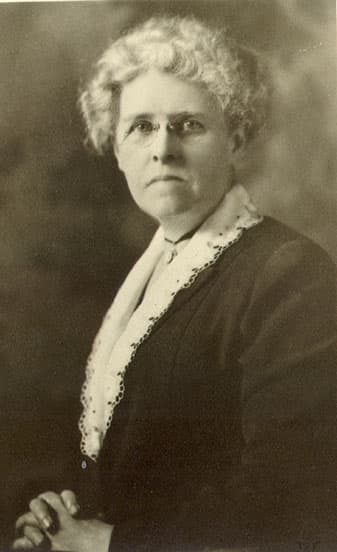
American · Law · Activism
Lola Baldwin
1860 – June 22, 1957
Early Life and Background
Aurora "Lola" Greene Baldwin was born in 1860 in Elmira, New York
Details of Baldwin’s childhood, schooling, and family background are fragmentary in the surviving record. The Archives West collection and biographical studies note that before her work in Portland she spent years as a teacher and as a volunteer investigator with charitable organizations on the East Coast.[9][5] This early experience in education and charity work formed the foundation for her later approach to policing, which combined investigative rigor with a strong emphasis on moral reform and social welfare. Baldwin came of age at a time when women were generally excluded from formal law enforcement and from most positions in municipal government. Women’s public activism was often channeled through church groups, benevolent societies, and settlement houses. Her move from this voluntary reform world into the ranks of sworn officers would later make her a key figure in the history of both policing and women’s work. In 1904, Lola Baldwin moved with her husband LeGrand Baldwin to Portland, Oregon.[1][9] Almost immediately she became involved in local reform efforts. She helped organize Portland’s nascent juvenile court, working with reformers such as Judge Arthur Frazer and civic activists to create a separate system for young offenders and vulnerable youth.[11] Frazer appointed her the court’s unpaid probation officer for transient girls, a role that required close contact with young women at risk in a rapidly growing city.[11] At the same time, Baldwin worked with the Young Women’s Christian Association (YWCA) Travelers’ Aid program. She coordinated volunteers who met trains and boats arriving in Portland, offering guidance, lodging, and protection to young women seeking work or adventure in the city.[1][9][11] These arrivals were particularly numerous during major events, when Portland became a magnet for visitors and opportunists alike. Her dual involvement in juvenile probation and Travelers’ Aid brought Baldwin sharply into focus as a skilled organizer and investigator. She observed the vulnerabilities of single women in a city rife with prostitution, trafficking, and vice, and she concluded that sustaining protective work would require institutional support beyond the limited budgets of charities. The turning point in Baldwin’s path toward formal policing came with Portland’s Lewis and Clark Centennial Exposition in 1905.[1][6][9] As part of preparations for the fair, Baldwin was hired—initially through charitable channels, not the police—to lead a coordinated effort to protect young women drawn to the city by the exposition’s promises of work and entertainment.[11] Working with the YWCA and Travelers’ Aid, she organized volunteers to meet incoming trains and boats and to steer women away from exploitative employers, brothels, and fraudulent offers.[6][11] According to later accounts, Baldwin and her network helped more than 1,600 young women find suitable jobs and safe lodging during the exposition.[6] She also participated in a committee that successfully lobbied for state legislation authorizing the creation of a juvenile court in Multnomah County, intertwining her protective and legal reform work.[11] Baldwin’s success during the fair demonstrated both the scale of the problem and the effectiveness of organized intervention. The temporary protective machinery she had built could not simply be dismantled when the exposition closed. Instead, Baldwin used her experience, political connections, and investigative skills to argue that the city itself—through its police department—should assume responsibility for ongoing protective work with women.[1][9] Her case was persuasive. As the Oregon Encyclopedia and archival collections emphasize, Baldwin "deftly" converted her unpaid and semi‑formal roles into a proposal for a permanent, full‑time position within the Portland Police Department.[1][9][14] This proposal would soon become a landmark in women’s labor history. On April 1, 1908, Portland Mayor Harry Lane administered the police oath to Lola Greene Baldwin, then forty‑eight years old.[1][13][14] She had passed the civil service examination and was formally sworn in "to perform Police Service" for the city of Portland.[1][11][14] This act made her the first woman hired under civil service rules in the United States as a full‑time, paid law enforcement officer and the first municipal policewoman in the country.[1][6][7][8][14] Baldwin was appointed Superintendent of the Women’s Auxiliary to the Police Department for the Protection of Girls, soon renamed the Women’s Protective Division, with the rank of detective.[2][6][8] Her division’s mission reflected her background: instead of emphasizing reactive arrests, Baldwin prioritized preventive policing aimed at safeguarding women and girls before they became entangled in criminal or exploitative situations.[6][8][12] In contemporary language, Baldwin was sometimes described as a "municipal mother"—a phrase later adopted as the title of historian Gloria E. L. Main’s book A Municipal Mother: Portland’s Lola Greene Baldwin, America’s First Policewoman.[1][14][16] The label captured both the gendered expectations placed on her and the groundbreaking nature of her role: she brought a "maternal" ethos into a sphere traditionally reserved for men, but she did so in the form of a sworn, salaried officer wielding investigative authority. From 1908 to 1922, Baldwin led the Women’s Protective Division of the Portland Police Department.[1][6][9][12] Under her direction, the division focused on environments that she and her colleagues believed "bred corruption": amusement parks, dance halls, saloons, cheap lodging houses, and other venues associated with vice and predatory behavior.[6][8] Her officers patrolled these spaces, monitored compliance with regulations, and intervened when they found evidence of exploitation or risk. They often steered women toward safer employment, provided information on reputable rooming houses, and coordinated with social agencies to secure assistance. Baldwin’s philosophy was that preventing women from being drawn into prostitution or crime was both morally and economically sound for the city. At the same time, she participated in broader civic campaigns against urban vice and corruption, bringing a woman’s perspective to debates over liquor licensing, dance hall regulation, and the policing of commercialized leisure.[8][7] Portland in the early twentieth century was a "ragtime" city, with its traditional values challenged by new forms of entertainment and migration. Baldwin’s division stood at the intersection of these cultural shifts, trying to protect women without wholly suppressing their aspirations for independence. Baldwin’s work attracted national attention. Cities such as Seattle and Tacoma observed Portland’s experiment with policewomen and invited her to advise them on organizing their own women’s protective divisions.[8][9] Through reports, correspondence, and on‑site consultations, she contributed to the spread of the municipal policewoman model across the Pacific Northwest and beyond, influencing how departments imagined the possibilities of women’s police work. During World War I, Baldwin’s expertise in vice control and women’s protection led to a national assignment. From roughly 1915 to 1918, she served as supervisor of the West Coast (Section 7) of the War Department Commission on Training Camp Activities, Section on Women and Girls.[9] In that capacity, she reported on social conditions and efforts to control vice near military camps in her region. The Commission on Training Camp Activities aimed to safeguard soldiers’ health and morale by reducing prostitution, venereal disease, and related forms of exploitation around camps. Baldwin’s section concentrated specifically on the impact of these environments on women and girls, as well as on the effectiveness of local policing and social agencies in addressing risks. Her reports, preserved in the Archives West collection, document systematic investigations into lodging houses, amusement venues, and red‑light districts, and they recommend strategies that combine enforcement with social services.[9] This wartime work demonstrates that Baldwin’s influence extended well beyond Portland: she was part of a national effort to rethink the relationship between gender, sexuality, and public order during a period of intense mobilization. In 1922, after fourteen years as superintendent of the Women’s Protective Division, Baldwin retired from the Portland Police Department.[1][6][8][9] Her retirement marked the end of her formal tenure as a sworn officer, but not the end of her public service. She continued to serve on parole boards, prison labor boards, and other civic bodies concerned with criminal justice and social welfare.[1][9] Even outside the police hierarchy, she remained an influential voice in debates about how society should treat offenders, particularly women and youth. Baldwin also emerged as a vocal advocate for equal pay and benefits for women police officers. Sources note that she lobbied for parity in salary, pensions, and working conditions, arguing that women who met civil service standards and performed dangerous enforcement work deserved the same compensation as men.[1][6][7][8] Her advocacy anticipated later feminist campaigns for workplace equality in law enforcement. Her continuing engagement with public issues is evident in actions such as her 1941 letter to The Oregonian, in which she urged the city not to allow hard liquor in dance halls.[7] Even decades after leaving her post, Baldwin remained deeply concerned about the environments in which young people socialized and about the potential for exploitation, reflecting the continuity of her reformist convictions. Information about Baldwin’s private life is more limited than documentation of her public career. Sources consistently identify her as married to LeGrand Baldwin, with whom she moved to Portland in 1904.[1][9] Details about children or extended family are sparse in the main biographical and archival accounts, which focus primarily on her professional achievements and public activism. Baldwin’s self‑presentation and the language used by contemporaries suggest that she embraced a blend of traditional and nontraditional gender roles. The moniker "municipal mother" highlighted her "maternal" concern for women and girls, yet she also occupied positions of formal authority and investigative power rarely granted to women of her generation.[14][16] Her papers, as described in archival finding aids, include extensive correspondence, reports, and clippings that portray a woman deeply invested in civic life and professional identity.[9] Later accounts emphasize that Baldwin was widely respected by colleagues and reformers, even as some contemporaries disagreed with her moral standards or with the paternalistic aspects of her protective work.[6][8] Her personal beliefs about sexuality, leisure, and respectability shaped her approach to policing, but they also reflected mainstream reform values of the Progressive Era. After her 1922 retirement, Baldwin appears to have remained in the Portland area, with at least part of her later years spent in Lake Grove (now part of Lake Oswego), where local histories note her presence as a retired but still active civic figure.[4] She continued writing, advising, and serving on boards well into old age, and many observers remarked that she "never really retired" from her reform work.[3][8] According to biographical summaries and the widely cited Wikipedia entry, Baldwin died in Portland, Oregon, on June 22, 1957, at the age of ninety‑seven.[2] Some scholarly and archival sources list only the year of her death, but the June 22 date is attested in reliable secondary reference works.[2][5][9] She lived long enough to see substantial changes in women’s roles, including the growth of women’s units in police departments and the broader integration of women into public employment. Even in her later years, Baldwin remained connected to discussions about vice control and women’s protection. The preservation of her papers, photographs, and scrapbooks in the Archives West–described Lola Greene Baldwin collection testifies to the significance of her work and to the efforts of later archivists and historians to document her contributions.[9] Her long life spanned eras from Reconstruction through the early civil rights movement, providing a wide temporal canvas on which her particular story of women in policing unfolded. Lola Greene Baldwin occupies a central place in the history of women in law enforcement. Scholars and public historians consistently identify her as America’s first municipal policewoman and the first woman hired under civil service rules as a full‑time, paid law enforcement officer by a U.S. municipality.[1][6][7][8][14][16] Her 1908 appointment in Portland marked the origin of the municipal policewoman movement, which gradually spread across the country. Baldwin’s legacy has several dimensions: Her story has been retold in various media, including the Oregon Public Broadcasting documentary Oregon Experience: Lola G. Baldwin and related articles and historical features.[3][6][8][12] The Oregon Encyclopedia, academic works such as A Municipal Mother, and a graduate thesis on her role in the professionalization of women’s policing further cement her status as a key figure in Western and gender history.[1][5][14][16] On the centennial of her appointment, April 1, 2008, Portland’s mayor issued a proclamation declaring "Lola Greene Baldwin Centennial Day," explicitly honoring her achievements as America’s first policewoman.[8] Contemporary tributes from the Portland Police Bureau highlight archival images of Baldwin at her desk and with other women officers, symbolizing the path she opened for generations of policewomen.[15] At the same time, historians note the complexity of her legacy. Baldwin’s work emerged from Progressive Era moral reform traditions, and some aspects of her preventive policing—such as regulation of leisure spaces and concerns about "respectability"—reflected the era’s paternalistic attitudes toward working‑class and immigrant women.[5][8] Yet her pioneering role and her efforts to integrate women into formal law enforcement remain significant milestones in the history of women’s rights and public employment. Today, Baldwin is remembered as both a product of her time and a transformative figure within it: a woman who used the tools available—charity, moral reform, and eventually the badge—to carve out new professional terrain for women in the public sector and to reshape how American cities understood the relationship between gender, safety, and the law.Move West and Career Beginnings in Portland
Lewis and Clark Exposition and the Road to a Police Post
Appointment as America’s First Municipal Policewoman (1908)
Building the Women’s Protective Division (1908–1922)
War Department Service During World War I
Retirement from the Police Department and Continuing Advocacy
Personal Life
Later Life and Death
Legacy and Historical Impact
Dated achievements
3 indexed.
- Apr011908Law
Sworn in as first municipal policewoman
First municipal policewoman and first woman hired by a U.S. municipality for regular enforcement duties.
View details Baldwin, Lola (1860-1957) - Apr011908Law
First woman hired under civil service rules
First woman hired under civil service rules as a full-time, paid law enforcement officer in the U.S.