← All women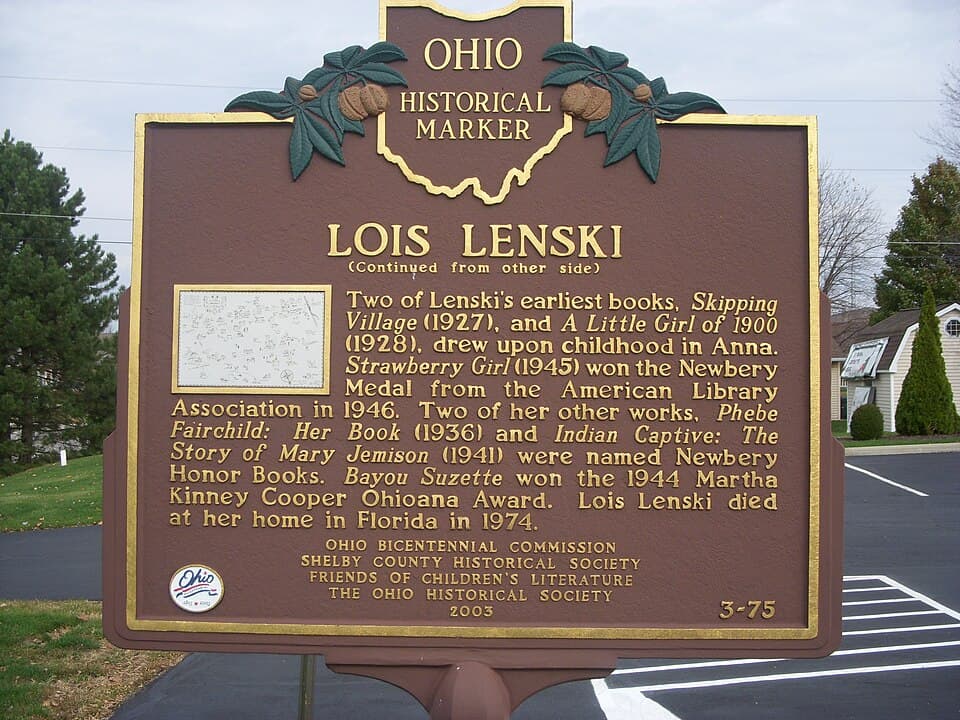
American · Literature · Arts
Lois Lenski
October 14, 1893 – September 11, 1974
Early Life and Background
Lois Lenski was born on October 14, 1893, in Springfield, Ohio, to Richard Charles Henry Lenski, a Lutheran minister, and Marietta Young Lenski. Raised in a home that valued education and artistic expression, Lois was encouraged from a young age to pursue her interests in literature and art. Her formative years were spent in the Midwest, fostering a connection to rural life that would profoundly influence her work. In her teenage years, the Lenski family moved to Ann Arbor, Michigan, where Lois graduated high school in 1911.
She attended Ohio State University, where she studied education and became actively involved in the art department, excelling in drawing and painting. After graduating in 1915, Lenski pursued further studies at the Art Students League in New York City. This education uniquely positioned her to combine her passions for writing and illustrating.
Career Beginnings and Development
Lenski began her career primarily as an illustrator for other authors' books, honing her skills in both art and storytelling. Her first publication as an illustrator was a book called "Silly Books to Read Aloud." Subsequently, inspired by her illustrative work and encouraged by her literary peers, Lenski began writing her books.
Her first venture into authoring was "Skippy Bedelle" in 1928, although it was her subsequent creation, "Peppy: The Story of a Guide Dog," published in 1937, that marked the beginning of her recognition as an author. Her style was marked by detailed, empathetic portrayals of American life, especially in rural and underrepresented regions, which set her apart in the children's book genre of the time.
Major Works, Discoveries, or Accomplishments
Lois Lenski's major breakthrough came with her "Roundabout America" series, which started with "Bayou Suzette" in 1943, focusing on the diverse cultures and rural life across America. Her critically acclaimed novel, "Strawberry Girl," won the prestigious Newbery Medal in 1946. This book is revered not only for its storytelling but also for its depiction of the cultural tensions and rural lifestyles in the American South.
A prolific writer, Lenski authored and illustrated more than 100 books throughout her career, including the beloved "Mr. Small" series, which remains a staple in children's literature. Her work is celebrated for capturing the essence of American life, providing readers an intimate look into various communities and eras.
Awards, Honors, and Recognition Received
Throughout her prolific career, Lenski received numerous accolades. Besides the Newbery Medal for "Strawberry Girl," she also earned the Lewis Carroll Shelf Award for "Indian Captive" in 1956, and many of her books were adapted into classroom reading materials, bringing her stories to generations of young readers.
Personal Life
Lenski married Arthur Covey, an artist, in 1921. The couple shared a love for art and creativity, with Covey supporting Lenski's literary and artistic pursuits. Together, they had two children, and the family settled in the rural town of Harwinton, Connecticut, which served as a serene backdrop for Lenski's work and inspiration.
Legacy and Historical Impact
Lois Lenski's legacy endures through her expansive body of work that continues to be celebrated for its ability to capture the diverse American experience. Her commitment to depicting authentic rural life and giving a voice to its communities resonated with readers and provided an educational perspective often missing in children's literature of her time.
Lenski's books have not only entertained generations but also contributed significantly to cultural understanding and empathy. By focusing on marginalized voices and rural perspectives, she paved the way for future authors to explore similar themes.
Later Life and Death
Continuing to write into her later years, Lenski left an indelible mark on the literary landscape. Her later works focused more on social themes, reflecting a deepening concern for societal issues. Lois Lenski passed away on September 11, 1974, in Florida. Her contributions to literature continue to be studied, celebrated, and cherished.
Dated achievements
1 indexed.
- Oct141893Literature
Birth of Lois Lenski
Lois Lenski was born on October 14, 1893, in Springfield, Ohio.
View details Wikipedia