← All women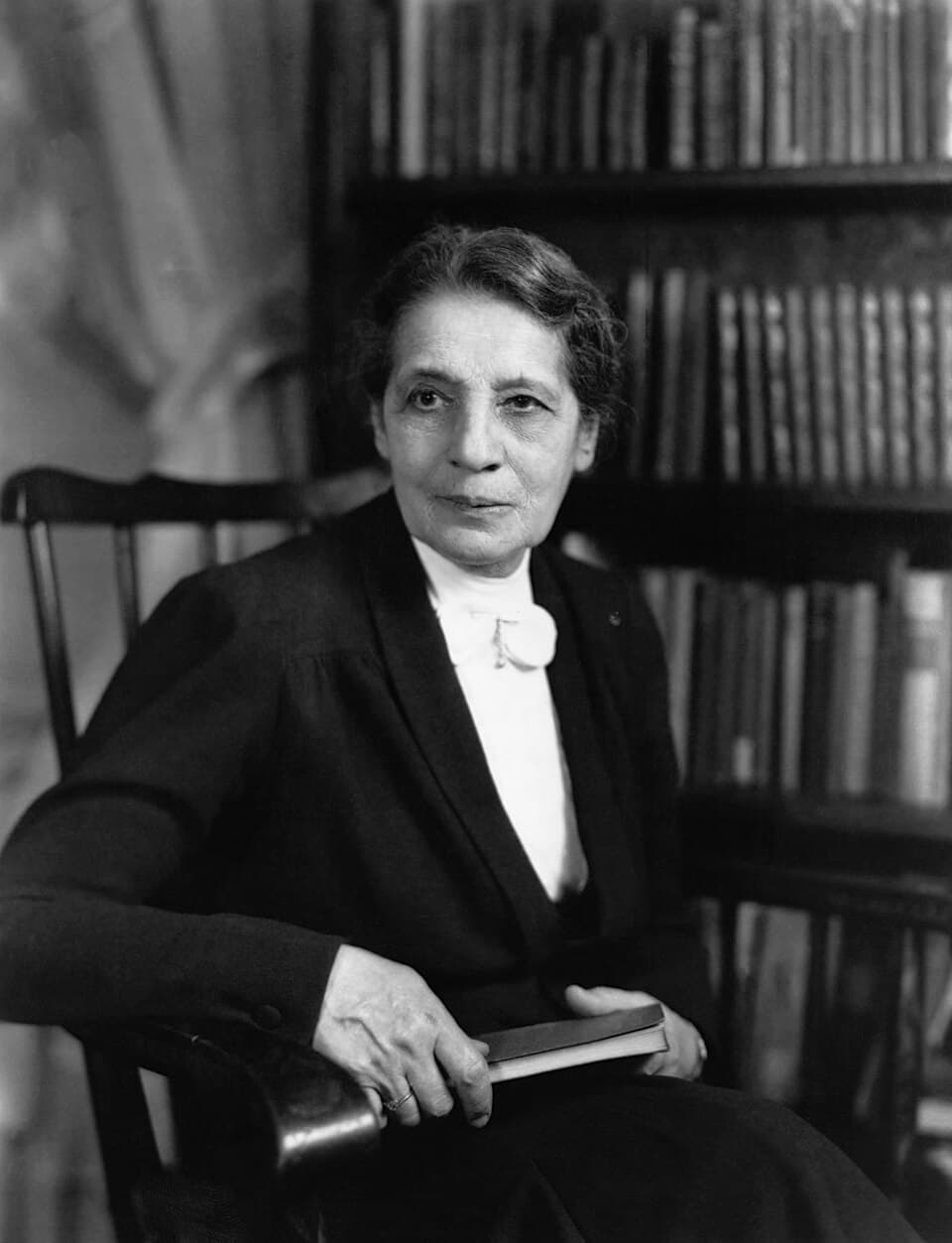
Austrian, Swedish · Science
Lise Meitner
November 7, 1878 – October 27, 1968
Early Life and Background
Lise Meitner was born Elise Meitner on 7 November 1878 in Vienna, then part of Austria-Hungary. She would later become one of the most important nuclear physicists of the 20th century. She was the third of eight children in an assimilated Jewish family; her father, Philipp Meitner, was a lawyer, and her mother, Hedwig Skovran, managed the household.[7][3] Although girls were barred from the Austrian higher secondary schools that prepared boys for university, Meitner showed early talent in mathematics and physics and received additional private instruction.[7] Her parents supported her interests, a crucial factor for a girl who faced structural barriers to formal scientific education.
In her late teens, Meitner studied privately to pass the external examinations equivalent to the gymnasium curriculum, enabling her to qualify for university admission.[7] Around this time she encountered the writings of physicist Ludwig Boltzmann, whose popular lectures on the nature of matter deeply impressed her; she later credited Boltzmann with inspiring her decision to study physics seriously.[7][1] This formative period in Vienna—marked by both cultural richness and legal discrimination against women—shaped Meitner’s resolve to pursue academic science despite significant obstacles.
University Education and Doctorate
In 1901, after passing the necessary examinations, Meitner was admitted to the University of Vienna, one of the first women to study physics there.[7] She attended lectures by Boltzmann and other leading physicists, absorbing the new ideas of statistical mechanics and atomic theory.[7] Her doctoral research focused on heat conduction in inhomogeneous materials, a problem at the intersection of theoretical and experimental physics.[1]
In 1906, Meitner earned her doctorate in physics from the University of Vienna, becoming one of the earliest women to receive a physics doctorate there and commonly cited as the second woman to obtain any doctorate from that university.[1][3] This achievement was remarkable given the institutional resistance to women in the sciences. Her success placed her among a small cohort of women with advanced training in physics at a time when the discipline was overwhelmingly male and contributed to the modest but growing precedent for women’s advanced scientific education in Central Europe.
Career Beginnings in Berlin
After her Ph.D., Meitner sought further research opportunities and, in 1907, moved to Berlin, then a major center of theoretical physics.[7] There she attended lectures by Max Planck, a leading figure in quantum theory, who initially opposed women’s participation but was impressed by Meitner’s abilities and eventually allowed her to study and later assist in his institute.[7][12] Her acceptance into Planck’s circle marked one of the first times he admitted a woman as a student or collaborator, illustrating both her exceptional talent and the gradual, contested opening of German academic institutions to women.
In Berlin, Meitner began a long collaboration with chemist Otto Hahn, initially working without pay and with limited laboratory access because of her gender.[1][7] Hahn had laboratory facilities at the Kaiser Wilhelm Institute for Chemistry, and Meitner, trained as a physicist, brought crucial expertise in radioactive measurements. Together they embarked on a program to study radioactivity and nuclear processes, laying the groundwork for decades of joint research. During these early years, Meitner often worked in makeshift conditions and was excluded from some official positions and titles, reflecting the persistent gender hierarchy in German science.[3]
Radioactivity Research and Early Discoveries
Throughout the 1910s and 1920s, Meitner and Hahn conducted systematic studies of radioactive substances and their decay chains. In 1917, while working at the Kaiser Wilhelm Institute, they identified and characterized a long-lived isotope of the element later named protactinium, filling a crucial gap in the actinium series.[1][7] Their discovery of protactinium provided important confirmation of the structure of radioactive families and contributed to the mapping of the periodic table at high atomic numbers.
Meitner also made significant theoretical contributions. In 1922, she published work clarifying the cause of what is now called the Auger effect, an atomic process in which the emission of an electron follows inner-shell ionization.[7][3] Although the phenomenon had been experimentally observed by Pierre Auger, Meitner’s analysis helped explain its underlying mechanism, integrating it into the broader understanding of atomic physics emerging from quantum theory. Her investigations of beta decay, gamma radiation, and nuclear processes further established her as a leading figure in the new field of nuclear physics.
Professor in Berlin and Recognition
By the mid-1920s, Meitner had attained increasing professional status. In 1926, she became the first woman in Germany to hold a full professorship in physics, at the University of Berlin, while continuing her research at the Kaiser Wilhelm Institute.[4][3] This appointment was a landmark for women in science, representing an institutional acknowledgment of her accomplishments in a context where female academics were rare and often confined to lower-ranking posts.
Meitner’s Berlin years were scientifically productive. She and Hahn refined methods for detecting and analyzing radioactive isotopes, and she supervised younger researchers, helping to shape the next generation of nuclear scientists.[1][12] Despite these achievements, she frequently encountered discrimination: her name was sometimes omitted from official documents, her salary lagged behind that of male colleagues, and she was excluded from membership in certain academies. Nevertheless, her reputation grew internationally, and she began receiving significant honors.
Among her early recognitions were the Lieben Prize and the Max Planck Medal, awarded for outstanding contributions to physics.[4] These awards underscored her status as a leading nuclear physicist and highlighted the importance of her work on radioactivity and atomic structure. She was elected to several learned societies, though often later and more hesitantly than male contemporaries with comparable achievements.
Rise of Nazism and Flight from Germany
The political context of Meitner’s career changed dramatically with the rise of National Socialism. Although she had converted from Judaism to Protestantism earlier in life, Nazi racial laws defined her as Jewish and stripped her of many civil rights.[7][3] By the mid-1930s, she faced increasing pressure and official discrimination: her name disappeared from some publications, her institutional position was precarious, and colleagues warned her of impending danger.[4]
In 1938, after the annexation of Austria (Anschluss) and mounting threats, Meitner was forced to leave Germany. Her escape was difficult; she lacked valid exit papers and relied on colleagues in the Netherlands and Scandinavia to arrange a clandestine border crossing.[1][9] Eventually she reached Sweden and joined the Nobel Institute for Physics in Stockholm.[7] This move uprooted her from the institute and city where she had worked for three decades, but it allowed her to continue research and ultimately play a decisive role in interpreting experimental findings that would change nuclear science.
Discovery and Explanation of Nuclear Fission
Even after leaving Berlin, Meitner maintained correspondence with Otto Hahn, who continued experimental work on neutron irradiation of heavy elements, particularly uranium. In late 1938, Hahn and his collaborator Fritz Strassmann obtained puzzling results: bombardment of uranium seemed to yield barium, a much lighter element. They informed Meitner of these findings, seeking her theoretical insight.[7][1]
During discussions with her nephew, physicist Otto Robert Frisch, Meitner realized that the uranium nucleus might be splitting into two roughly equal parts—a process unprecedented in known nuclear reactions.[7][9] She applied Einstein’s mass–energy relation, \(E = mc^2\), to estimate that such a division would release enormous energy. Frisch later recalled that this insight came during a famous walk in the Swedish countryside, during which they calculated the energy output and grasped the potential significance.[8][7]
In February 1939, Meitner and Frisch published a short but influential paper in Nature, in which they provided the theoretical explanation for the phenomenon and introduced the term "nuclear fission" to describe the splitting of heavy nuclei.[7][16] Their analysis showed that neutron-induced fission of uranium could produce a chain reaction, making possible both nuclear reactors and nuclear weapons. This work is widely regarded as the foundational theoretical description of nuclear fission, and Meitner’s role was central: she articulated the mechanism, carried out the energy calculations, and framed the process in conceptual terms.
The experimental evidence underlying this breakthrough had been produced in Hahn’s Berlin laboratory, but Meitner’s interpretation transformed puzzling chemical results into a revolutionary physical discovery. The discovery of nuclear fission had immediate global repercussions: it prompted research programs in multiple countries and ultimately enabled the construction of the first nuclear reactors and atomic bombs during World War II.[7][16]
Ethical Stance and Relationship to the Manhattan Project
Despite her crucial role in explaining nuclear fission, Meitner took a strong moral stance against nuclear weapons. When approached about participation in Allied bomb research, she refused. According to historical accounts, she declared, "I will have nothing to do with a bomb," and she did not join the Manhattan Project at Los Alamos.[1][4] Her position reflected both her horror at Nazi persecution and her belief that science should serve humane purposes rather than mass destruction.
In the United States, some media outlets nonetheless dubbed her the "Jewish mother of the atomic bomb," a label that both misrepresented her religious identity—she did not personally identify as Jewish after her conversion—and ignored her opposition to nuclear warfare.[5] Meitner herself rejected such characterizations, emphasizing that her work was a fundamental contribution to physics, not a blueprint for weaponry. Her ethical stance has since been cited in discussions about scientists’ responsibilities regarding the applications of their discoveries.
Nobel Prize Controversy
In 1944, the Royal Swedish Academy of Sciences awarded the Nobel Prize in Chemistry to Otto Hahn alone, "for the discovery of the fission of heavy nuclei."[6][9] Meitner’s contribution—the theoretical explanation and naming of nuclear fission—was not recognized in the award, despite her decades of collaboration with Hahn and her essential interpretation of his experimental results. Many historians and scientists have since argued that this omission represents one of the most significant injustices in the history of the Nobel Prizes.[6][13]
Several factors have been proposed to explain this exclusion: gender bias in scientific recognition, political tensions during and after World War II, and the Academy’s focus on experimental rather than theoretical contributions. Whatever the reasons, the decision left Meitner without the highest formal accolade for a discovery in which she played a pivotal role. In later decades, the story of her exclusion became a central example in analyses of how women’s scientific work has been marginalized or credited to male collaborators.
Later Career, Awards, and Honors
After the war, Meitner remained in Sweden, continuing research and mentoring younger scientists. She held positions at the Nobel Institute for Physics and maintained international contacts through conferences and correspondence.[7] Although she never received a Nobel Prize, she was honored with numerous other awards that recognized her contributions to nuclear physics and radioactivity.
In 1966, she shared the Enrico Fermi Award with Otto Hahn and Fritz Strassmann, granted by the United States Atomic Energy Commission.[4] The award acknowledged their roles in the discovery of nuclear fission and offered belated institutional recognition of her part in the breakthrough. Meitner also received the Otto Hahn Prize for Chemistry and Physics, the Max Planck Medal, and the Lieben Prize, among other honors.[4][12] These awards, bestowed by scientific societies and governments, testified to a growing awareness of her importance even as the Nobel decision remained unchanged.
Her name has been attached to scientific institutions, scholarships, and lectures, often aimed at encouraging women in physics and related fields. She continued to advocate for women’s participation in science, drawing on her own experiences of exclusion and perseverance.[4] Colleagues regarded her as both an outstanding researcher and a generous mentor.
Personal Life
Meitner’s personal life was shaped by her dedication to science and by the upheavals of the 20th century. She never married and had no children, devoting much of her time and energy to research and academic responsibilities.[7] Her closest relationships were with family members—particularly her nephew Otto Robert Frisch—and with scientific colleagues in Berlin and later in Sweden and England.
Religiously and culturally, Meitner occupied a complex position. Born into a Jewish family, she later converted to Protestantism, a decision that reflected both personal conviction and the sociocultural pressures of her era.[7][3] Nevertheless, under Nazi racial laws she was classified as Jewish, and this status forced her emigration and shaped public narratives about her identity. In her own writings and correspondence, she emphasized ethical and humanistic concerns more than formal religious categories.
In her later years, Meitner lived modestly, spending time with relatives and maintaining engagement with scientific discourse. Friends and colleagues described her as reserved but warm, disciplined yet compassionate—a personality consistent with the epitaph "a physicist who never lost her humanity" that Frisch chose for her gravestone.[1][5]
Later Life, Move to England, and Death
In her final decade, Meitner relocated from Sweden to England, where she lived in Cambridge near family and physicist friends.[5][7] She remained intellectually active, following developments in nuclear physics and its applications in energy and medicine. She also continued to express concern about nuclear weapons and advocated for peaceful uses of atomic energy.
On 27 October 1968, Meitner died peacefully in her sleep in a nursing home in Cambridge at the age of eighty-nine.[5][7] Her death prompted obituaries and retrospectives that highlighted both her scientific achievements and the injustice of her exclusion from the Nobel Prize. The gravestone inscription, "Lise Meitner – a physicist who never lost her humanity," encapsulated the dual legacy that friends and historians sought to preserve.[1][5]
Legacy and Historical Impact
Lise Meitner’s legacy is multifaceted, encompassing scientific innovation, ethical reflection, and the history of women in science. Her work with Hahn and others on radioactivity contributed substantially to the mapping of nuclear decay chains and the understanding of atomic nuclei. Her 1917 discovery of protactinium filled a key gap in the periodic table and advanced knowledge of heavy elements.[1][7] Her 1922 analysis of the Auger effect helped clarify fundamental atomic processes.[7] Most importantly, her 1938–1939 theoretical explanation of neutron-induced uranium fission and the coining of the term "nuclear fission" provided the conceptual foundation for transformative technologies.[7][16]
The discovery of nuclear fission led directly to the development of nuclear reactors and atomic bombs during World War II, changing global politics, military strategy, and energy production.[7][10][16] Meitner’s calculations and conceptual framing showed that enormous energy could be released by splitting heavy nuclei, enabling chain reactions that power reactors and weapons. Her work has also had profound consequences for medicine: research stemming from nuclear physics, including fission-related processes, contributed to advances in diagnostic imaging and radiotherapy for cancer treatment.[10]
In the history of women’s contributions to science, Meitner stands out as a pioneer who achieved high-level recognition in a field that had largely excluded women. She was the first woman physics professor in Germany and one of the earliest women anywhere to hold a senior academic position in nuclear physics.[4] Her experiences of discrimination—working unpaid, lacking official titles, and being omitted from major awards—have become central case studies in examinations of gender bias in scientific institutions.
Posthumous honors have further cemented her legacy. In 1997, the International Union of Pure and Applied Chemistry (IUPAC) named element 109 meitnerium (Mt) in her honor, explicitly recognizing her role in the discovery of nuclear fission.[4][16] This naming placed her alongside a select group of scientists commemorated in the periodic table and served as a powerful symbol of belated but enduring acknowledgment.
Meitner is now widely remembered as one of the most important women in 20th-century science and as a figure whose career illustrates both the possibilities and the constraints faced by women physicists.[16][12] Scholarly biographies, museum exhibits, and educational materials emphasize her scientific rigor, her moral stance against nuclear weapons, and her perseverance in the face of exile and discrimination. Her story continues to inspire efforts to promote equity and inclusion in the sciences and to ensure that contributions by women and other marginalized groups are fully recognized.
Continuing Reassessment and Cultural Memory
Since the late 20th century, historians and scientists have undertaken a sustained reassessment of Meitner’s role in nuclear physics. Detailed archival research has documented her central contributions to the interpretation of Hahn’s experimental data and her independent theoretical achievements.[12][13] Many commentators now argue that she should have shared the Nobel Prize and that her exclusion reflects structural biases rather than a lack of merit.
Cultural memory of Meitner has expanded beyond specialized scientific circles. She appears in discussions of ethics in science, in narratives about refugees and intellectual migration, and in projects highlighting "forgotten" women in STEM fields.[1][9][13] Educational resources from institutions and governmental agencies—such as profiles in "Women in Radiation History"—present her as a role model who both advanced knowledge and fought discrimination.[4]
Through these ongoing reevaluations, Lise Meitner has become emblematic of the need to reconsider how scientific credit is assigned and to recognize the collaborative and often contested nature of discovery. Her life story offers not only a record of pioneering research but also a lens through which to examine the intersection of science, politics, and gender in the modern era.
Dated achievements
2 indexed.
- Nov071878Science
Birth of Lise Meitner in Vienna
Birth of Lise Meitner in Vienna, Austria-Hungary, a future pioneer of nuclear fission and one of the most important women in 20th-century science.
View details Lise Meitner – Encyclopaedia Britannica - Oct271968Science
Death of Lise Meitner in Cambridge
Death of Lise Meitner in Cambridge, England; her epitaph honors her as “a physicist who never lost her humanity.”