← All women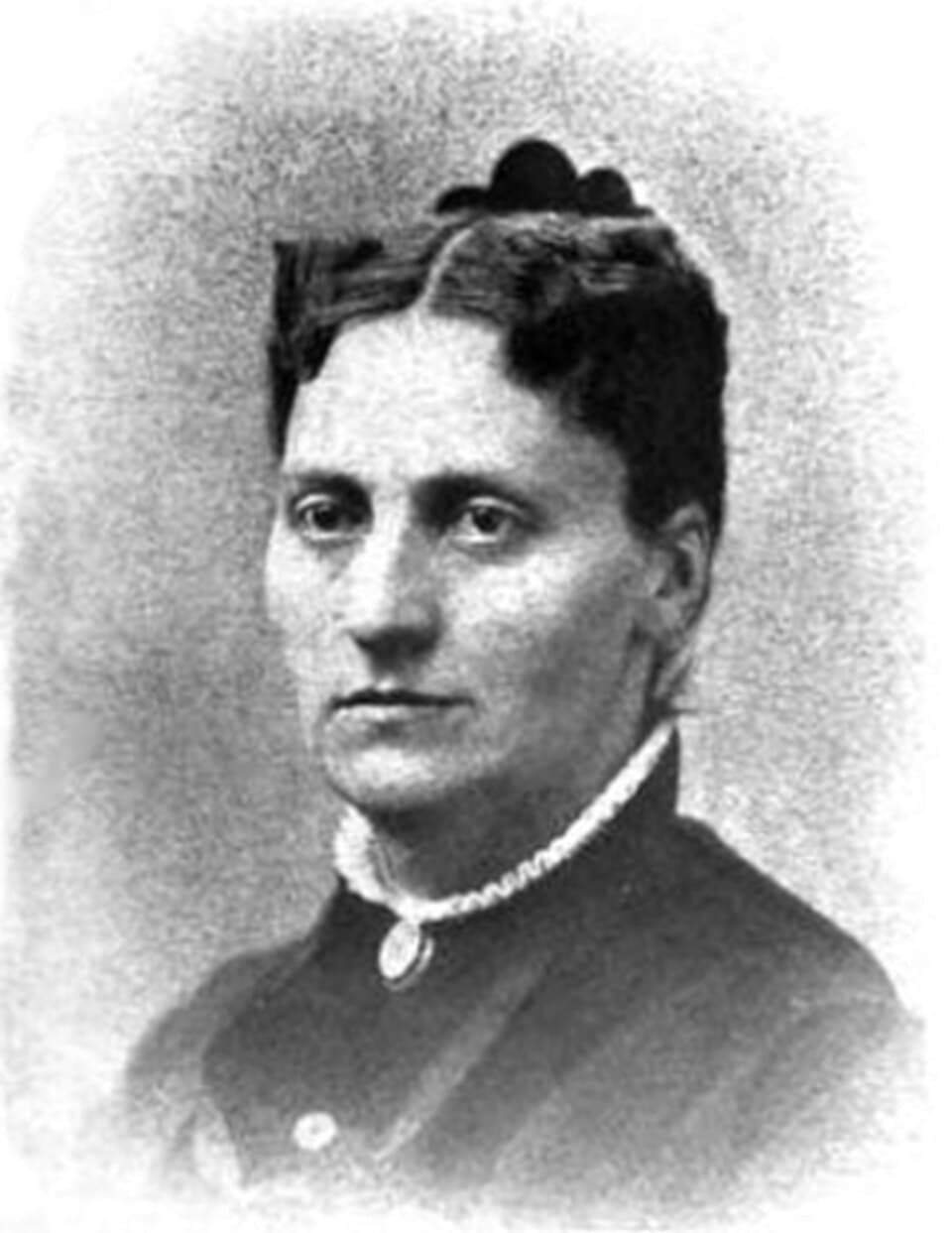
American · Medicine · Activism
Linda Richards
July 27, 1841 – April 16, 1930
Early life and background
Linda Richards was born Malinda Ann Judson Richards on July 27, 1841, near Potsdam, New York. She was the youngest daughter of Sanford and Betsy Sinclair Richards. Later biographical accounts describe a childhood shaped by movement and hardship, including a family relocation westward, and these early experiences helped form the practical resilience that would characterize her career. Richards came of age in a period when the United States had not yet developed formal nursing education, and nursing itself was not widely recognized as a profession.
Her early interest in caregiving is often linked in later accounts to personal family experience, especially the illness of her mother. Whatever the precise formative influence, it is clear that Richards entered adulthood in a time when women’s paid professional opportunities were constrained and when the care of the sick was only beginning to be organized through hospitals, reform movements, and specialized instruction. Those circumstances made her later achievements especially consequential: she would help define an entirely new kind of work for women.
Entry into nursing education
Richards became involved in the earliest stage of American nurse training at the New England Hospital for Women and Children in Boston. In September 1872, she entered the first class of the hospital’s newly organized nursing school, and sources identify her as the first student enrolled in that inaugural class. The school itself was part of a larger reform movement that sought to bring order, discipline, and scientific method into hospital care. At a time when nursing was still seen as unskilled labor, the creation of a formal training school was revolutionary.
Richards completed the one-year program in September 1873 and received the first diploma issued by the school. This made her the first person in the United States to receive a nursing diploma from a formal training institution. That distinction is the basis for her enduring reputation as the first professionally trained nurse in the country. The milestone mattered not only because it marked a personal success, but because it demonstrated that nursing could be taught, measured, and certified.
The New England Hospital for Women and Children was founded in 1862 to serve women and children, and its training school, organized in 1872, became a turning point in American health care. Richards’s place in its first class made her part of the foundation story of modern nursing in the United States.
Early career and professional leadership
After graduation, Richards moved quickly into leadership roles. She served in hospitals where she helped shape the daily organization of nursing work and the education of new nurses. Her influence extended beyond bedside care. One of her most important innovations was the development of systems for recording and tracking patient information. Richards is credited with creating one of the first practical systems for keeping individual medical records for hospitalized patients, a reform that improved continuity of care and provided a model that would be adopted more broadly.
That kind of record keeping may seem routine today, but in the nineteenth century it represented a major administrative innovation. Hospitals were becoming larger and more complex, and nursing needed methods that could support supervision, accountability, and better patient outcomes. Richards understood that professional nursing required not only compassion and bedside skill, but also documentation and organized institutional practice.
She went on to hold posts in major hospitals, including positions associated with Bellevue Hospital in New York and Massachusetts General Hospital in Boston. In these roles she helped expand training systems and strengthen nursing administration. Her work showed that nurses could be educators, supervisors, and reformers as well as caregivers.
Work in the United States and Japan
Richards was not content with a single institutional achievement. She became widely known for establishing and leading nursing training programs in multiple settings in the United States and abroad. One of her most notable later accomplishments was her work in Japan, where she helped organize nursing education and supervised a nursing school in Kyoto connected with Doshisha Hospital. That effort extended American-style nursing training into an international context and demonstrated the portability of the professional model she had helped pioneer.
Her presence in Japan also reflects the larger global circulation of medical reform ideas in the late nineteenth century. As hospitals modernized, the need for trained nurses became international. Richards’s work abroad placed her among the early women who exported professional nursing methods across borders. At a time when women’s travel and professional authority were both more limited, she was able to establish credibility through expertise and institutional leadership.
Organizational leadership and professional identity
Richards also played a central role in building the professional identity of nursing. She served as the first president of the American Society of Superintendents of Training Schools for Nurses, an important organization in the development of standards for nurse education. Her leadership helped establish the idea that nursing schools should share common expectations for curriculum, supervision, and student preparation.
This role was historically significant because it moved nursing from isolated hospital practice toward collective professional governance. The creation of a national organization for training-school superintendents signaled that nursing was becoming a self-aware profession with its own leaders and standards. Richards’s position at the head of that movement reflects the respect she earned in a field that was still defining itself.
Her authority was especially important because women in the nineteenth century often had to prove competence in institutions controlled by male physicians and administrators. Richards earned influence through performance, persistence, and the practical success of the schools she helped build.
Writings and historical self-documentation
Richards also preserved her own story through writing. Her memoir, Reminiscences of Linda Richards, later republished under the title America’s First Trained Nurse, provides invaluable firsthand evidence about the early history of nursing education in the United States. Such writings are important not only as personal recollection but as historical documents that help explain how professional nursing emerged from scattered efforts into a recognized vocation.
Through her writing, Richards helped define how her own work would be remembered. She presented nursing as a discipline requiring training, organization, and public responsibility. That self-narration contributed to the historical memory of nursing as a profession built by women who insisted that caregiving deserved structure, education, and respect.
Personal life
Details of Richards’s personal life appear in biographical accounts, though her public legacy rests primarily on her professional achievements. Later popular sources note an engagement to George Poole, who died during the Civil War, an experience often mentioned as one of the emotional losses that shaped her life. Whether or not emphasized in every source, such personal episodes help explain the depth of commitment that characterized her career.
Richards did not become famous through marriage, and her historical importance lies instead in her professional identity. She devoted her life to building nursing as a field of educated women. That career-centered legacy was unusual in an era when women were frequently defined by domestic roles, making her example especially powerful for later generations of nurses.
Awards, honors, and recognition
During her lifetime and after her death, Richards received broad recognition as the first professionally trained nurse in the United States. Institutions, museums, and nursing organizations have repeatedly cited her as a foundational figure in the profession. The Smithsonian National Museum of American History describes her as “America’s first trained nurse,” and the Women of the Hall honors her as the recipient of the first diploma from the nation’s first school of nursing.
Her recognition also rests on the practical legacy of her work. She was celebrated not because of a single isolated act, but because she repeatedly built institutions and systems that changed nursing practice. Her innovations in education, record keeping, and professional leadership ensured that her name remained central to the history of nursing.
Legacy and historical impact
Richards’s legacy is foundational. She helped move nursing in the United States from informal labor toward a profession grounded in training, standards, and institutional responsibility. By entering the first class of a nursing school, earning the first diploma from that school, and then helping establish further training programs, she created a model that others could follow.
Her impact extended beyond the United States. Through her work in Japan, she helped demonstrate that nursing education could be adapted internationally. Her administrative innovations in patient records also anticipated modern expectations for continuity of care and hospital documentation. In each case, she helped turn nursing into a structured, accountable, and respected field.
Richards’s story is especially significant in women’s history because it captures how one woman’s expertise could reshape an entire occupation. She entered a profession that barely existed in its modern form and helped define what it would become. Her life also illustrates how women reformers advanced professional standards by building institutions rather than only advocating abstract ideals.
Later life and death
Richards retired in 1911 and later lived on a farm in Lowell, Massachusetts. By the time of her death on April 16, 1930, she had lived to see the profession she helped create become established in hospitals and training schools across the country. Her death in Boston marked the end of a life that had spanned nearly ninety years of profound change in American medicine.
Although the world of nursing had changed dramatically by the time she died, Richards remained a symbol of its origins. Her name endured as a shorthand for professional nursing itself. The historical record preserves her not only as a first, but as a builder: a woman who transformed a needed form of care into a disciplined and respected profession.
Dated achievements
4 indexed.
- Jul271841Medicine
Birth of Linda Richards
Linda Richards was born in Half Moon, New York. She would become the first professionally trained nurse in the U.S.
View details Miss Linda Richards - America's First Trained Nurse - Sep011872Medicine
Entered first U.S. nurse training class
Richards entered the first class at the New England Hospital for Women and Children, making her the first student.