← All women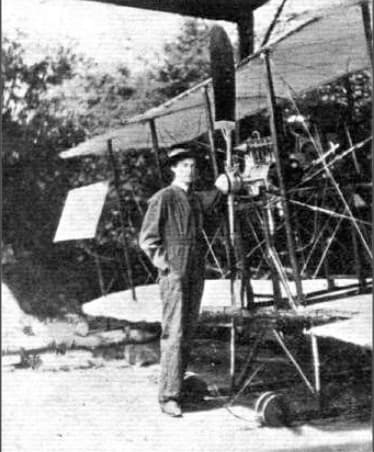
British, Irish · Aviation · Science
Lilian Bland
September 28, 1878 – May 11, 1971
Early Life and Background
Lilian Emily Bland (28 September 1878 – 11 May 1971) was an Anglo‑Irish journalist, photographer and pioneering aviator, best known for designing, building and flying her own aeroplane, the Bland Mayfly, in 1910.[1][15] She is widely recognised as the first woman in the world to design, build and pilot her own aircraft and the first woman to fly an aircraft in Ireland.[1][2][3][4]
Bland was born at Willington House near Maidstone, Kent, into a family that straddled English and Irish gentry society.[1][15] Her father, John Humphrey Bland of Fernagh, Whiteabbey, County Antrim, was part of the Anglo‑Irish landed class, and her mother, Emily Charlotte Bland (née Madden), came from a Norfolk family.[7] Through her paternal line she was a granddaughter of Robert Wintringham Bland, dean of Belfast.[7] These connections linked her to both the English countryside of her birth and the Irish estates that would later become central to her aviation experiments.
Details of her formal schooling are sparse in surviving sources, but accounts emphasise that from an early age she resisted the expectations placed on upper‑middle‑class girls in the late Victorian and Edwardian period.[2][3] Rather than cultivating ladylike pursuits such as painting and needlework, she gravitated toward outdoor activities. Later descriptions of her youth depict her wearing trousers or breeches, riding astride rather than side‑saddle, shooting, hunting, and taking part in sports that were generally the preserve of men.[2][11] She also showed early interest in photography, handling cameras and developing plates at a time when the medium was still relatively new and technical.
In 1900, her mother died, a family event that precipitated significant change. Following the bereavement, her father decided to relocate to Carnmoney, near Belfast, his family’s home region in County Antrim.[3][4] Bland, then in her early twenties, moved with him and began the phase of her life most closely associated with Ireland. The landscapes of Carnmoney and the nearby Shane’s Castle estate would later serve as the testing grounds for her glider and the Mayfly.
Career Beginnings: Journalism, Photography and Sport
In the first decade of the twentieth century, Bland developed a multifaceted career as a sports journalist and photographer, while continuing to defy social conventions in her personal behaviour.[2][11][18] She contributed articles and photographs on horse racing and other sports to newspapers, including coverage that demonstrated both her keen eye and her deep familiarity with equestrian life. Her work required her to travel, observe events closely, and engage with male‑dominated sporting circles, in which a woman reporter was unusual.
Contemporary and retrospective accounts note that she sometimes wrote under her own name and that her photography was integral to her journalism.[2][3] Her ability to handle cameras, plates, and chemicals reflected a practical comfort with technology. Photography also cultivated visual and spatial awareness—skills that would later translate into the design of aircraft structures.
Bland’s involvement with horse racing extended beyond reportage. BBC educational material and later narratives mention that she obtained a jockey’s licence, enabling her to compete rather than simply observe, and that she aimed at one point to ride in the Grand National.[2] While surviving records differ on whether she ultimately took part in the race itself, the ambition to ride in such a prestigious event underscores her refusal to accept gendered restrictions in sport.
Her everyday life at Carnmoney further illustrated this independent spirit. She rode and trained horses, handled firearms, practiced martial arts according to some modern accounts, and worked on motorcar engines, all while smoking cigarettes and dressing in functional clothing that raised eyebrows among contemporaries.[3][11][18] These experiences not only shaped her reputation as an unconventional woman but also gave her familiarity with mechanics, balance and speed—elements closely related to early aviation.
Path to Aviation: Inspiration and Preparation
Bland’s interest in flight crystallised around 1909, when she received a postcard of Louis Blériot’s aeroplane from an uncle who had visited France.[2][3] Blériot’s historic crossing of the English Channel in July 1909 had captured public imagination and made heavier‑than‑air flight appear increasingly feasible. The image and the feat seem to have convinced Bland that aviation represented the next frontier of adventure and engineering, and that she could participate directly.
According to later accounts, she began by carefully studying photographs and published accounts of contemporary aeroplanes and gliders.[1][2] Without access to formal aeronautical training, she taught herself by observation and by reading whatever technical material she could obtain. She then constructed a glider, often referred to simply as the Mayfly glider, using wood and fabric and experimenting with wing shapes and control mechanisms.[1][4]
She tested this glider on Carnmoney Hill, near her home, running it on the slopes and allowing it to lift briefly into the air.[4] These exercises enabled her to feel the forces acting on the wings and tail, refine the design, and build confidence in her ability to handle an aircraft. Her work paralleled, in miniature, the experimental gliding undertaken by pioneers such as the Wright brothers a few years earlier, but she conducted it essentially alone on an Irish hillside.
By late 1909 and into 1910, Bland’s ambition grew from gliding to powered flight.[1] She began planning a complete aeroplane, drawing on her glider’s configuration but strengthening the structure to carry an engine. She obtained a 20 horsepower A.V. Roe engine, sourced components locally or fabricated them, and engaged local craftsmen when necessary for specialized parts. The machine would become known as the Bland Mayfly, a name she chose with humorous understatement: "It may fly, it may not."[13]
Major Accomplishment: The Bland Mayfly and the Flights of 1910
Through 1910, Bland dedicated herself to building the Mayfly. Working at Carnmoney and later on the Shane’s Castle estate near Randalstown, she assembled a biplane with wooden spars, fabric‑covered wings and tail, wire bracing, and a central fuselage structure to hold the engine and pilot.[1][4] She paid close attention to weight, balance and control, repeatedly testing, modifying and reinforcing parts.
Early trials involved the aircraft configured as a glider, launched from Carnmoney Hill. Bland used these flights to verify lift and controllability before installing the engine.[4] When she did fit the engine, she faced the practical problem of constructing a reliable fuel system. In improvisation that has become part of her legend, she initially used a whisky bottle and an ear‑trumpet as a makeshift petrol tank and feed line, enabling the engine to run while she refined a more durable arrangement.[1][3]
By August 1910 the Mayfly was ready for a full powered attempt.[2] On 31 August 1910, at a field on the Shane’s Castle estate near Randalstown, County Antrim, Bland taxied the aeroplane, took off, and flew at a reported height of approximately 30 metres for about a quarter of a mile before landing successfully.[2][4] Sources differ slightly on the precise distance, but agree that the flight was clearly sustained and controlled.
This flight constituted multiple firsts. Bland became the first woman in the world to design, build and fly her own aeroplane, a feat widely acknowledged by museums, broadcasters and aviation historians.[1][2][3][6][19] She also became the first woman to fly an aircraft in Ireland, and the Mayfly itself is recognised as the first powered biplane flown in Ireland.[1][3][4][17] Her accomplishment came less than a year after Harry Ferguson’s first powered flight on the island, placing her near the very beginning of Irish aviation history.[4]
Bland’s achievement was particularly striking given her circumstances. She had no formal engineering training, was working outside the emerging institutional frameworks of aviation clubs and military research, and was operating in a social environment that saw both motoring and flying as male domains. She financed and managed the project herself, using local resources and personal ingenuity. Her success demonstrated that complex mechanical and aerodynamic problems could be tackled by a self‑taught woman, challenging contemporary assumptions about gender and technical competence.
After the Mayfly: End of Flying Career and New Directions
Despite her success, Bland’s aviation career was brief. Contemporary and later accounts describe how her father, alarmed by the risks involved in flying, offered to buy her a motorcar if she would give up experimental flights.[2][1] The proposal appealed to her, and she eventually accepted, trading the exhilaration and danger of aviation for automobilism, another modern technology.
By 1911, she had reportedly sold the Mayfly or its components and turned her attention elsewhere.[1] Her withdrawal from aviation meant that she did not participate in the rapid development of aircraft through the First World War, but it also kept her from the accidents that claimed the lives of many early pilots. Her pioneering role therefore resides in the preparatory and proof‑of‑concept phase of Irish aviation rather than its later institutionalisation.
In the years following her flying experiments, Bland’s life shifted focus. She remained energetic and independent, but sources emphasise her move towards family and emigration rather than public technological work. Her story diverges from that of other early aviators who kept close ties to aircraft development, instead illustrating how women’s scientific and technical achievements could be truncated by social pressures, economic realities or personal choices.
Personal Life: Marriage, Emigration and Family
Accounts of Bland’s personal life indicate that she later married a cousin, Charles Loftus Bland, although precise dates are not consistently documented.[16][13] The marriage appears to have taken place in the 1910s, after she had ceased flying. With Charles, she emigrated to Canada, settling near Vancouver and turning to farming.[10][13] This move echoed a broader pattern among members of the British and Irish gentry seeking new opportunities in the Dominions.
In Canada, Bland is described as applying the same practical resourcefulness she had shown in aviation to the challenges of rural life. She helped establish and manage a farm, working directly with animals, equipment and land.[13] Some accounts mention that she had a daughter, who died young, a loss that must have deeply affected her, although detailed records are limited in public sources.[13]
Eventually, Bland returned to England, settling in Cornwall
In Cornwall, Bland spent her later decades away from the public eye, and for much of the mid‑twentieth century her aviation exploits were little known outside specialist circles. She witnessed major historical transformations: the First World War, in which aircraft played unprecedented roles; the interwar expansion of commercial aviation; the Second World War’s intensification of aerial warfare; and the post‑war rise of jet travel. By the time of her old age, aircraft bore little resemblance to the fragile biplane she had built on an Irish estate. On 11 May 1971, Lilian Bland died aged 92.[1][15] Sources state that she is buried in the churchyard at Sennen, near Land’s End in Cornwall, close to the sea.[10][12] Her death closed the life of a woman who had been present at aviation’s beginnings yet lived long enough to see its transformation into a routine part of modern life. During her lifetime, Bland does not appear to have received major formal aviation awards or official honours, which reflects both the informality of early aviation and the marginalisation of women’s technical achievements. Her work predated many of the institutional structures—national aeronautical societies, military recognition schemes, and international award systems—that later commemorated pioneers. Moreover, as an independent experimenter, she operated outside the networks that often brought recognition. Nevertheless, retrospective recognition has been substantial. In women‑in‑aviation timelines and histories, she is repeatedly cited as the first woman to design, build and fly her own aircraft.[1][8] The Timeline of women in aviation notes her 1910 achievement among key milestones in women’s involvement in flight.[1] The Ulster Transport Museum features exhibitions and online material dedicated to her life and the Mayfly, underscoring her significance in Irish transport and engineering history.[3] Media organisations such as the BBC, RTÉ, The Irish Times, Scientific American and The Guardian have produced articles, educational resources and programmes recounting her story.[2][4][13][18][19] These narratives often describe her as a "flying feminist" and celebrate her audacity in challenging early‑twentieth‑century gender norms. In contemporary Irish innovation campaigns, she has been nominated or highlighted as one of the country’s greatest women inventors.[18] Local commemoration has also grown, with community projects, talks and heritage initiatives around Carnmoney and Antrim celebrating her contributions. Taken together, these forms of recognition function as belated honours, situating Bland within both aviation history and women’s history despite the absence of formal medals or titles during her flying years. Lilian Bland’s legacy operates on several levels: technical, cultural and symbolic. Technically, she demonstrated that a self‑taught individual could design and build a functioning biplane using modest resources shortly after the earliest successes of powered flight.[1][4] Her Mayfly contributed to the experimental landscape of early aircraft development and showed that Ireland could produce native aviation innovators. Culturally, Bland has become an emblem of early twentieth‑century women who refused to accept restrictive gender roles. Her lifestyle—wearing trousers, smoking, engaging in shooting and motor mechanics—prefigured later feminist challenges to normative femininity.[2][3][11] By entering aviation, she moved beyond symbolic rebellion into direct engagement with cutting‑edge technology, offering a counterexample to narratives that depict women as peripheral to the history of science and engineering. Symbolically, her status as the first woman to design, build and fly her own aeroplane has particular resonance in contemporary discussions of women in STEM. Her story is used in educational materials to inspire girls to pursue engineering and science, demonstrating that women have been present and capable from the earliest phases of technological revolutions.[2][3][6][19] Her improvisation with the Mayfly—right down to the whisky‑bottle fuel tank—illustrates creative problem‑solving, a hallmark of engineering practice. In Ireland, Bland’s achievements feed into broader narratives of national innovation and the history of transport. She stands alongside figures like Harry Ferguson in accounts of Irish aviation’s origins, but with the added dimension of gender barrier‑breaking.[4][3] Her life highlights the intersection of local landscapes (Carnmoney Hill, Shane’s Castle), global technological currents, and individual agency. At the same time, her relatively brief aviation career and long subsequent obscurity underline how women’s contributions to science and technology can be forgotten when they do not align with institutional priorities or long‑term professional trajectories. The recent resurgence of interest in her work, driven by feminist scholarship, museum curation and media storytelling, reflects a wider effort to recover and reinsert women’s achievements into historical narratives. In historiographical terms, Bland’s life offers insight into the possibilities and limits facing women in early twentieth‑century technological fields. She shows that, where social position and personal determination aligned, a woman could penetrate even the newest, most prestigious domains of innovation. Yet her withdrawal from aviation and lack of contemporary formal recognition also show how fragile such footholds could be. Today, Lilian Bland is firmly established as a key figure in both women’s aviation history and Irish technological heritage. Her 1910 flights, once a near‑forgotten episode on an Antrim estate, now stand as a testament to ingenuity and courage at the dawn of powered flight, and as an enduring reminder that women have long been capable of leading technological change.Later Life and Death
Recognition, Awards and Honours
Legacy and Historical Impact
Assessment
Dated achievements
6 indexed.
- Sep281878Science
Birth of Lilian Bland
Lilian Emily Bland was born at Willington House near Maidstone, Kent, England, on 28 September 1878.
View details Lilian Bland - Wikipedia - Aug311910Science
First successful flight of the Mayfly
Bland achieved the first successful powered flight of her self-built aircraft, the Mayfly, at Randalstown, County Antrim.