← All women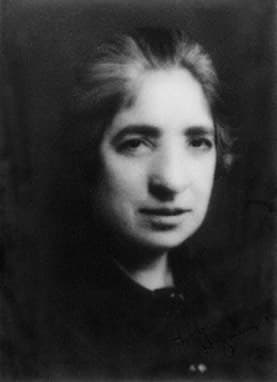
American · Science
Libbie Hyman
December 6, 1888 – August 3, 1969
Early Life and Background
Libbie Henrietta Hyman was born on December 6, 1888, in Des Moines, Iowa, to Joseph Hyman and Sabina Neumann Hyman. Her parents were immigrants from Eastern Europe, and she was the youngest of four children. Hyman's early life was marked by a struggle for educational opportunities due to financial constraints.
Despite the challenges, Hyman excelled in school. She attended the University of Chicago, where she initially pursued a degree in botany but soon shifted her interest to zoology, influenced by the distinguished professor Charles Manning Child. Hyman graduated with a degree in zoology, and her academic excellence earned her an assistantship, which led her to complete a Ph.D. in 1915.
Career Beginnings and Development
After obtaining her Ph.D., Hyman served as a research assistant in Child's laboratory at the University of Chicago. For nearly a decade, she immersed herself in research on invertebrates, particularly flatworms. Her critical reflections and comprehensive reviews of the literature helped shape her reputation in the academic community.
In 1929, she transitioned to a new phase of her career when she was offered a fellowship by the American Association of University Women. This opportunity enabled her to work independently and focus on what would soon become her monumental contribution to zoology.
Major Works, Discoveries, or Accomplishments
Hyman is most renowned for her seminal work, "The Invertebrates," a comprehensive six-volume series that detailed the anatomy, systematics, and biology of invertebrates. Published between 1940 and 1967, this work solidified her standing as a preeminent zoologist of her time. The first volume was issued in 1940, serving as a textbook for many zoology students worldwide.
Awards, Honors, and Recognition Received
Hyman received several accolades for her contributions to science. She was awarded an honorary Doctor of Science degree from the University of Chicago in 1951. Furthermore, in 1961, she received the Daniel Giraud Elliot Medal from the National Academy of Sciences for her eminent contributions to zoology.
Personal Life and Legacy
Hyman led a private life, dedicating herself wholly to her research and writing. Her legacy extends beyond her publications; she inspired generations of zoologists and provided a foundation for ongoing research in invertebrate zoology. As a woman in science during her time, she surmounted societal barriers, paving the way for future women scientists.
Later Life and Death
Hyman continued her writing and research well into her later years, even as her health began to decline. She passed away on August 3, 1969, in New York City. Her contribution to science continues to be celebrated, and her works remain critical references in the study of invertebrate zoology.
Dated achievements
2 indexed.
- Dec061888Science
Birth of Libbie Henrietta Hyman
Libbie Henrietta Hyman was born in Des Moines, Iowa.
View details Libbie Henrietta Hyman Biography on Encyclopedia.com - Aug031969