← All women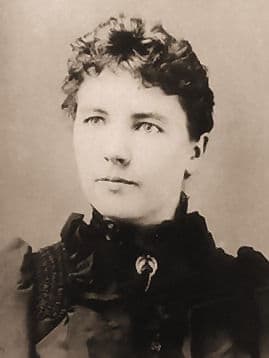
American · Literature · Arts
Laura Ingels Wilder
February 7, 1867 – February 10, 1957
Early Life and Background
Laura Elizabeth Ingalls Wilder was born on February 7, 1867, in a log cabin in the "Big Woods" near Pepin, Pepin County, Wisconsin.[1][2][18] She was the second of five children born to Charles Phillip Ingalls, a farmer and carpenter, and Caroline Lake Quiner Ingalls, who managed the household and contributed to the family’s income through sewing and other work.[1][15] Her siblings were Mary, Carrie, Charles ("Freddie," who died in infancy), and Grace.[1]
Laura’s childhood coincided with the period of rapid westward expansion and homesteading in the United States. Over the course of her youth, the Ingalls family moved repeatedly in search of better land and economic opportunity. They left Wisconsin for the prairies of Kansas in 1869, returned to Pepin around 1871, then moved to Minnesota in 1874, followed by Iowa, and back to Minnesota before finally settling near De Smet in what was then the Dakota Territory.[5][9][15] These moves exposed Laura to varied frontier environments—dense forests, open prairie, small towns—and continual financial uncertainty.
Despite frequent relocation, Wilder received intermittent formal education at rural schools when distance and weather allowed, supplementing this with learning at home.[1][5] Caroline Ingalls, herself comparatively well educated for a frontier woman, placed a high value on literacy and moral instruction, encouraging her daughters to read, write, and recite.[1] The combination of frontier hardship, family cohesion, and an emphasis on education became central themes in Wilder’s later autobiographical fiction.
Laura’s formative experiences included severe winters on the Dakota plains, crop failures, and outbreaks of illness such as scarlet fever, which left her sister Mary blind.[1][5] As she grew older, family economic pressures led her to assume adult responsibilities early. These experiences of precarity and resilience deeply shaped her view of work, community, and the importance of mutual aid—values that permeate the Little House books.
Career Beginnings and Development
By her mid‑teens, Wilder was contributing significantly to the family’s livelihood. At age fifteen she earned a teaching certificate and began teaching in small rural schools in Dakota Territory, while boarding with local families and often traveling considerable distances under harsh conditions.[5][9][15] Teaching provided a rare avenue of paid work for a young woman in the frontier setting and honed her skills in communication and storytelling.
In 1885, she married a neighboring homesteader, Almanzo Wilder, in De Smet.[7][9] The couple farmed near De Smet and had one surviving child, Rose Wilder Lane, born in 1886.[1][18] Their early married years were marked by substantial hardship: crop failures, Almanzo’s illness and partial paralysis from diphtheria, and the death of an infant son.[1] After a series of moves—including time in Minnesota and a brief period in Florida—the Wilders eventually settled on a farm near Mansfield in southern Missouri around 1894, which they named Rocky Ridge Farm.[1][5][18]
At Rocky Ridge, Laura worked alongside Almanzo to develop the farm, raising poultry and dairy cattle and cultivating orchards, while also becoming active in local civic life. She served as secretary‑treasurer of the Mansfield Farm Loan Association, a position that required meticulous record‑keeping and public speaking.[9][18] These practical responsibilities strengthened her confidence and gave her insight into rural financial systems.
Wilder’s literary career began not with books but with journalism. In the 1910s she wrote regular articles, columns, and "home department" pieces for the Missouri Ruralist, a farm newspaper, offering advice and commentary on topics such as domestic management, rural economics, and citizenship.[5][9][18] Through this work she developed a clear, conversational prose style and learned to address a wide readership while articulating her views on self‑reliance, frugality, and civic responsibility.
Her daughter Rose Wilder Lane, who became a professional writer and journalist, played a crucial role in Laura’s transition from local columnist to nationally published author.[1][18] Lane encouraged her mother to record her pioneer childhood in book form, helped her navigate the publishing world, and in varying degrees edited and shaped the manuscripts that became the Little House series.[1] Their collaborative but sometimes tension‑filled relationship is central to understanding Wilder’s development as an author.
Major Works and Literary Accomplishments
Wilder’s major contributions to literature are the "Little House" series of children’s novels, based on her childhood and early adulthood as a settler and homesteader.[1][2] She began writing these books in her sixties, turning decades‑old memories into carefully structured narratives for young readers. The series is notable both for its late start in her life and for its enduring popularity.
The first book, Little House in the Big Woods, was published in 1932.[1][6][18] Drawing on her earliest years in Wisconsin, it depicts domestic routines, seasonal cycles, and family celebrations in the forested environment near Pepin. The work introduced readers to the Ingalls family and set the tone for the series: detailed descriptions of everyday tasks, moral lessons, and an emphasis on familial warmth amid hardship.
Subsequent volumes trace the family’s moves and Laura’s growth from child to young woman. Farmer Boy (1933) centers on Almanzo Wilder’s childhood on a prosperous New York farm, giving a contrasting picture of rural life focused on intensive labor and relative material comfort.[1][2] Little House on the Prairie (1935) recounts the family’s years in Kansas, including their settlement on land that was part of the Osage reservation—a portrayal that has later drawn critical attention for its depiction of Native Americans.[1][9]
On the Banks of Plum Creek (1937) and By the Shores of Silver Lake (1939) follow the Ingallses through their moves to Minnesota and then to Dakota Territory, narrating events such as grasshopper plagues, financial loss, and the founding of the town of De Smet.[1][2] These books illustrate the transformation of wilderness into town life and highlight Laura’s increasing responsibilities.
The Long Winter (1940) offers a dramatic account of the brutal winter of 1880–81 in Dakota Territory, when blizzards cut off supplies and townspeople faced starvation.[1][5] Wilder’s narrative emphasizes community cooperation, the ingenuity of young men who travel for wheat, and the endurance required to survive environmental extremes.
In Little Town on the Prairie (1941) and These Happy Golden Years (1943), Wilder depicts Laura’s teenage years, her work as a teacher, social life in the growing town of De Smet, and her courtship and marriage to Almanzo.[1][2] These volumes complete Laura’s coming‑of‑age arc and transition the series from childhood adventure to young adult responsibilities.
Across the series, Wilder combines autobiographical material with literary shaping, sometimes altering chronology or softening events to suit narrative and moral aims.[1] The books are characterized by detailed descriptions of household labor, food preparation, and craftwork, presenting domestic and agricultural tasks as both essential to survival and sources of satisfaction. While clearly situated within a settler colonial framework, they have long been praised for their vivid storytelling and ability to make historical daily life accessible to children.
Wilder also wrote a ninth volume, The First Four Years, covering her early married life. The manuscript, left in a rougher form, was published posthumously and is more somber in tone, reflecting the financial and health challenges she and Almanzo faced.[1][2] Outside the series, her journalism and essays for farm publications reflect a consistent worldview that values thrift, independence, and civic engagement.
Awards, Honors, and Recognition
Wilder’s work quickly attracted both popular and critical recognition. Several of the Little House books received Newbery Honor citations, signaling their importance in the field of children’s literature.[9] Over time, the series sold tens of millions of copies and was translated into numerous languages, ensuring a global readership.[9]
In the mid‑twentieth century, the American Library Association established the Laura Ingalls Wilder Award to honor authors and illustrators whose books have made a substantial and lasting contribution to children’s literature.[7] Wilder herself was the first recipient, an acknowledgment of the enduring impact of her series.[7] The award, later renamed the Children’s Literature Legacy Award, reflects her central place in the canon, even as scholarly debates have complicated her legacy.
Beyond formal awards, Wilder’s work has inspired extensive adaptations and commemorations. The television series Little House on the Prairie, broadcast beginning in the 1970s, was loosely based on her books and brought her characters and settings to an even broader audience.[1][11] Museums and historic sites at Pepin, De Smet, and Mansfield preserve locations associated with her life, and fan communities continue to engage with her work through research, reenactments, and educational programs.[5][18]
Academic interest in Wilder intensified with biographies such as Caroline Fraser’s Prairie Fires: The American Dreams of Laura Ingalls Wilder, which situate her life in the broader context of U.S. economic, environmental, and political history, highlighting both her accomplishments and the ideological dimensions of her storytelling.[3][19]
Personal Life
Wilder’s personal life was deeply entwined with farming, family, and community engagement. Her marriage to Almanzo Wilder formed a partnership in which both worked physically demanding jobs to sustain their homestead, and financial hardship was a persistent reality.[1] Their only surviving child, Rose Wilder Lane, became an important figure in American letters in her own right—as a journalist, novelist, and political thinker—and maintained a complex relationship with her parents, including periods of close collaboration and tension.[1]
At Rocky Ridge Farm, Laura and Almanzo gradually improved their circumstances through diversified farming, particularly poultry and dairy production, and by planting extensive apple orchards.[5][18] Laura managed household finances, participated in local organizations, and enjoyed regional travel as farm income and Rose’s support allowed. Her civic work, including roles in the Farm Loan Association, reflects a commitment to rural development and mutual aid.[9][18]
Religiously and culturally, Wilder was influenced by Protestant traditions and the values emphasized in her family: honesty, diligence, respect for authority, and self‑discipline. These appear throughout her books in the portrayal of her parents and in the moral lessons embedded in each episode.[1] Her writings and letters suggest that she valued personal responsibility and limited government interference, themes that intersect in complex ways with Rose Lane’s later libertarian views.[1]
In late life, Wilder enjoyed modest literary fame but did not become a public celebrity in the modern sense. She remained primarily at Rocky Ridge, where she continued to correspond with readers, manage farm affairs, and revise her understanding of the past through storytelling.[5] Her domestic routines and close attention to the landscape around her continued until advanced age.
Later Life and Death
After the publication of These Happy Golden Years in 1943, Wilder’s active book‑writing career slowed, though interest in her work remained strong.[1][2] She lived quietly at Rocky Ridge Farm, where tourists and admirers occasionally visited, and she corresponded with readers and librarians. As the United States transitioned through World War II and into the early Cold War era, her books were increasingly read as nostalgic celebrations of pioneer virtue and family cohesion.
Almanzo Wilder died in 1949, leaving Laura a widow in her eighties.[1] She continued to reside on the farm, supported by royalties and by the ongoing involvement of her daughter. On February 10, 1957, Wilder died in Mansfield, Missouri, at age ninety.[1][2][6][18] She was buried in the local cemetery, and Rocky Ridge Farm later became a museum dedicated to her life and work.[5]
By the time of her death, Wilder’s literary contribution had secured a lasting place in American culture. Her depiction of frontier life, though filtered through memory and ideology, provided mid‑century readers with a compelling narrative of national origins and domestic resilience. Her death marked the end of an era in which a woman who had personally lived the homesteading experience could narrate it directly for children.
Legacy and Historical Impact
Wilder’s legacy is multifaceted, encompassing literary achievement, cultural influence, and ongoing critical debate. The Little House series has long been regarded as a cornerstone of American children’s literature, praised for its detailed portrayal of daily life, its strong, resourceful female protagonist, and its accessible narrative style.[1][2][9] The books have introduced generations of readers to the idea of the American frontier as a space of opportunity, hardship, and moral testing.
From a women’s‑history perspective, Wilder is significant as a woman who transformed domestic and childhood experiences—traditionally undervalued in historical narratives—into widely celebrated literature. She wrote most of her major work in her sixties and seventies, challenging assumptions about the timing of creative achievement in women’s lives.[5][9] Her portrayal of Laura as a girl who learns to work, teach, and make independent choices offered many readers a model of female competence and agency.
At the same time, scholars and educators have critically examined the series’ representation of Native Americans, African Americans, and settler colonialism. Phrases and scenes in the books reflect the racial attitudes of the nineteenth century and Wilder’s own era, and some editions have been updated or contextualized for modern readers.[1][3] The American Library Association’s decision to rename the Laura Ingalls Wilder Award as the Children’s Literature Legacy Award stems from concerns about these portrayals, illustrating how her legacy is continually reassessed as societal perspectives change.[3]
Despite these controversies, Wilder’s work remains an important resource for understanding how Americans in the early twentieth century remembered and mythologized the nineteenth‑century frontier. Her close collaboration with Rose Wilder Lane also offers a case study in women’s literary production, editorial influence, and family dynamics within authorship.[1] The continuing popularity of the books, the television adaptations, and the historic sites dedicated to her life demonstrate both the enduring appeal and the evolving interpretation of her stories.
In sum, Laura Ingalls Wilder occupies a central place in the history of women’s writing in the United States. Her transformation of personal biography into national narrative, her late‑life emergence as a major author, and the long‑term impact of her work on children’s literature and cultural memory secure her status as a historically significant figure, even as ongoing scholarship complicates and enriches our understanding of her contributions.
Dated achievements
3 indexed.
- Feb071867Science
Birth of Laura Ingalls Wilder
Laura Elizabeth Ingalls was born in a log cabin near Pepin, Wisconsin, to Charles and Caroline Ingalls.
View details Wisconsin Historical Society: Laura Ingalls Wilder - Feb251885Science
Marriage to Almanzo Wilder
Laura Ingalls married farmer Almanzo Wilder in De Smet, Dakota Territory, beginning a lifelong partnership.