← All women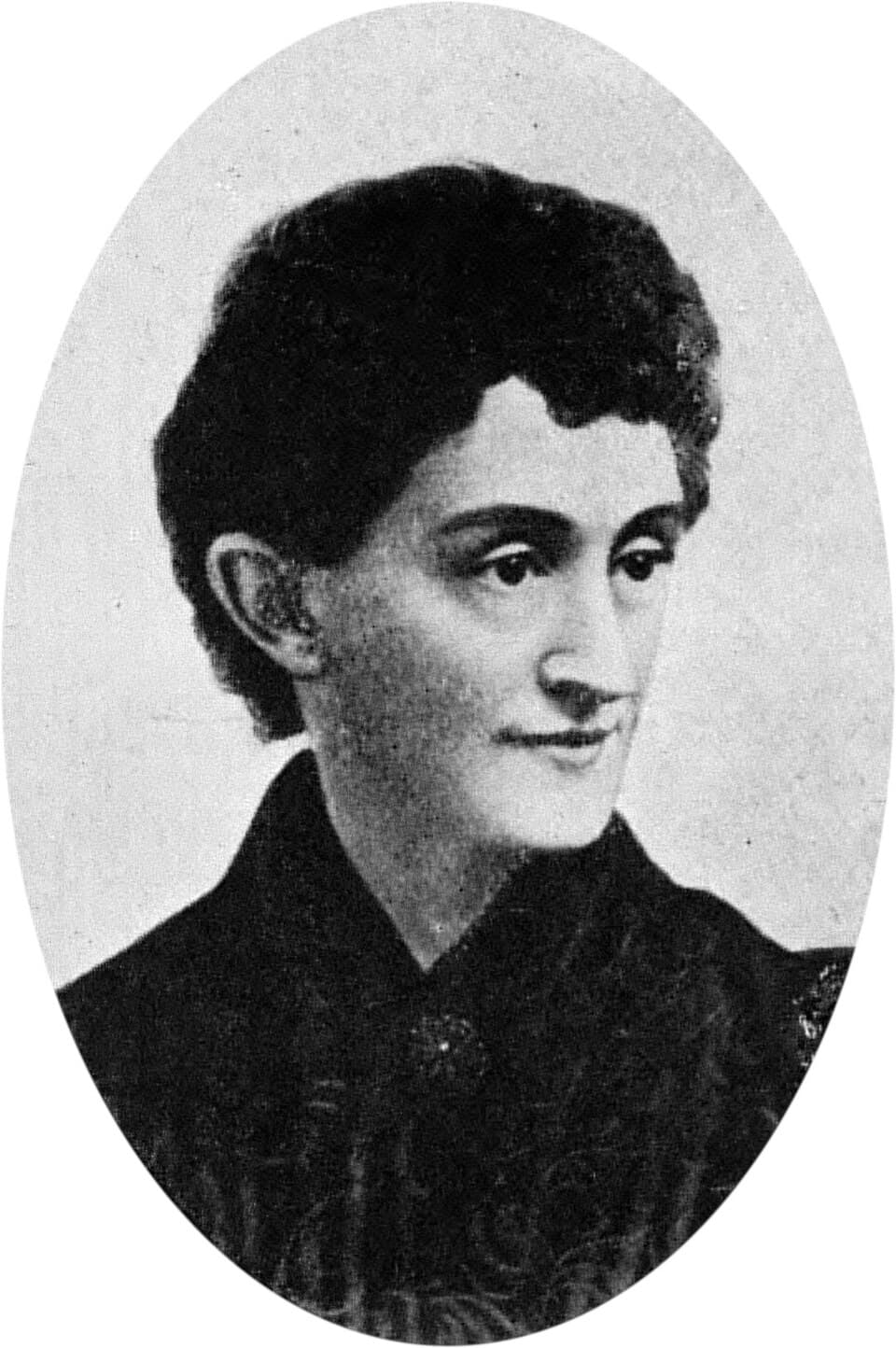
United States · Politics
Laura Eisenhuth
May 29, 1859 – September 30, 1937
Early Life and Background
Laura J. Kelly Eisenhuth was born on May 29, 1859, in the mid‑nineteenth‑century United States, at a time when the country was on the brink of civil war and the public school system was still developing.[1] Later biographical summaries identify her as the daughter of Thomas and Nancy Kelly and situate her childhood in the American Midwest, where she grew up with several siblings in communities shaped by agriculture and small‑town life.[1] These formative years exposed her to the realities of rural education, including the challenges of limited resources and the importance of schooling for social mobility.
As a girl in the 1860s and 1870s, Eisenhuth came of age in a society that largely restricted women to domestic roles and informal civic work. Yet teaching was one of the few respectable professions open to women, and she followed that path, receiving the training and practical experience necessary to become a schoolteacher.[1][2] Her early experience as a student and teacher laid the foundation for a career in education that would eventually propel her into electoral politics.
Career Beginnings and Development
By the early 1880s, Laura Kelly was working as an educator and had begun to establish herself as a competent teacher and school administrator.[1][2] On June 9, 1883, she married William (often recorded as Willis) Eisenhuth in Pennsylvania.[1] Following their marriage, the couple moved west, ultimately settling in what would become the state of North Dakota, as many families did during the era of frontier settlement and homesteading.[1][2] In the Dakota Territory, she continued teaching, bringing Eastern educational practices to sparsely populated rural districts.
During the 1880s, Eisenhuth’s work expanded beyond the classroom. She became deeply involved in local school administration, and sources note that she served as a county superintendent of schools, building a reputation for diligence and attention to educational standards.[2] In 1889, not long after North Dakota achieved statehood, she was elected superintendent of schools for Foster County, demonstrating that voters were willing to entrust her with responsibility for supervising teachers, overseeing school buildings, and managing the limited funds available for education.[2]
In 1890, she was appointed a state institute conductor, responsible for overseeing the operation of teacher institutes in the northern part of the state.[2] These institutes trained and supported teachers, especially in isolated rural communities, and her role reflected both her professional expertise and the growing recognition of her leadership capacities. By the early 1890s, she was known across North Dakota’s education system as an experienced practitioner and administrator.
Entry into Statewide Politics
The creation of North Dakota as a state in 1889 brought with it a new constitution and electoral framework. Notably, the constitution contained provisions that allowed women to vote in, and run for, certain school‑related offices, including the position of Superintendent of Public Instruction.[1] This narrow opening was significant: while women still lacked full suffrage and were barred from most offices, there was now a pathway to statewide authority linked to education.
According to later biographical accounts, Eisenhuth first ran for the office of state Superintendent of Public Instruction in 1890 and lost.[2] This initial campaign helped raise her profile and made her more widely known as a candidate committed to improving schools. Two years later, drawing on her reputation as a veteran teacher and county superintendent, she secured the endorsement of the Democratic Party and mounted a second statewide campaign.[2]
Major Accomplishments: First Woman Elected to Statewide Executive Office
On November 8, 1892, in North Dakota’s general election, Laura J. Eisenhuth was elected Superintendent of Public Instruction.[1][2] Her victory made her the first woman in the United States elected to a statewide state office and to a statewide elected executive office, a milestone confirmed by research from the State Historical Society of North Dakota and the Center for American Women and Politics.[1][2][6][9] She won in a predominantly Republican state as a Democrat, reflecting both her personal standing and the respect accorded to her professional qualifications.
On January 3, 1893, Eisenhuth entered the State Capitol in Bismarck and took the oath of office, formally assuming her duties as state Superintendent of Public Instruction.[1] Contemporary records indicate that she filed her official bond and recorded in the Superintendent’s Record that she had taken office, marking the beginning of her term.[1] She was the fourth person to hold the position in the new state and the first woman to serve in any statewide elected executive office anywhere in the country.[1][2][6][9]
During her tenure, which lasted from 1893 to 1895, Eisenhuth oversaw the administration of public education across North Dakota.[1][2] She was responsible for certifying teachers, providing guidance on curriculum, collecting data on school attendance and facilities, and issuing reports to the governor and legislature. Her 1894 report to the governor famously criticized unsanitary school outhouses and urged improvements in sanitation, emphasizing that the health and safety of students were essential components of effective schooling.[6] Her attention to practical conditions, such as the quality of school buildings and the presence of bathtubs in towns with water systems, showed her concern for the day‑to‑day realities facing children and teachers on the frontier.[2][6]
Eisenhuth’s achievements were particularly remarkable given the broader context. Nationally, most women still lacked the right to vote in state and federal elections, and female officeholders were extremely rare. Her election and service demonstrated that a woman could win a statewide contest, hold executive responsibility, and direct policy in a core government function—public education—decades before the ratification of the Nineteenth Amendment in 1920.[1][2][6][9]
Re‑election Campaign and Later Educational Work
In the general election of November 6, 1894, Eisenhuth sought re‑election as Superintendent of Public Instruction.[1][2] She faced Republican candidate Emma Bates, another woman, in what became a rare statewide race between two female candidates.[2] In that election, Eisenhuth was defeated, and Bates succeeded her in office, ensuring that the position remained under female leadership even as partisan control shifted.[1][2]
After leaving statewide office, Eisenhuth remained engaged in education. She is reported to have served as assistant principal of Carrington High School, continuing to influence local schooling and to apply her administrative experience at the community level.[2] She also ran for statewide office again in 1896 and 1900, but did not regain the superintendent’s post.[2] These later campaigns underscore her ongoing commitment to public service, even as electoral success eluded her.
Awards, Honors, and Historical Recognition
There is no record of Eisenhuth receiving formal national awards, medals, or patents during her lifetime, and her significance lies primarily in her electoral and officeholding firsts. However, later historical works and institutional publications have recognized her contributions.
- The State Historical Society of North Dakota produced the article "Breaking the 1889 Glass Ceiling," highlighting Eisenhuth as the first woman elected to statewide office in the United States and documenting her assumption of office on January 3, 1893.[1]
- The Center for American Women and Politics (CAWP) has cited Eisenhuth in discussions of early women officeholders, emphasizing her role as a predecessor to later generations of women elected officials.[6][9]
- Regional newspapers and educational materials, such as the Minot Daily News and North Dakota Studies resources, include her among notable women in North Dakota history and reference her policy concerns and administrative work.[2][6]
These forms of recognition function as historical honors, ensuring that her pioneering status is acknowledged in scholarly and public discourse about women in government.
Personal Life
Eisenhuth’s personal life intertwined with her public career. Her marriage to William (Willis) Eisenhuth in 1883 brought her to the northern Plains and into the communities where she would build her educational reputation.[1][2] Her husband, who at one point owned a drugstore in Carrington and had experience as a teacher, shared her engagement with local institutions.[2] The couple did not have children, according to state historical accounts, and her time was largely devoted to teaching and administrative responsibilities.[1]
In 1902, her first husband died, leaving her widowed after nearly two decades of marriage.[1][2] A few years later, she remarried, this time to Ludwig (Ludvig) Alming, a farmer near Carrington.[1][2] This second marriage marked a transition in her life away from formal public office and toward agricultural and family pursuits.
Later Life and Death
Following her remarriage, Eisenhuth and her second husband eventually moved to the West Coast. Sources note that by 1909 the couple had relocated to Medford or Jacksonville in Oregon, where they operated a fruit farm.[1][2] This move reflected broader patterns of internal migration, as individuals and families sought new opportunities in the Pacific states.
Although she no longer held public office, Eisenhuth’s earlier achievements continued to be remembered in North Dakota and in studies of women in government. She lived quietly on the West Coast for the remainder of her life. On September 30, 1937, she died at the age of seventy‑eight, closing a life that had spanned from the era of frontier schooling to the modern age of expanding women’s rights.[1][2] Her death marked the end of a personal journey that had taken her from teacher to county superintendent, statewide official, and finally farmer and private citizen.
Legacy and Historical Impact
Laura J. Eisenhuth’s legacy rests primarily on her status as the first woman elected to a statewide state office and statewide elected executive office in the United States.[1][2][6][9] Her 1892 election and 1893 assumption of office demonstrated that women could compete successfully in statewide contests and manage executive responsibilities in a core governmental function. This occurred nearly three decades before national woman suffrage, illustrating that institutional openings in specific offices—particularly those connected to education—could allow women to exercise political power even when broader voting rights remained restricted.
Historians of North Dakota and scholars of women’s politics emphasize several aspects of her impact:
- She broke a significant political barrier, showing that the electorate could accept a woman in a high‑visibility statewide executive role.[1][2][6][9]
- Her victory was grounded in professional expertise rather than symbolic protest, highlighting the importance of women’s educational and administrative credentials in early campaigns for office.[2]
- Her defeat in 1894 by Emma Bates, another woman, indicated that female candidacies for the superintendent’s office had become a normal part of the political landscape, helping institutionalize women’s leadership in education.[1][2]
- Later references by CAWP and the State Historical Society of North Dakota have kept her story alive, integrating her into broader narratives about the slow but steady expansion of women’s representation in government.[1][6][9]
While Eisenhuth did not hold multiple offices or achieve national celebrity, her pioneering role at the state level laid groundwork for the women who would follow her into statewide positions, including secretaries of state, attorneys general, and governors. Her life demonstrates how changes at the state and local level can precede and prepare the way for national transformations in women’s political rights.
Dated achievements
6 indexed.
- May291859Science
Birth of Laura J. Kelly Eisenhuth
Laura J. Kelly was born in Pennsylvania, later becoming a pioneering educator and politician in North Dakota.
View details Laura J. Eisenhuth - Wikipedia - Jun091883Science
Marriage to William Eisenhuth
Laura Kelly married William Eisenhuth in Pennsylvania, later moving west to North Dakota to pursue education and politics.