← All women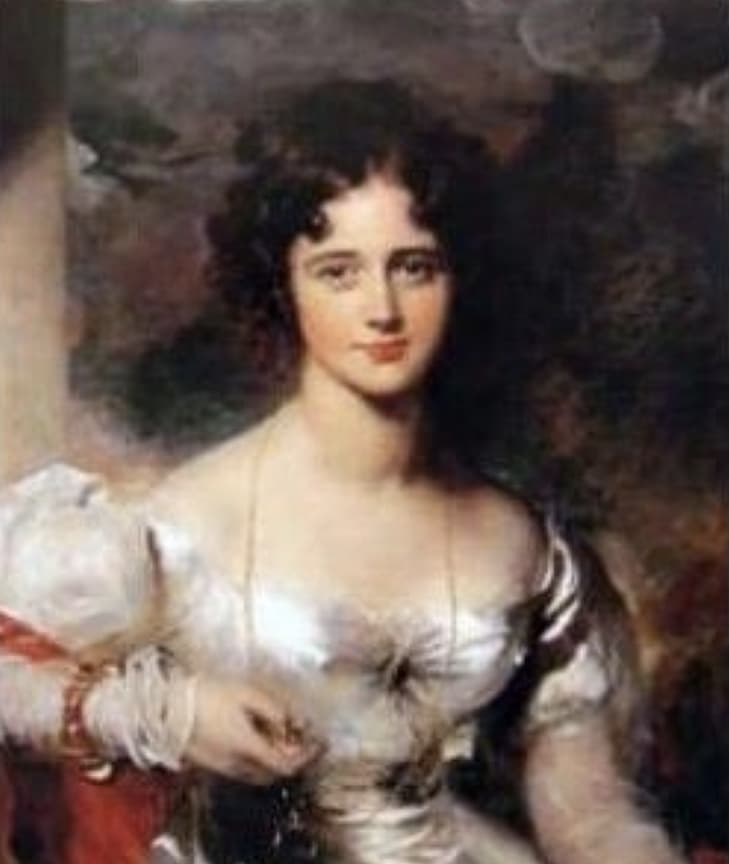
British · Exploration · Politics
Lady Hester Stanhope
March 12, 1776 – June 23, 1839
Early Life and Family Background
Lady Hester Lucy Stanhope was born on 12 March 1776 at Chevening, Kent, England, into one of the most prominent political families of late eighteenth‑century Britain.[6][1] She was the eldest daughter of Charles Stanhope, Viscount Mahon (later 3rd Earl Stanhope), a radical politician, scientist, and inventor, and Hester Pitt, Lady Mahon, daughter of William Pitt, 1st Earl of Chatham.[6][10] Through her mother she was the niece of William Pitt the Younger, Britain’s future Prime Minister, placing her at the nexus of aristocratic and governmental power.[6][2]
Her upbringing combined privilege with unconventional influences. Her father was known for eccentric democratic sympathies and scientific interests, while her mother died when Hester was only four, leaving her and her sisters largely to governesses and household tutors.[2][6] Encyclopedia.com notes that she received a "fragmentary education," mainly from governesses and her father, rather than a structured schooling.[6] This irregular education nevertheless exposed her to politics, languages, and the intellectual currents of the Enlightenment, shaping her independent mind and forceful personality.
Chevening and other family estates, including Burton Pynsent, formed the backdrop of her childhood, but the family atmosphere was strained. The Earl’s unconventional views and financial limitations contrasted with aristocratic expectations. Biographical accounts in the nineteenth‑century Dictionary of National Biography and the Cyclopaedia of Female Biography describe Hester as spirited, outspoken, and difficult to manage, already showing the defiant traits that would later lead her to reject conventional marriage and domesticity.[10][11]
Entry into Political Society and Career Beginnings
In her twenties, Stanhope’s life shifted decisively toward the centre of British politics. Around 1803 she entered the household of her uncle William Pitt the Younger, then Prime Minister of Britain, living with him at Walmer Castle and in London until his death in 1806.[2][3][8] At Walmer, she acted as his hostess and, informally, his private secretary, organizing dinners, managing political guests, and sharing in his confidences.[8][15]
English Heritage highlights this period as one in which she was "at the heart of British politics," using her charisma to facilitate Pitt’s political networking.[2] Contemporary accounts credit her with a sharp tongue, brilliant conversation, and a capacity to dominate social gatherings. She became known in London society for her boldness of manner and dress, sometimes shocking polite circles but attracting admiration for her wit and intelligence.[2][3]
After Pitt’s death in 1806, Stanhope’s position changed abruptly. She received a government pension in recognition of her service in his household, but her future was uncertain and her finances precarious.[1][6] Attempts to establish her in a conventional aristocratic role—possibly through marriage—foundered on her unwillingness to submit to expectations. She never married and had no children, a deliberate rejection of what contemporaries considered the natural destiny of a woman of her rank.[6][9]
During these years she travelled within Britain and Europe, including periods in Bath and on the Continent, cultivating a reputation as an eccentric but compelling figure. Nineteenth‑century biographers describe her indulging in "dreams of a great destiny in the Orient," already imagining a life beyond Britain.[8][10]
Departure from England and Early Travels
In 1810, Stanhope executed the radical decision that would define her career: she left England for good.[6][1] On 6 February 1810Lady Jane Grey, beginning a long voyage through the Mediterranean.[1] Encyclopedia.com confirms that she "left England for good (1810)," travelling first to the Mediterranean islands and then eastward.[6]
Her companions included her physician, Dr. Charles Lewis Meryon, and other attendants. The voyage took her to Gibraltar and Malta and then onward to Greece and Constantinople, where she moved within diplomatic and expatriate circles.[1][6] From there she continued to the Levant and Egypt, driven by a mix of curiosity, desire for independence, and an emerging fascination with Eastern landscapes and cultures.
While many British aristocrats travelled abroad on grand tours, Stanhope’s journey was distinctive in three respects. First, she did not intend to return, effectively severing her ties with English society.[6] Second, she travelled without a husband or male guardian in the conventional sense, occupying a leadership role within her entourage. Third, her travel gradually shifted from social visiting to exploratory movement into less accessible regions, foreshadowing her later reputation as an adventurer rather than a mere tourist.[3][12]
Exploration of the Middle East and Palmyra
Stanhope’s most famous exploits took place in the Middle East. According to Encyclopedia.com, she became the first European woman to enter the Syrian desert city of Palmyra in 1813
Accounts describe how she negotiated with Bedouin leaders for safe passage, using gifts, diplomatic language, and her personal authority to secure protection.[6][8] When she arrived at Palmyra (Tadmur), the ruins of the ancient caravan city and the former capital of Queen Zenobia, local tribes reportedly received her in a quasi‑royal manner, hailing her as a queen and escorting her in a grand procession.[6][8] English Heritage and biographical essays emphasize the theatrical nature of this entry, which Stanhope herself seems to have carefully orchestrated.[2][3] Her visit to Palmyra had both symbolic and practical significance. Symbolically, it represented a breach of gender norms, as a Western woman took on roles—negotiator, caravan leader, honoured guest—that were traditionally reserved for male explorers and officials. Practically, her journey contributed to European knowledge of Palmyra’s ruins, which were still being integrated into historiography and travel literature.[6][2] In women’s history, Stanhope’s Palmyra expedition stands as a landmark in female access to remote Middle Eastern sites. Later scholars and popular writers frequently cite her as the "Queen of the Desert" and "Mystery Lady of the Orient," highlighting how her persona challenged both European and Middle Eastern expectations of women’s comportment and capabilities.[4][13] During the same period, Stanhope travelled in Egypt, where she visited the Great Pyramid of Giza. ExplorersWeb and other accounts identify her as the first English woman to enter the Great Pyramid, part of a broader pattern of crossing boundaries in exploration.[12] The exact details of the visit are less well documented than her Palmyra expedition, but the claim reflects contemporary awareness that few women ventured into the physical interior of such monuments. Her presence inside the pyramid carried strong symbolic weight. The Great Pyramid had become an emblem of both ancient power and modern scientific curiosity, studied by engineers, antiquarians, and military men. Stanhope’s entry into its cramped passageways demonstrated that women could participate in the embodied experience of exploration, not just observe from a safe distance. Although she did not publish scholarly work on Egyptian monuments, her travels in Egypt reinforced her image as an intrepid adventurer uninterested in the limitations imposed on respectable women. This image would later be echoed in memoirs and letters, contributing to the mythos of the female traveler who dares to go where men go—and sometimes further.[3][12] Stanhope’s most important contribution to historical scholarship came through her 1815 excavation at Ashkelon (Ascalon) on the Palestinian coast. Inspired by the discovery of a medieval Italian manuscript that described a hidden hoard of gold coins buried beneath a mosque at Ashkelon, she organized an expedition to search for the treasure.[9][12][16] In 1815, and specifically from 1 April 1815, she led what historians widely regard as the first modern archaeological excavation in Palestine and in the history of Holy Land archaeology.[9][1] The project was notable for several reasons: During the excavation, on 19 May 1815, her team unearthed a large headless marble statue of Greco‑Roman style, described by Neil Asher Silberman as the first Greco‑Roman artifact ever intentionally excavated in the Holy Land.[5][18] Two days later, on 21 May 1815, she ordered the statue to be smashed and thrown into the sea, a decision taken to reassure Ottoman authorities that she would not remove antiquities from the region, in accordance with the conditions of her permit.[5] By the time the excavation was abandoned, around 10 June 1815, Stanhope had created a model of archaeological practice that departed from casual treasure hunting and foreshadowed professional archaeology. Wikipedia and other reference sources emphasize that her excavation at Ascalon "is considered the first to use modern archaeological principles," particularly systematic recording and the use of texts.[1][7] From the perspective of women’s history, Stanhope’s role as excavation leader is extraordinary. She commanded labourers, negotiated with Ottoman officials, and made strategic decisions regarding finds. Scholars at Chawton House and Women in Archaeology highlight her as a "trowelblazer" and "the first modern excavator of the Holy Land," underscoring that a woman helped lay foundations for a discipline that would later become male‑dominated.[9][19] After her travels and excavations, Stanhope eventually settled permanently in the mountains near Sidon in Lebanon1820s, establishing herself at Djoun (also spelled Joun) among the Druze and other local communities.[6] Historyswomen and other sources describe her residence in a former convent at Mar Elias, near the village of Jun/Joun, where she ruled her household with absolute authority.[8] In Lebanon, she adopted local dress, often wearing the garments of an emir, complete with weapons and pipe, and maintained a retinue of guards and servants.[8] She became involved in regional politics, sometimes disastrously, lending support or counsel in conflicts among Druze leaders and Ottoman authorities.[3][15] At her height, she is said to have maintained an armed force large enough to rival those of male contemporaries, reinforcing her image as a local ruler or "queen".[9] Encyclopedia.com describes how she performed humanitarian services and acquired a reputation for wisdom and sanctity, with locals viewing her as a kind of wise woman or saint.[6] She dispensed charity, mediated disputes, and offered medical and practical assistance, drawing on her European connections to secure aid when possible. Her house became both a refuge and a centre of gossip, attracting travellers curious to meet the legendary English lady who had created a quasi‑independent realm in Mount Lebanon.[3][15] However, her finances deteriorated severely. Cut off from regular income in England and funding an expensive household and local patronage, she fell deeply into debt.[3] In later years, she became more reclusive, restricting her circle and relying heavily on loyal servants. Yet even in decline, she preserved the aura of a commanding presence whose words carried weight among the surrounding villages.[6][8] Although Stanhope did not produce formal scholarly books, her letters and memoirs played a central role in shaping her reputation. Wikipedia notes that "her letters and memoirs made her famous as an explorer," highlighting their importance in disseminating accounts of her travels and life in the East.[1] Much of this material was preserved by her physician, Dr. Meryon, and later edited and published in the nineteenth century. The multi‑volume Life and Letters of Lady Hester Stanhope, compiled from her correspondence and recollections, offered European readers an intimate view of her personality, political experiences, and Middle Eastern adventures.[18] These volumes contributed to the Victorian fascination with eccentric aristocrats and Oriental travel, portraying Stanhope as both heroic and tragic. Her writings reveal a strong, often uncompromising voice. She commented on British politics, Middle Eastern customs, and the constraints placed on women of her class. The letters are a crucial source for historians reconstructing her life, especially given the lack of formal diaries or official records for many events. They also situate her within a broader literary tradition of travel writing and memoir that helped normalize the idea of women writing publicly about distant places. In addition to autobiographical material, Stanhope became the subject of numerous biographies, including twentieth‑ and twenty‑first‑century studies such as Lorna Gibb’s Lady Hester: Queen of the East and academic works like Lady Hester Lucy Stanhope: A New Light on Her Life and Love Affairs.[14][19][20] These works reassess her significance as an explorer, proto‑archaeologist, and figure in Middle Eastern history. Stanhope’s personal life defied the conventions of her time. She never married and had no children, a fact stressed by Encyclopedia.com.[6] She was known to have taken several lovers, both before and during her travels, and modern biographies explore her romantic relationships as part of her challenge to normative femininity.[9][19] Her decision to live unmarried was not simply abstention; it was a conscious assertion of autonomy. Free from the legal and social constraints of coverture, she could manage her finances, travel, and household according to her own judgment. However, this autonomy also exposed her to vulnerability, as she lacked the security that a husband’s estate might have provided.[3] Contemporaries frequently described her as eccentric. The Dictionary of National Biography labels her an "eccentric" and recounts her unconventional habits, strong opinions, and often theatrical conduct.[10] She cultivated this image, using it to command attention and assert authority in settings where women were usually subordinate. Her adoption of male or quasi‑military dress in Lebanon, for example, reinforced her position as a leader rather than a dependent guest.[8] Despite—or because of—her eccentricity, she forged deep loyalties among servants and local followers. Many remained with her through financial hardship and declining health, testifying to the respect and affection she inspired. Her relationships were marked by intensity and volatility, reflecting a personality that demanded much but also gave much in return. Stanhope did not receive formal scientific or state honours comparable to those granted to male explorers or scholars. Nonetheless, she enjoyed significant contemporary recognition. Her government pension after Pitt’s death acknowledged her service in his household and, indirectly, her contribution to political life.[1][6] Her fame as an adventurer and proto‑archaeologist was largely literary and social rather than institutional. Travel writers, biographers, and journalists of the nineteenth and twentieth centuries portrayed her as a "Queen of the East" and "Queen of the Desert," titles that, though unofficial, expressed the impact she had on popular imagination.[4][13][14] In modern discussions of women in archaeology and exploration, organizations such as Chawton House and Women in Archaeology highlight her as a pioneering figure who deserves greater scholarly recognition.[9][19] In the Middle East, her legacy took the form of local stories and memories rather than formal honours. Villagers around Djoun remembered her generosity and wisdom, and some accounts suggest she was regarded as a kind of saint or protector.[6][15] This informal veneration contrasts with the institutional honours often granted to male figures, but it underscores the depth of her local influence. In her later years, Stanhope’s life in Lebanon became increasingly difficult. Her finances deteriorated as debts mounted and remittances from England proved insufficient to support her household and charitable activities.[3][6] She became more reclusive, occasionally refusing visitors and withdrawing into a smaller circle of trusted confidants. Despite these challenges, she maintained a measure of authority in her mountain community. The McClintock and Strong Biblical Cyclopedia describes her life in Mount Lebanon as one of the "most interesting romances of history," emphasizing both its drama and its hardship.[15] She continued to exercise judgment in local disputes and to offer aid to the poor, even as her own material resources dwindled. On 23 June 1839, Stanhope died at her residence in Djoun (Joun), near Sidon, in Mount Lebanon.[6][1][15] Sources agree that she died in relative poverty and isolation, though not entirely abandoned, as servants remained with her.[3][6] Encyclopedia.com and Wikipedia give this date and place, noting the contrast between the grandeur of her earlier life and the austerity of her final circumstances.[6][1] Her death abroad symbolized a complete break with her native country: she had not returned to England since her departure in 1810. Buried in the land where she had carved out an unconventional existence, she left behind both a local memory as Lady Hester of Djoun and an international legend as a woman who defied her era’s limitations. Lady Hester Stanhope’s legacy spans multiple fields: women’s history, Middle Eastern exploration, and the early history of archaeology. She is widely remembered as an aristocratic English traveler who "pioneered Western access to remote areas of the Middle East" and later settled there, performing humanitarian services and acquiring a reputation for wisdom and sanctity.[6] In exploration, her journeys to Palmyra, Damascus, Jerusalem, and other cities expanded European knowledge of the Syrian interior and contributed to the romantic image of the Orient. Her theatrical self‑presentation—the queenly entries, the adopted titles, the dramatic negotiations—helped to construct enduring myths around European travelers in the region.[6][8] In archaeology, her Ashkelon excavation occupies a crucial place. Scholars credit her with conducting the first modern archaeological excavation in Palestine, employing stratigraphic recording and textual guidance long before institutions standardized such practices.[1][9] Her status as a woman leading this work complicates standard narratives that attribute the origins of Holy Land archaeology solely to male scholars and missionaries. For women’s history, Stanhope represents a powerful example of a woman who refused the domestic destiny prescribed by her class. She leveraged her aristocratic background to gain access to political circles, then rechanneled that capital into autonomous travel and local rule in Lebanon. Her life demonstrates that women of the early nineteenth century could and did negotiate roles that transcended marriage and motherhood, even if such choices came at great personal cost. Modern scholarship and popular writing continue to reassess her. Articles such as "Lady Hester Stanhope: Traveler and Trailblazer" and studies hosted by Chawton House argue for her recognition as a "trowelblazer"—a woman who wielded the archaeological trowel ahead of institutional acceptance of female archaeologists.[3][9] ExplorersWeb and other outlets present her as a "great explorer" whose story remains ripe for literary and cinematic adaptation.[12][16] Overall, Stanhope’s legacy is one of boundary‑breaking: geographical (from England to the Syrian desert and Lebanese mountains), disciplinary (from political hostess to proto‑archaeologist), and gendered (from expected wife to autonomous ruler and explorer). Her life expands our understanding of what women could do in the late eighteenth and early nineteenth centuries and invites continued research into the many unpublished or understudied sources that document her extraordinary career.Egypt and the Great Pyramid
Ashkelon and the Birth of Modern Holy Land Archaeology
Settlement in Lebanon and Local Authority
Writing, Letters, and Posthumous Publications
Personal Life, Relationships, and Eccentricity
Awards, Honours, and Contemporary Recognition
Later Life, Decline, and Death
Legacy and Historical Impact
Dated achievements
9 indexed.
- Mar121776Science
Birth of Lady Hester Stanhope
Born at Chevening, Kent, into the aristocratic Stanhope family, daughter of the 3rd Earl Stanhope and Lady Hester Pitt.
View details Lady Hester Stanhope - Wikipedia - Feb061810Science
Departure from England on Lady Jane Grey
Sails from England aboard the Lady Jane Grey, permanently leaving Britain to begin her life of Eastern travel and exploration.