← All women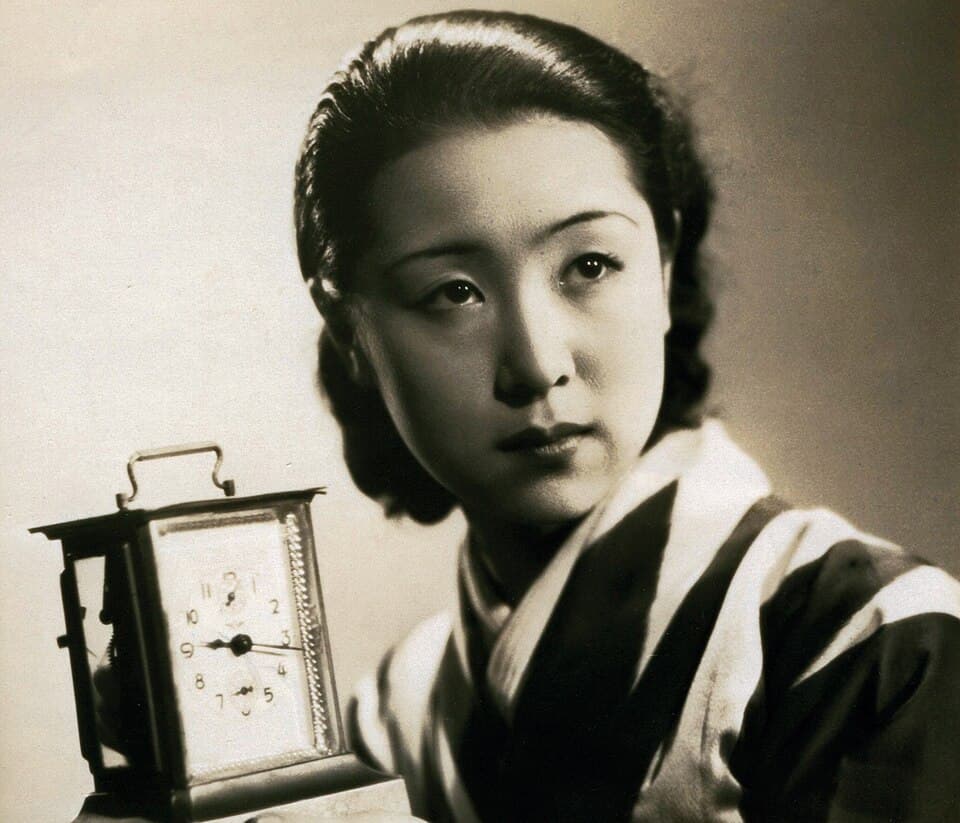
Japanese · Arts
Kinuyo Tanaka
November 29, 1909 – March 21, 1977
Early Life and Background
Kinuyo Tanaka was born on November 29, 1909, in Shimonoseki, Yamaguchi Prefecture, Japan. Her family consisted of modest laborers, and her early life was marked by the socio-economic challenges of post-Meiji Restoration Japan. However, her family's encouragement of creativity laid the foundation for Tanaka's pursuit of the arts. She did not graduate from high school, opting instead to join Shōchiku Studios, marking the beginning of her storied cinematic career.
Career Beginnings and Development
Tanaka's involvement in the film industry began in the 1920s, an era when Japanese cinema was transitioning from silent to sound films. Her debut was in "Noraneko" (1925). Her talent and screen presence quickly catapulted her to stardom, and she became a muse for renowned directors like Kenji Mizoguchi. Her performances in "The Water Magician" (1933) and "Osaka Elegy" (1936) demonstrated her range and emotional depth, establishing her as a leading actress.
Major Works and Accomplishments
Tanaka starred in over 250 films, with notable performances in "Life of Oharu" (1952) and "Sansho the Bailiff" (1954). In 1953, she directed "Love Letter," making her one of Japan's pioneering female directors. This move was significant, as it challenged the male-dominated film industry and inspired future female filmmakers. Her directorial work is praised for its sensitivity and depth, focusing on themes of female experience in post-war Japan.
Awards, Honors, and Recognition
Throughout her career, Tanaka received multiple accolades. She won the Blue Ribbon Award for Best Actress several times and was honored at the Mainichi Film Concours. The Japanese government awarded her the Order of the Precious Crown, signaling her status as a cultural icon. In 1985, the Kinuyo Tanaka Memorial Award was established to honor excellence in acting.
Personal Life
Tanaka married director Hiroshi Shimizu in 1929, though the marriage was short-lived. Despite personal challenges, she maintained a genteel public persona, dedicated to her craft and supportive of younger actors and filmmakers entering the industry.
Legacy and Historical Impact
Kinuyo Tanaka left a profound legacy in Japanese cinema. Her work as both an actress and director challenged traditional gender roles and opened doors for women in film. Her films are studied for their thematic depth and artistic innovation. The Tokyo International Film Festival holds retrospectives of her work, and her influence continues to be a point of reference in academic studies on global cinema.
Later Life and Death
In the later years of her life, Tanaka continued to act, demonstrating her enduring appeal and adaptability as Japanese cinema evolved. She passed away on March 21, 1977, at the age of 67, from a brain tumor. Her death marked the end of an era, but her contributions to Japanese cinema live on as a testament to her talent and pioneering spirit.
Dated achievements
2 indexed.
- Nov291909Arts
Kinuyo Tanaka's Birthday
Kinuyo Tanaka was born on November 29, 1909, in Shimonoseki, Japan.
View details Kinuyo Tanaka Biography - Britannica - Mar211977Arts
Death of Kinuyo Tanaka
Kinuyo Tanaka passed away on March 21, 1977, at the age of 67.
View details