← All women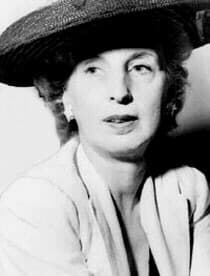
American · Literature · Activism
Kay Boyle
February 19, 1902 – December 27, 1992
Early Life and Background
Kay Boyle was born on February 19, 1902, in St. Paul, Minnesota. Her father was a lawyer, and her mother was an educator with a strong emphasis on arts, which greatly influenced Boyle's upbringing. The family moved frequently during her childhood, immersing Kay in diverse cultural contexts. She attended the exclusive Miss Capen’s School in New York and later learned at the Cincinnati Conservatory of Music, albeit briefly.
Career Beginnings and Development
Boyle moved to New York City in the 1920s, engaging with the cultural and intellectual currents that characterized the decade. Her first published work, a collection of poems, appeared in 1922. She moved to France in 1923, joining the expatriate circle that included Ernest Hemingway, James Joyce, and Gertrude Stein. Her involvement with the Parisian literary scene catalyzed her career, allowing her to develop her distinctive prose style.
Major Works and Accomplishments
Boyle’s first major success came with the publication of Plagued by the Nightingale in 1931, a novel that explored themes of love and identity. Over her lifetime, she wrote more than a dozen novels, including The Death of a Man (1936) and Generation Without Farewell (1960). Her short stories and essays, some of which appeared in publications like The New Yorker and Harper’s, underscored her literary prowess.
Her work was instrumental in redefining modernist literary expression, blending poetic intensity with narrative depth. She was recognized with awards such as two Guggenheim Fellowships and the coveted O. Henry Award.
Activism and Awards
Boyle was an ardent advocate for civil rights, a stance that informed much of her activism and writing. Her political engagement became evident during the McCarthy era, when she was blacklisted for alleged Communist affiliations, a charge she denied. Despite this, Boyle endured and continued to contribute to prominent causes, including anti-war movements and desegregation.
Personal Life
Boyle’s personal life was as vibrant as her literary one. She was married three times and had six children, balancing her career with her responsibilities as a mother. Her marriages, notably to Laurence Vail and Joseph Franckenstein, were both sources of personal growth and creative inspiration.
Legacy and Historical Impact
Boyle's impact on literature and society endures through her courageous engagement with social issues and her profound body of work. She inspired generations of writers and activists to blend creativity with conscience, advancing the role of literature in confronting political and social injustices.
Later Life and Death
In her later years, Boyle continued to write and teach, serving as a Professor of English at San Francisco State University. Her commitment to education and activism never waned until her passing on December 27, 1992, in Mill Valley, California. Her enduring legacy is reflected in the continued relevance and appreciation of her work.
Dated achievements
2 indexed.
- Feb191902Literature
Birth of Kay Boyle
Kay Boyle was born on February 19, 1902, in St. Paul, Minnesota.
View details Encyclopedia Britannica: Kay Boyle - Dec271992Literature
Death of Kay Boyle
Kay Boyle passed away on December 27, 1992, in Mill Valley, California.
View details