← All women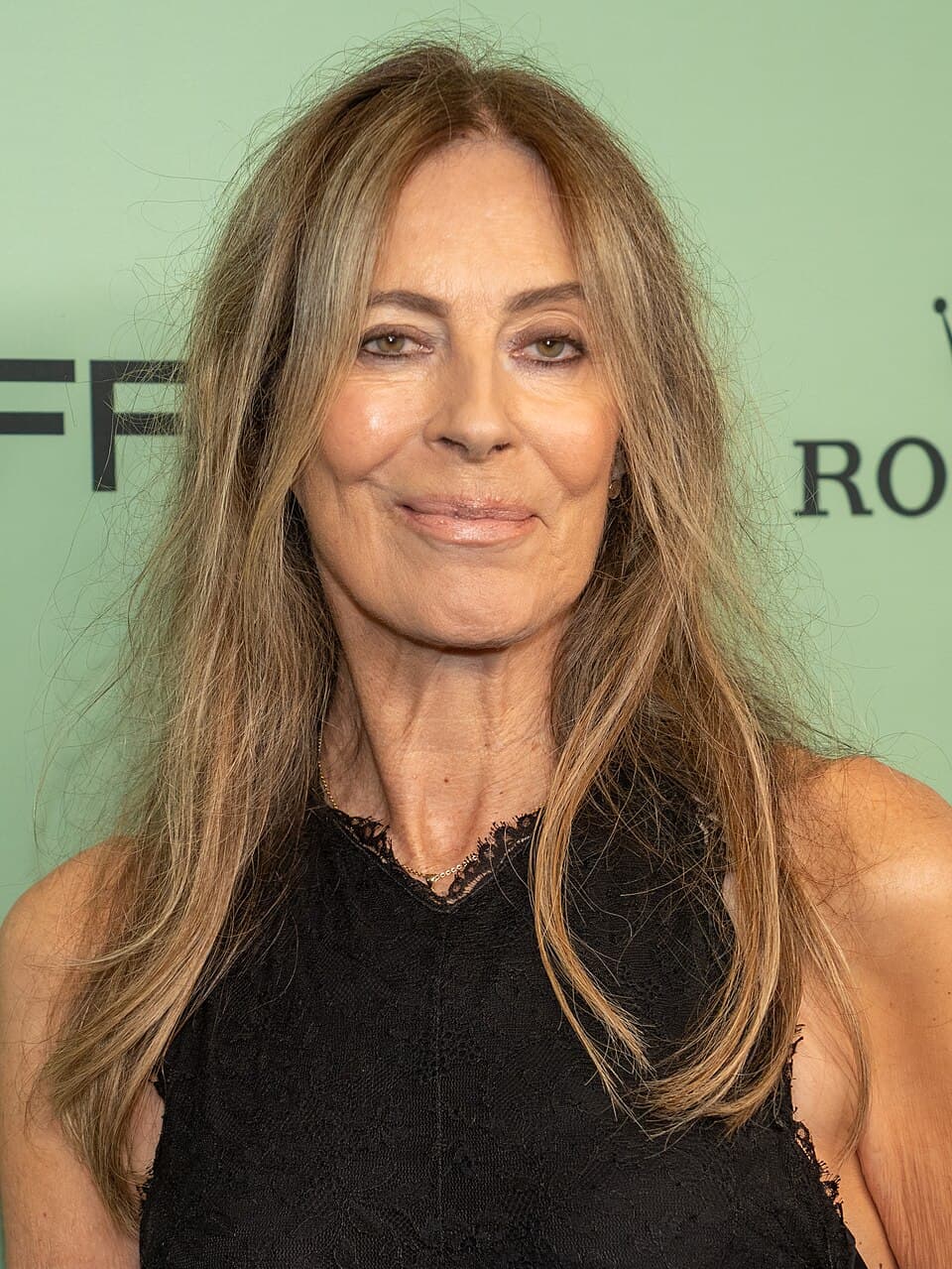
American · Arts
Kathryn Bigelow
November 27, 1951 – present
Early Life and Background
Kathryn Ann Bigelow was born on 27 November 1951 in San Carlos, California, United States.[1][5][6] She is the only child of Gertrude Kathryn (née Larson), a librarian, and Ronald Elliot Bigelow, a paint factory manager.[1][10] Growing up in the San Francisco Bay Area during the social and cultural upheavals of the 1960s, she was exposed to a climate of artistic experimentation and political questioning that would later inform her work.
Bigelow’s early interests centered on visual art. She studied painting at the San Francisco Art Institute, one of the leading centers for avant‑garde art on the U.S. West Coast.[1][7][15] Her training placed her within the broader context of post‑minimalist and conceptual art movements. At around age 20, she received a scholarship to the Whitney Museum of American Art Independent Study Program in New York.[7] There she worked in a studio in a former Off‑Track Betting building and was critiqued by leading figures such as Richard Serra, Robert Rauschenberg, and Susan Sontag, an experience that sharpened her sense of visual composition, political engagement, and narrative form.
During this period, she also became associated with the British avant‑garde cultural collective Art & Language, further embedding her in experimental artistic circles.[7][15] These formative experiences gave her a rigorous, conceptually driven approach to images and text—an approach that later translated into her filmmaking, especially in her preference for immersive, often confrontational cinema that explores conflict, violence, and moral ambiguity.
Education and Transition to Filmmaking
Bigelow’s move from fine art to film occurred in the 1970s. Seeking to extend her visual experimentation into moving images and narrative structures, she enrolled at Columbia University School of the Arts in New York.[1][7][14] At Columbia, she studied film theory and production, working under influential scholars and filmmakers. She completed a master’s degree, reportedly graduating in 1979.[7]
Her academic work included short films and projects that combined the intellectual frameworks of critical theory with genre storytelling. This dual orientation—toward both theoretical rigor and popular forms—became a hallmark of her later career. Bigelow resisted strict boundaries between “art cinema” and “commercial cinema,” instead treating genre conventions as material that could be reworked to interrogate power, gender, and violence.
Career Beginnings
Bigelow made her feature directorial debut with the outlaw biker film The Loveless, released in 1981.[1][3] Co‑directed with Monty Montgomery and starring Willem Dafoe, the film was a stylized portrait of a motorcycle gang passing through a small Southern town. Although modest in scale, it established Bigelow’s interest in subcultures, marginal figures, and the aesthetics of speed, danger, and ritualized violence.
In the 1980s, she continued to work in genre cinema while infusing it with distinctive visual flair and thematic depth. Her 1987 film Near Dark combined vampire mythology with the iconography of the American West, creating a cult classic noted for its atmospheric photography and unromantic portrayal of vampirism.[1][3] Around the same time, she directed Blue Steel (1990), a thriller centered on a female police officer, played by Jamie Lee Curtis, who becomes entangled with a psychopathic killer.[1] The film engaged with questions of gender, authority, and violence through an action‑thriller framework.
These early works marked Bigelow as one of the few women directing action‑oriented films in Hollywood, a terrain typically dominated by male filmmakers. Critics and scholars have since noted that her films from this era already interrogate masculinity, power, and the body, even as they deliver the kinetic pleasures associated with genre cinema.[15]
Breakthrough and Major Works
Bigelow’s mainstream breakthrough came with the 1991 action film Point Break, starring Keanu Reeves and Patrick Swayze.[1][3] The film follows an FBI agent investigating a group of surfers suspected of bank robbery, but it is equally concerned with adrenaline‑seeking, loyalty, and spiritualized risk. Its high‑energy action sequences, including skydiving and surfing set‑pieces, helped cement Bigelow’s reputation as a director capable of staging complex, visceral sequences while sustaining character‑driven drama.
In 1995, she directed the science‑fiction thriller Strange Days, co‑written by James Cameron and Jay Cocks.[1] Set at the turn of the millennium, the film explores memory recording technology, police brutality, sexual violence, and media spectacle. Although not initially a commercial success, it earned critical attention for its ambitious themes and innovative use of subjective camera work. Bigelow later received a Saturn Award for Best Director for the film, highlighting its significance within genre circles.
Her 2002 film K‑19: The Widowmaker dramatizes a Cold War nuclear submarine accident, focusing on duty, sacrifice, and moral responsibility within a hierarchical military structure.[1] Starring Harrison Ford and Liam Neeson, the film again illustrates Bigelow’s interest in tightly confined spaces and the psychological pressures they impose.
The Hurt Locker and Historic Recognition
Bigelow’s most celebrated work to date is the 2008 war drama The Hurt Locker.[1][3][6] Written by journalist‑screenwriter Mark Boal and inspired by his experiences embedded with a bomb disposal unit in Iraq, the film centers on an Explosive Ordnance Disposal (EOD) team whose members confront improvised explosive devices under extreme stress. Filmed largely in Jordan, it adopts a quasi‑documentary style, with handheld cameras and an emphasis on immediacy.
The film saw limited release in 2009 but quickly became a major awards contender.[1][3] It was praised for avoiding overt ideological statements while exploring the addictive nature of combat, the psychological toll of war, and the complex dynamics within military units. Bigelow’s direction was key to its impact: she crafted sequences of sustained tension that foreground perceptual uncertainty, particularly around identifying threats in civilian environments.
On 7 March 2010, at the 82nd Academy Awards, The Hurt Locker won six Oscars, including Best Picture and Best Director for Bigelow.[1][3][5] With the Best Director win, she became the first woman in history to receive the Academy Award for Best Director.[1][4][6] The same evening, as both director and one of the producers of the film, she became the first woman to both direct and produce a Best Picture winner, a milestone noted in commentary on the ceremony.[3]
These awards confirmed Bigelow’s standing as a leading filmmaker and represented a landmark in women’s history in cinema. Her triumph was particularly notable given that she was competing against large‑scale studio productions, including James Cameron’s Avatar. The success of a comparatively low‑budget, independently financed war drama signaled a shift in how the Academy recognized different types of films.
Zero Dark Thirty and Later Work
Bigelow followed The Hurt Locker with the 2012 film Zero Dark Thirty, again collaborating with Mark Boal.[1][3] The film dramatizes the decade‑long hunt for Osama bin Laden, focusing on a fictionalized CIA analyst whose relentless pursuit culminates in the 2011 raid on Abbottabad. The work attracted intense debate over its depiction of interrogation practices and intelligence gathering, with some commentators arguing that it blurred the line between portrayal and endorsement of torture.
Despite controversy, Zero Dark Thirty was widely acclaimed for its procedural detail, narrative scope, and technical achievement. Bigelow’s direction balances bureaucratic processes with covert operations, using an almost journalistic tone in parts of the film. It received numerous critics’ awards and was nominated for major honors, including the Academy Award for Best Picture, for which Bigelow was a credited producer.[1][3]
In 2017, she directed Detroit, a historical drama about the 1967 Detroit uprising and the police beating and killings at the Algiers Motel.[1][3] The film examines structural racism, police violence, and the trauma of Black communities under siege. Bigelow’s work continues her long‑standing interest in depicting systems of authority and the ways in which individuals navigate severe, often lethal, conflict.
Awards, Honors, and Recognition
Over the course of her career, Bigelow has received numerous accolades, including two Academy Awards, two BAFTA Awards, and a Primetime Emmy Award.[1][3] She has also been recognized by the Directors Guild of America, the Producers Guild of America, and multiple critics’ organizations, particularly for The Hurt Locker and Zero Dark Thirty.[1][3][11]
In 2010, Time magazine included her among the 100 most influential people in the world, citing her historic Oscar win and the significance of her contributions to contemporary cinema.[11] She has also received lifetime achievement honors and retrospectives from film festivals and institutions, which underscore her role in expanding both the aesthetic possibilities and the gender dynamics of action‑oriented and war‑related filmmaking.
Personal Life
Bigelow maintains a relatively private personal life compared with some of her Hollywood contemporaries. She was married to director James Cameron from 1989 to 1991.[1][6] The pair collaborated professionally, with Cameron contributing story work on Strange Days. Their relationship has often been mentioned in coverage of the 2010 Oscars because Cameron’s Avatar was one of the main competitors to Bigelow’s The Hurt Locker for Best Picture and Best Director.
There is no widely cited evidence that Bigelow has children; most biographical sources focus on her professional life, artistic training, and filmography rather than domestic details.[1][6][7] She has been described as intensely focused on her work, frequently involved in research and preparation for films that address complex political and social issues.
Filmmaking Style and Themes
Bigelow’s films are often noted for their kinetic energy, immersive visual style, and engagement with themes of violence, risk, and moral ambiguity.[15] She frequently employs handheld cameras, long takes of high‑tension situations, and sound design that places viewers inside the physical experience of characters under pressure. Rather than presenting violence as spectacle alone, her work tends to explore its psychological impacts and the institutional structures that shape it.
Her focus on police, military, and paramilitary characters—ranging from vampire gangs to bomb disposal units and special‑operations teams—has prompted extensive critical analysis. Scholars have examined how her films negotiate gender, noting that while many center on male protagonists, they are directed by a woman who both deploys and interrogates traditional images of masculinity and authority.[15]
Bigelow has often resisted being categorized strictly as a “female director,” emphasizing instead the craft of filmmaking and the universality of certain experiences. Nonetheless, her position as one of the few women to build a long career directing large‑scale action, thriller, and war films has made her a crucial figure in discussions of gender in Hollywood.
Legacy and Historical Impact
Kathryn Bigelow’s legacy is anchored by her historic 2010 Academy Award for Best Director, which broke a longstanding barrier for women in one of cinema’s most prestigious categories.[1][4][6] For decades, the directing Oscar had symbolized a pinnacle of recognition for creative and logistical leadership in filmmaking, yet no woman had won it. Bigelow’s achievement demonstrated that women could not only direct complex, action‑intensive films but also be honored for such work by major institutions.
Her success has been cited as an inspiration for subsequent generations of women pursuing directing careers in Hollywood and beyond. While broader structural inequalities persist, Bigelow’s career provides a high‑profile example of sustained work at the intersection of commercial viability, artistic experimentation, and political engagement.
Beyond her barrier‑breaking awards, Bigelow’s films have contributed to ongoing conversations about the representation of war, policing, terrorism, and social unrest in popular culture. Works such as The Hurt Locker, Zero Dark Thirty, and Detroit invite viewers to confront uncomfortable realities, often avoiding simple moral resolutions. Her emphasis on procedural detail, lived experience, and the textures of risk positions her films as important cultural artifacts for understanding late 20th‑ and early 21st‑century conflicts.
Later Life and Ongoing Work
As of the mid‑2020s, Kathryn Bigelow remains an active filmmaker and producer.[1][3] She continues to develop projects that reflect her interest in contemporary political and social issues, though not all of these have yet reached production or release.[1] Her unrealized projects—documented in film scholarship and public databases—also attest to the challenges of financing and distributing politically charged or formally ambitious works even for established directors.
Bigelow’s later career has included work in television and documentary formats, contributing to her receipt of a Primetime Emmy Award for Exceptional Merit in Documentary Filmmaking.[1][3] This diversification underscores her adaptability and ongoing engagement with non‑fiction storytelling alongside her feature films.
Living in an era of heightened scrutiny of media institutions, she occupies a complex position: simultaneously a pioneering figure within Hollywood and a director whose work frequently interrogates the very systems—military, intelligence, law enforcement—that mainstream cinema often glorifies. Her continuing influence can be seen in the growing number of women who direct high‑intensity genre films and in the persistent scholarly and critical attention paid to her body of work.
Dated achievements
4 indexed.
- Nov271951Science
Birth of Kathryn Bigelow
Kathryn Ann Bigelow was born in San Carlos, California, United States.
View details Kathryn Bigelow - Wikipedia - Mar072010Arts
First woman to win the Academy Award for Best Director
At the 82nd Academy Awards, Bigelow won Best Director for The Hurt Locker, the first woman ever to win this Oscar in the award's 82-year history.